A routine cleaning and exam sounds simple, but the procedure code your hygienist uses determines whether insurance pays 100% or leaves you with an unexpected bill. Understanding how CDT codes, frequency rules, and periodontal history affect your coverage can prevent costly surprises before you sit in the chair.
The Cleaning Code That Changes Everything Mid-Appointment
For Cypress-area patients, most arrive expecting a standard prophylaxis — the twice-a-year cleaning often covered at 100% under preventive benefits. What many don't realize is that a single probe measurement can reclassify the entire appointment before the hygienist finishes charting.
Here's how the CDT code system works in practice:
-
Code: D1110
-
Procedure Name: Adult Prophylaxis (routine cleaning)
-
Insurance Tier: Preventive
-
Typical Coverage: 100%
-
Code: D4346
-
Procedure Name: Scaling — generalized moderate inflammation
-
Insurance Tier: Basic/Periodontal
-
Typical Coverage: 50–80%
-
Code: D4341
-
Procedure Name: Scaling & Root Planing — 4+ teeth per quadrant
-
Insurance Tier: Basic/Periodontal
-
Typical Coverage: 50–80%
-
Code: D4342
-
Procedure Name: Scaling & Root Planing — 1–3 teeth per quadrant
-
Insurance Tier: Basic/Periodontal
-
Typical Coverage: 50–80%
When a hygienist probes pocket depths at or above 4mm across multiple teeth, the ADA's guidance on periodontal scaling codes makes clear that submitting a D1110 code would be clinically inaccurate. The office is legally and ethically required to recode. That shift drops the procedure out of your preventive benefit tier and into basic treatment — which typically carries a deductible and only partial coverage.
What you can do: Before your hygienist begins, ask the front desk to submit a pre-treatment estimate to your insurer. This is a no-obligation request that shows you exactly how your plan will process each code. It takes a few days but can prevent a surprise bill entirely. If you're a new patient or haven't been seen in over two years, this step is especially worth taking.
According to WebMD, deep cleaning — scaling and root planing — goes beneath the gumline to address bacteria that standard brushing and routine prophylaxis cannot reach. It's a medically necessary procedure when gum disease is present, not an upsell.
Once You've Had Deep Scaling, Your Insurance Relationship Changes Permanently
This is the detail most patients discover too late. After completing a full course of scaling and root planing, your dental chart is permanently flagged. From that point forward, many insurance carriers will deny claims submitted under D1110 (routine prophylaxis) and require all future cleanings to be billed as D4910 — Periodontal Maintenance.
Why does that matter? Periodontal maintenance visits typically count against your annual maximum at a higher dollar value, fall under basic rather than preventive benefits, and are often recommended three to four times per year rather than twice. That frequency multiplies the out-of-pocket impact quickly.
MouthHealthy from the ADA explains that scaling and root planing is clinically beneficial for patients with chronic periodontitis — a condition affecting nearly half of American adults over 30. The treatment is appropriate and important. But the downstream insurance consequences deserve an honest conversation with your dental team before you begin.
How to navigate this: Ask your dentist whether alternating D1110 and D4910 claims — sometimes called "alternate benefit billing" — is supported under your specific plan. Some insurers permit this arrangement. Others don't. Knowing your plan's policy in advance lets you budget accurately or explore cash-pay periodontal maintenance pricing directly with the practice.
The "Two Cleanings Per Year" Rule Is More Complicated Than You Think
Patients commonly assume their plan covers two cleanings per calendar year — one in spring, one in fall. Scheduling accordingly feels reasonable. But many insurers don't use a calendar-year frequency model.
There are three primary frequency formulas insurers use:
- Calendar Year: Two cleanings any time within January–December. Most flexible.
- Service-Year (Rolling 12 Months): One cleaning every 12 months from the date of the last service.
- Exact Rolling Interval: One cleaning every 180–183 days, counted to the exact day. One day early triggers a 100% denial.
Healthline's overview of cleaning frequency notes that the standard recommendation is every six months, though your dentist may adjust that based on individual risk factors. The clinical recommendation and the insurance frequency rule are two separate things — and the insurer's rule is what determines payment.
Script to use before booking: Call the member services number on your insurance card and ask: "Does my plan use a calendar-year frequency limit or a date-to-date rolling interval for prophylaxis? What is the earliest date my next cleaning will be covered?" Write down the representative's name and the date of the call. If a claim is denied, that documentation supports an appeal.
WebMD's guidance on dental visits also recommends confirming in-network status before scheduling — another step that protects against unexpected out-of-pocket exposure.
What a Routine Exam and Cleaning Actually Involves
When your visit does fall under a standard D1110 prophylaxis, here's what the appointment typically includes:
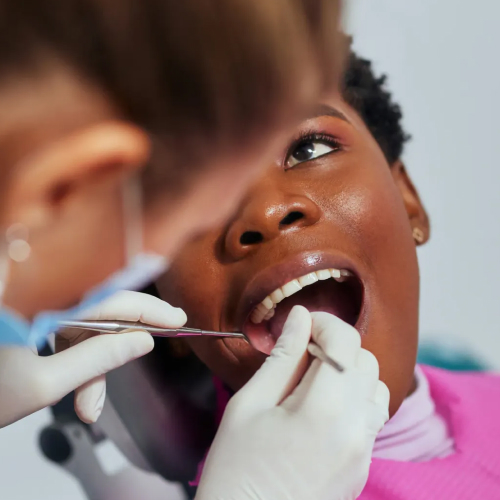
A dental hygienist begins with a physical exam, checking for signs of gingivitis or other concerns. Scaling removes plaque and tartar from tooth surfaces and along the gumline using hand instruments or ultrasonic tools. Polishing follows, using a gritty paste to remove residual staining. Professional flossing clears debris between teeth. Most visits close with a fluoride treatment applied as a varnish or gel.
Research from the NIH's Informed Health resource confirms that plaque removed during professional scaling cannot be fully addressed through home brushing alone — particularly tartar, which hardens and requires clinical instruments to remove.
The exam portion involves your dentist reviewing X-rays, probing pocket depths, checking for cavity fillings, and evaluating soft tissue. This is where early detection of gum disease, oral cancer, and tooth decay happens — before symptoms appear and before treatment becomes more complex.
According to the ADA's home care guidance, consistent home hygiene between visits — brushing twice daily, flossing once, and using appropriate rinses — directly reduces how much clinical intervention is needed at each appointment. Good habits between visits keep routine cleanings routine.
Ready to Schedule Your Cleaning in Cypress?
Understanding your coverage before you arrive is one of the most practical things you can do for your dental health. If you have questions about what your plan covers, which codes apply to your situation, or what to expect at your next visit, the team at Cypress Family Dental is here to help. We serve patients throughout Cypress and the surrounding North Orange County area and are happy to help you navigate your benefits before your appointment. We also offer dental implants and endodontic root canal treatments for patients who need restorative care beyond routine visits.
This article is for informational purposes only and does not constitute dental or insurance advice. Individual insurance plans vary significantly. Always confirm coverage details directly with your insurer and consult a licensed dental professional for personalized clinical recommendations.




..png)


..png)


