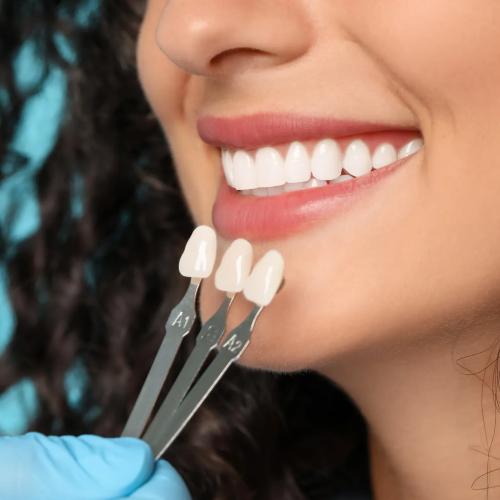
What Veneers Actually Involve Over Time (And What Gets Left Out)
Considering veneers? Learn what they involve, how long they last, and what to expect over time. Schedule your consultation with Cypress Family Dental today!
Read More
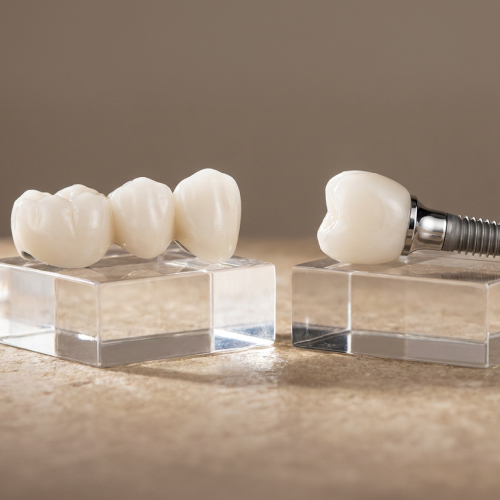
Dental implants and bridges both replace missing teeth, but they differ significantly in how they feel during and after treatment, how long they last, and how they function over time. Understanding the full picture — not just the day-one comparison — helps you make a decision you won't regret a decade from now.
For Cypress-area patients, this comparison comes up constantly, and the conventional wisdom is almost always the same: bridges are less painful because there's no surgery involved. That's an oversimplification worth unpacking.
Yes, dental implant placement involves a surgical procedure. Your jawbone is prepared to receive a titanium post, and the days immediately following can involve pressure, mild swelling, and soreness. According to WebMD, this discomfort is manageable and typically resolves as the site heals. Most patients return to normal activity within a day or two.
Bridge placement, by contrast, requires shaving down the healthy teeth on either side of the gap — these are called abutment teeth. Removing that enamel is irreversible. What many patients don't anticipate is that aggressive preparation of previously healthy teeth can trigger pulpitis — nerve inflammation inside the tooth. This doesn't always show up immediately. In some cases, it develops weeks or months after cementation, presenting as thermal sensitivity or dull aching that doesn't resolve on its own. In a percentage of cases, it progresses to irreversible nerve damage requiring a root canal.
So the comparison isn't simply "surgery vs. no surgery." It's acute, predictable post-operative soreness (implant) versus unpredictable, potentially lingering nerve sensitivity that can affect teeth that were perfectly healthy before the procedure (bridge). Neither is painless. But the implant's discomfort has a clear timeline; the bridge's nerve risk does not.
Here's a dimension of this comparison that rarely gets discussed plainly: what happens to your jawbone when a tooth root is no longer there.
A Healthline overview of dental implant benefits explains that when a tooth is lost, the jawbone in that area no longer receives the stimulation it needs. Over time, the body begins to resorb that bone tissue. A dental bridge replaces the visible tooth but not the root — meaning the bone beneath the floating false tooth (the pontic) continues to shrink.
This matters beyond aesthetics, though aesthetics are affected too. As the ridge beneath the pontic resorbs, a visible gap can develop between the artificial tooth and the gumline. This creates what's known as a "black triangle" — a dark void that becomes more pronounced over time. Food collects there. Speech can subtly change as air passes through gaps it didn't before.
Dental implants address this directly. Because the titanium post is anchored in the jawbone, it replicates the biomechanical load of a natural root. Research published on Healthline notes that implants interface directly with surrounding bone through osseointegration, forming a stable foundation that resists the resorption pattern seen under bridge pontics.
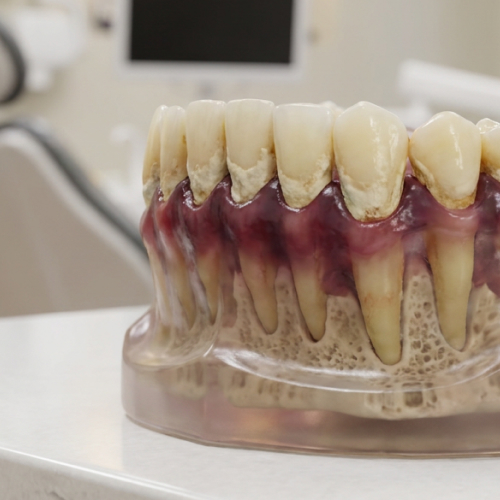
This is why implants are often described as preserving facial structure — not just replacing a tooth, but maintaining the bone that supports everything around it. Patients concerned about gum disease gingivitis should also be aware that bone loss and gum recession can compound these structural risks over time.
According to WebMD's dental bridge overview, bridges generally last between 5 and 15 years before they need replacement. Implants, by comparison, carry a 10-year clinical success rate of approximately 96–97%, with many lasting 15 years or more when properly maintained.
That gap compounds significantly over time. Consider what a bridge replacement cycle actually involves: when a bridge fails, it often fails because of decay developing beneath the crowns on the anchor teeth. Those teeth — already shaved down and structurally compromised — may now require root canals, tooth crown lengthening, or in some cases extraction. A three-unit bridge that fails can become a four- or five-unit restoration on the next round, involving more teeth, more procedures, and greater complexity.
As Healthline notes in its implant vs. bridge comparison, implants don't carry this cascading risk to adjacent teeth. The implant stands independently. If the crown above it wears down, it can typically be replaced without disturbing the implant post itself.
The long-term picture, then, isn't just about which option lasts longer in isolation — it's about what a replacement cycle looks like and whether it draws neighboring teeth into the equation.
The answer depends on your jawbone density, overall oral health, how many teeth are missing, and your timeline. Implants require adequate bone volume and a healing period of several months; bridges can often be completed in two visits over a couple of weeks. For patients who aren't candidates for surgery due to health conditions, bridges remain a clinically sound choice.
WebMD's overview of implants for older adults notes that no age is automatically a disqualifier for implants — what matters is overall health and bone quality, not the number on your birthday. A thorough consultation, including imaging, is the only way to know which path makes sense for your specific situation.
Both options restore your ability to chew, speak, and smile. The differences lie in how they interact with your surrounding teeth, your bone, and your long-term oral health trajectory. Staying current with your cleaning and exam appointments is essential for monitoring the health of any restoration over time.
If you're weighing dental implants versus a bridge in Cypress or the surrounding North Orange County area, Cypress Family Dental is here to help you think through the decision with a full clinical picture — not just a day-one comparison. If a tooth extraction is part of your situation, we can walk you through how that affects your replacement options as well. Contact us to schedule a consultation and find out which tooth replacement option fits your health, your timeline, and your goals.
Disclaimer: This article is intended for informational purposes only and does not constitute dental or medical advice. Individual treatment recommendations depend on a thorough clinical evaluation. Please consult a licensed dental professional for guidance specific to your situation.
Fresh news from the dental world
Mon - Fri 8AM - 5PM
Sat & Sun Closed
Check out what our patients are saying in Cypress...
..png)

“The Doctors Are Just Stellar”
The sweetest people work here, I'm convinced! The ladies at the front desk always go out of their way to be kind and helpful, the hygienists listen to your concerns and will address them to their best ability, and the doctors are just stellar. I drive over 40 min from where I live to go here because it's rare to find a dental office this fantastic.

“They Are So Efficient”
This is the best dentist I have been to and I have been to several. The team is professional and welcoming. They are never over-booked and I have never waited more than 5 minutes in the lobby. They are so efficient, no matter what I go in for, I am out in 45 minutes or less. I highly recommend Cypress Family Dental.

“The Staff Did A Great Job”
Came to Cypress Family Dental a year ago for my sleep apnea device. No more snoring! The staff did a great job fitting me for this oral appliance. Better yet, they were there to support me when I needed some adjustments later on. The front office staff couldn't have been more accommodating to schedule me in. Easy to recommend.

“They Truly Care”
The dentist and his staff are wonderful people! In the past, I have had horrible experiences at other dentist offices and then I found this place and I don't think I would ever go anywhere else again. I live about 45 min away from their office but the drive is well worth it. They truly care about their patients. I would recommend this office to anyone.

“A Very Pleasant Experience”
My visit to the Cypress Family Dental office today was a very pleasant experience. The front desk staff greeted me upon entering the office and efficiently confirmed my scheduled appointment. I'm seen within a short time by professional, knowledgeable and comfortable staff. They're open to various types of insurance and are flexible on terms. Overall, I would definitely recommend Cypress Family Dental.
..png)
“They're All Top Notch”
I'm so happy to have found this awesome dentist with an awesome staff. I am completely confident in the doctor's skill level, and completely comfortable relying on him to work on me without allowing me to experience unnecessary pain. In addition to having a good relationship with the dentist, being able to relate with the office staff is equally important to me. From the hygienist to the dental assistants to the front desk, they're all top notch.
“The Doctors Are Just Stellar”
The sweetest people work here, I'm convinced! The ladies at the front desk always go out of their way to be kind and helpful, the hygienists listen to your concerns and will address them to their best ability, and the doctors are just stellar. I drive over 40 min from where I live to go here because it's rare to find a dental office this fantastic.
“They Are So Efficient”
This is the best dentist I have been to and I have been to several. The team is professional and welcoming. They are never over-booked and I have never waited more than 5 minutes in the lobby. They are so efficient, no matter what I go in for, I am out in 45 minutes or less. I highly recommend Cypress Family Dental.
Check out our accreditations, sources, and relationships in the wide world of dentistry...


Check us out and follow our Cypress dental practice on social media...


