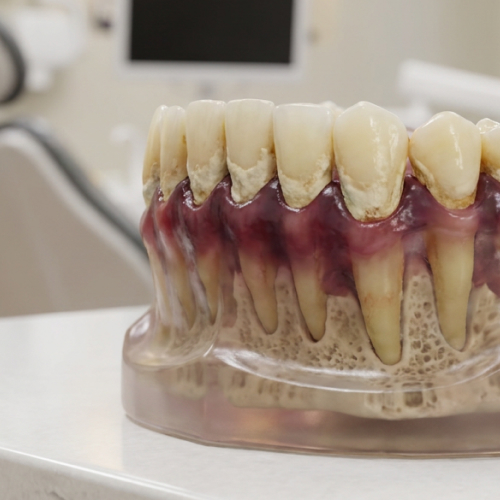
Can Gum Disease Be Reversed or Is Periodontitis Permanent?
Can gum disease be reversed, or is periodontitis permanent? Learn the stages of gum infection and how to protect your smile. Schedule an exam with us today!
Read MorePediatric and family dentists both provide excellent care for children, but they differ in training, office environment, and the complexity of cases they handle. Understanding those differences helps Cypress and La Palma families make the right call — especially for kids with anxiety, special needs, or early childhood cavities.
Most dental offices claim they're great with kids. But there's a meaningful gap between a waiting room with a toy bin and a practice trained in clinical behavior management protocols.
According to the American Academy of Pediatric Dentistry (AAPD), pediatric dentistry encompasses behavior guidance as a core specialty discipline — not an add-on. That training goes well beyond distraction techniques.
Pediatric dentists are specifically trained in structured approaches like tell-show-do, where a child is verbally prepared, shown each instrument, and then treated — reducing surprise and fear at every step. For children with autism spectrum disorder (ASD) or sensory processing sensitivities, specialists may also offer:
A general or family dentist can absolutely see children with mild anxiety — and many do so very effectively. But when a child's behavioral or medical needs require structured clinical protocols, a pediatric specialist's two-to-three years of post-doctoral training in child psychology and developmental care becomes directly relevant. The AAPD notes that pediatric dentists serve in a dual role — both primary care provider and specialist — which gives them broader latitude to adapt treatment to a child's individual development.
One of the most confusing situations parents face: a toddler has multiple cavities, but the family dentist won't fill them in-chair and refers to a hospital setting instead.
This isn't overcaution. It's anatomy.
According to WebMD, cavities are the most common chronic disease in children — affecting more than 50% of kids in their primary teeth. When early childhood caries (ECC) develops under age three, treatment often involves multiple quadrants, pulpotomies, and stainless steel crowns. That's a long procedure on a very small child who can't hold still. For families dealing with cavity fillings in young children, understanding the level of care required is essential.
Young children have narrow airways, faster oxygen desaturation rates, and limited capacity to cooperate for extended periods. These physiological realities change the sedation calculus significantly:
A pediatric dentist's specialty training specifically includes sedation protocols, pharmacological management, and hospital dentistry — skills that most general and family dentists don't develop to the same depth. Knowing when to step up the level of care, and how to do it safely, is a core part of what separates the two.
Pediatric dentists are sometimes described as "the pediatricians of dentistry." Mouth Healthy, the American Dental Association's patient resource, explains that beyond standard dental school training, pediatric dentists complete additional education in child psychology, childhood growth and development, and care for patients with special needs.
Their scope covers:
That said, the AAPD is explicit that there is no universally "wrong" choice between a family dentist and a pediatric dentist for most children. If your family dentist has experience with children, your child cooperates well, and no complex behavioral or medical needs exist, staying with that trusted provider is a perfectly reasonable decision.
The first dental visit — regardless of provider type — should happen after the first tooth appears and no later than a child's first birthday. Early and consistent care is the single most important variable.
Choosing between a pediatric dentist and a family dentist isn't about which is objectively superior. It's about matching your child's specific needs to the right level of care.
Children who tend to do well with a family dentist: cooperative kids with no significant behavioral concerns, straightforward preventive needs, and families who already have an established relationship with a trusted provider.
Children who may benefit from pediatric specialist care: those with ASD, sensory sensitivities, severe dental anxiety, complex early childhood caries, developmental disabilities, or medical conditions that complicate standard treatment. Our children's dentistry services are designed to support families navigating exactly these decisions. The NIDCR emphasizes that consistent dental attendance — wherever it happens — directly reduces untreated decay and long-term oral health disparities.
The most important step is simply getting your child seen regularly, by a provider you trust.
Cypress Family Dental welcomes children and families throughout Cypress, La Palma, and the surrounding North Orange County area. Our team is happy to discuss your child's specific needs and help you determine the right care path — whether that means treating your child in our office or coordinating with a specialist when it's in their best interest. If you ever face an unexpected issue, our dental emergency services are here to help. Reach out to schedule a visit today.
This article is for informational purposes only and does not constitute medical or dental advice. Please consult a licensed dental professional for guidance specific to your child's oral health needs.
Fresh news from the dental world

Mon - Fri 8AM - 5PM
Sat & Sun Closed
Check out what our patients are saying in Cypress...
..png)

“The Doctors Are Just Stellar”
The sweetest people work here, I'm convinced! The ladies at the front desk always go out of their way to be kind and helpful, the hygienists listen to your concerns and will address them to their best ability, and the doctors are just stellar. I drive over 40 min from where I live to go here because it's rare to find a dental office this fantastic.

“They Are So Efficient”
This is the best dentist I have been to and I have been to several. The team is professional and welcoming. They are never over-booked and I have never waited more than 5 minutes in the lobby. They are so efficient, no matter what I go in for, I am out in 45 minutes or less. I highly recommend Cypress Family Dental.

“A Very Pleasant Experience”
My visit to the Cypress Family Dental office today was a very pleasant experience. The front desk staff greeted me upon entering the office and efficiently confirmed my scheduled appointment. I'm seen within a short time by professional, knowledgeable and comfortable staff. They're open to various types of insurance and are flexible on terms. Overall, I would definitely recommend Cypress Family Dental.
..png)
“They're All Top Notch”
I'm so happy to have found this awesome dentist with an awesome staff. I am completely confident in the doctor's skill level, and completely comfortable relying on him to work on me without allowing me to experience unnecessary pain. In addition to having a good relationship with the dentist, being able to relate with the office staff is equally important to me. From the hygienist to the dental assistants to the front desk, they're all top notch.

“They Truly Care”
The dentist and his staff are wonderful people! In the past, I have had horrible experiences at other dentist offices and then I found this place and I don't think I would ever go anywhere else again. I live about 45 min away from their office but the drive is well worth it. They truly care about their patients. I would recommend this office to anyone.

“The Staff Did A Great Job”
Came to Cypress Family Dental a year ago for my sleep apnea device. No more snoring! The staff did a great job fitting me for this oral appliance. Better yet, they were there to support me when I needed some adjustments later on. The front office staff couldn't have been more accommodating to schedule me in. Easy to recommend.
“The Doctors Are Just Stellar”
The sweetest people work here, I'm convinced! The ladies at the front desk always go out of their way to be kind and helpful, the hygienists listen to your concerns and will address them to their best ability, and the doctors are just stellar. I drive over 40 min from where I live to go here because it's rare to find a dental office this fantastic.
“They Are So Efficient”
This is the best dentist I have been to and I have been to several. The team is professional and welcoming. They are never over-booked and I have never waited more than 5 minutes in the lobby. They are so efficient, no matter what I go in for, I am out in 45 minutes or less. I highly recommend Cypress Family Dental.
Check out our accreditations, sources, and relationships in the wide world of dentistry...


Check us out and follow our Cypress dental practice on social media...


