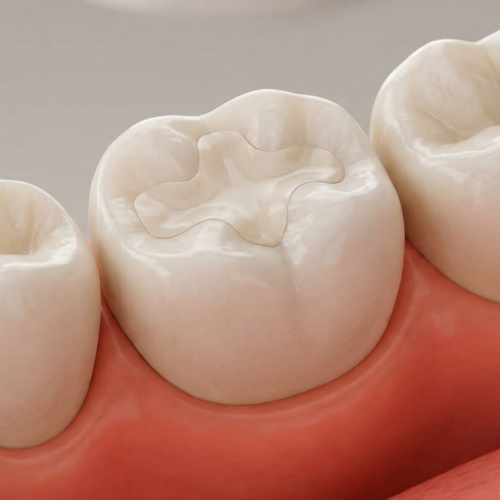
When Does a Cavity Actually Need a Dental Filling or Onlay?
Wondering if you need a dental filling or onlay? Learn when dentists treat decay and how to protect your smile. Book your visit to Cypress Family Dental today!
Read More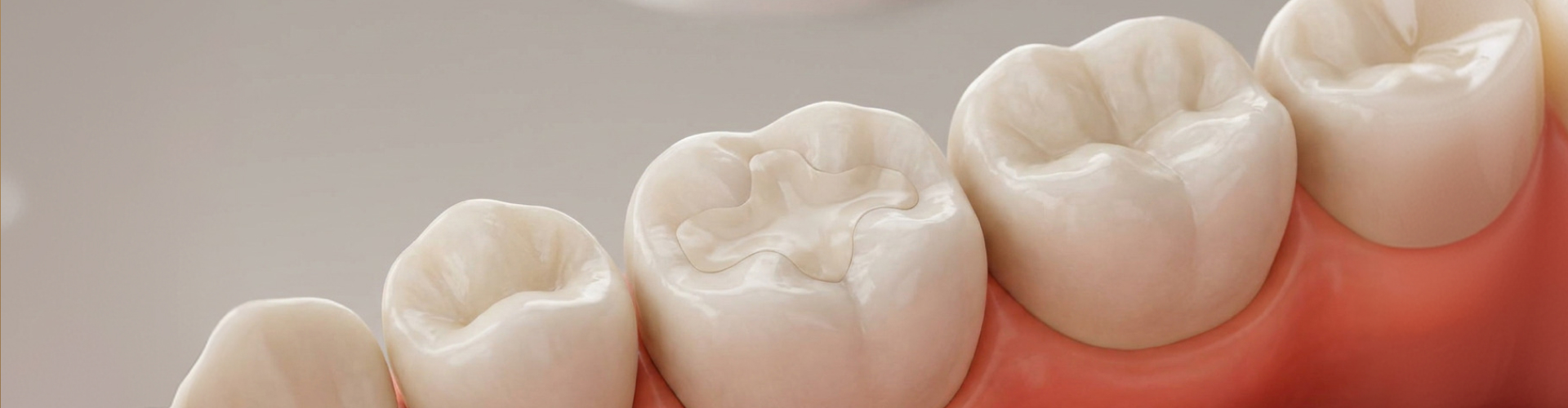
Not every cavity automatically needs a drill — and not every cavity that needs treatment is best served by a standard filling. Understanding what happens at the boundary between enamel and dentin, and why large fillings sometimes fail faster than inlays, helps you make smarter decisions with your dentist.
For Cypress patients, most leave a dental appointment either confused about why a cavity wasn't treated or anxious that something was ignored. The answer usually comes down to a specific anatomical boundary: the Dentino-Enamel Junction, or DEJ.
Early decay confined to the outer enamel layer — what clinicians classify as E1 or E2 stage lesions — can actually reverse itself. According to the NIH's National Institute of Dental and Craniofacial Research, enamel repairs itself using minerals from saliva and fluoride from toothpaste, meaning early-stage decay is a genuine biological tug-of-war, not a one-way street toward a cavity.
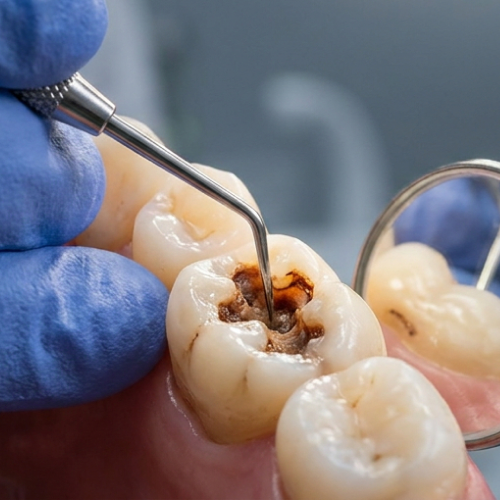
Once decay crosses the DEJ into dentin, that reversal becomes impossible. Dentin is softer and more porous than enamel, and bacterial acid progresses through it much faster. At that point, a restoration is necessary.
Here are specific questions worth asking at your next cleaning and exam when reviewing bitewing X-rays:
ADA spokesperson Dr. Sara Stuefen has noted that if decay hasn't reached the dentin layer, better brushing, flossing, and dietary changes — combined with professional fluoride application — can sometimes stop progression entirely. Open communication with your dentist is the key to knowing which side of that line your cavity sits on.
Inlays and onlays are often described simply as "stronger than fillings." That framing undersells the engineering difference.
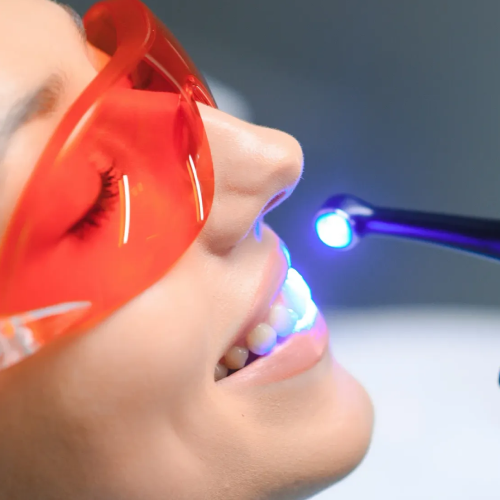
When a dentist places a composite resin filling directly in the mouth, the material shrinks 2–3% during the light-curing process — a phenomenon called polymerization shrinkage. In a small filling, that shrinkage is manageable. In a large restoration covering two or more tooth surfaces, that contraction pulls the composite away from the cavity walls, creating microscopic gaps at the margins. Those gaps become entry points for bacteria, leading to recurrent decay under the filling. WebMD's overview of dental fillings notes that decay around the edges of existing fillings is a well-established clinical problem — especially as restorations age.
An inlay or onlay sidesteps this entirely. The restoration is fabricated outside the mouth — in a dental lab or milled from a ceramic block — and then bonded into place as a finished, dimensionally stable unit. There's no in-mouth curing shrinkage, and the fit at the margins is far more precise.
A Healthline comparison of crowns and onlays highlights another advantage: onlays preserve significantly more healthy tooth structure than a tooth crown while still covering damaged cusps. That conservation matters long-term, because every time a tooth is prepared more aggressively, the remaining structure becomes harder to restore in the future.
The clinical decision tree looks roughly like this:
One reason patients default to fillings over inlays isn't clinical — it's a misunderstanding of how dental insurance responds to the claim.
Many patients hear "insurance doesn't cover inlays" and assume the claim is flatly rejected. In most cases, that's not accurate. What typically happens is that the insurer applies what's called a Least Expensive Alternative Treatment clause, or LEAT. Rather than denying the inlay outright, the plan reimburses at the rate it would have paid for a basic cavity filling on the same tooth. The patient is responsible for the difference between that reimbursement level and the inlay.
The practical implication: an inlay isn't uninsured — it's partially covered at a lower tier. Understanding that distinction means you can make a realistic decision rather than automatically accepting an alternative restoration.
The ADA's 2023 clinical practice guideline specifically affirms that conservative tissue removal — preserving as much healthy tooth structure as possible — leads to better long-term outcomes. Choosing an inlay when the tooth anatomy warrants it aligns directly with that evidence-based guidance. Settling for a large direct composite simply because the insurance math looks simpler may lead to future repairs.
When reviewing an Explanation of Benefits after an inlay claim, look for the line showing "plan allowance" versus "billed amount." The gap between those two figures represents the LEAT downgrade — and knowing how that gap works in advance lets you plan accurately before committing to treatment.
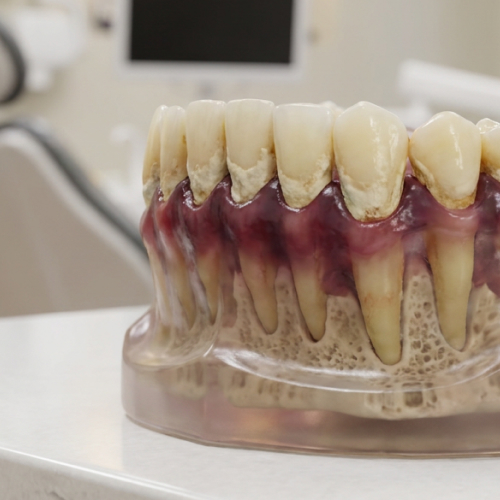
Tooth decay is a process, not an event — and the right restoration depends on how far that process has progressed. Mouthhealthy.org, the ADA's patient resource, recommends regular professional cleanings and exams as the foundation for catching decay at the most treatable stage. Staying on top of your gum disease gingivitis risk is equally important, as untreated gum problems can accelerate tooth decay and complicate restorations.
Before agreeing to any restoration, ask your dentist:
The answers shape a treatment plan that serves the tooth — not just the appointment.
Cypress Family Dental serves patients throughout Cypress, California and the surrounding North Orange County area. If you have questions about a cavity diagnosis, an aging filling, or whether an inlay or onlay makes more sense for your situation, schedule an exam and get a clear answer based on your actual X-rays. We also offer dental implants for patients who need a longer-term tooth replacement solution.
This article is for informational purposes only and does not constitute professional dental advice, diagnosis, or treatment. Always consult a licensed dentist regarding your specific oral health needs.
Fresh news from the dental world
Mon - Fri 8AM - 5PM
Sat & Sun Closed
Check out what our patients are saying in Cypress...
..png)

“The Doctors Are Just Stellar”
The sweetest people work here, I'm convinced! The ladies at the front desk always go out of their way to be kind and helpful, the hygienists listen to your concerns and will address them to their best ability, and the doctors are just stellar. I drive over 40 min from where I live to go here because it's rare to find a dental office this fantastic.

“They Are So Efficient”
This is the best dentist I have been to and I have been to several. The team is professional and welcoming. They are never over-booked and I have never waited more than 5 minutes in the lobby. They are so efficient, no matter what I go in for, I am out in 45 minutes or less. I highly recommend Cypress Family Dental.

“A Very Pleasant Experience”
My visit to the Cypress Family Dental office today was a very pleasant experience. The front desk staff greeted me upon entering the office and efficiently confirmed my scheduled appointment. I'm seen within a short time by professional, knowledgeable and comfortable staff. They're open to various types of insurance and are flexible on terms. Overall, I would definitely recommend Cypress Family Dental.

“They Truly Care”
The dentist and his staff are wonderful people! In the past, I have had horrible experiences at other dentist offices and then I found this place and I don't think I would ever go anywhere else again. I live about 45 min away from their office but the drive is well worth it. They truly care about their patients. I would recommend this office to anyone.

“The Staff Did A Great Job”
Came to Cypress Family Dental a year ago for my sleep apnea device. No more snoring! The staff did a great job fitting me for this oral appliance. Better yet, they were there to support me when I needed some adjustments later on. The front office staff couldn't have been more accommodating to schedule me in. Easy to recommend.
..png)
“They're All Top Notch”
I'm so happy to have found this awesome dentist with an awesome staff. I am completely confident in the doctor's skill level, and completely comfortable relying on him to work on me without allowing me to experience unnecessary pain. In addition to having a good relationship with the dentist, being able to relate with the office staff is equally important to me. From the hygienist to the dental assistants to the front desk, they're all top notch.
“The Doctors Are Just Stellar”
The sweetest people work here, I'm convinced! The ladies at the front desk always go out of their way to be kind and helpful, the hygienists listen to your concerns and will address them to their best ability, and the doctors are just stellar. I drive over 40 min from where I live to go here because it's rare to find a dental office this fantastic.
“They Are So Efficient”
This is the best dentist I have been to and I have been to several. The team is professional and welcoming. They are never over-booked and I have never waited more than 5 minutes in the lobby. They are so efficient, no matter what I go in for, I am out in 45 minutes or less. I highly recommend Cypress Family Dental.
Check out our accreditations, sources, and relationships in the wide world of dentistry...


Check us out and follow our Cypress dental practice on social media...


