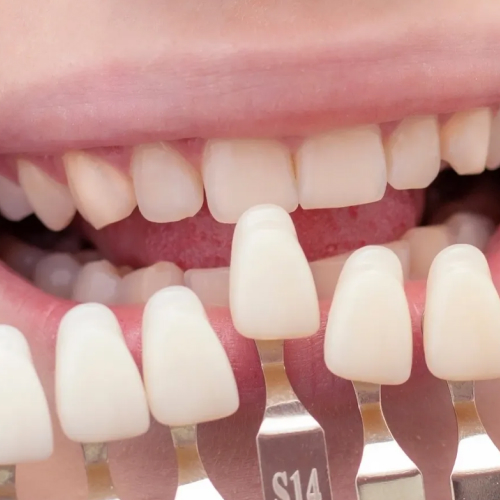
Are No-Prep Veneers Really Better and What Are the Hidden Risks?
Wondering if no-prep veneers are better for your smile? Learn the hidden risks, downsides, and oral health facts. Read our expert guide before deciding!
Read More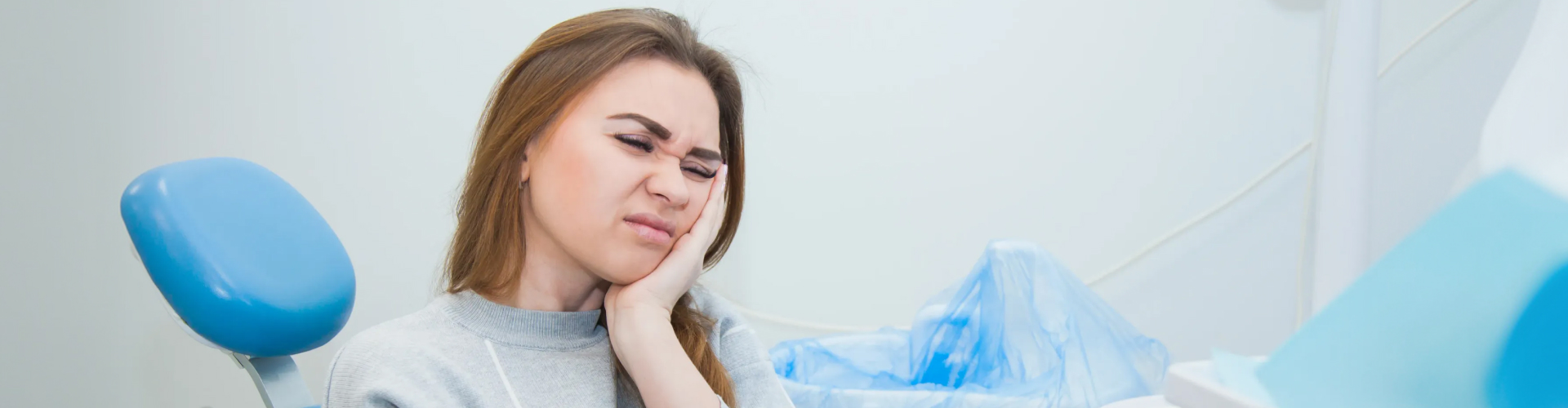
Most dental emergencies belong in a dentist's chair, not an emergency room — ERs can prescribe antibiotics and pain relief but cannot fix the tooth. Knowing which symptoms require a trauma center versus a dental office can save you time and potentially your life.
Most dental pain does not require a hospital. But two specific infection patterns are genuine medical emergencies, and the vague advice to "go to the ER if you have severe swelling" leaves patients unable to tell the difference. If you're unsure whether your situation qualifies as a dental emergency, the symptoms below will help you decide.
Lower jaw infections — check the floor of your mouth. Press your fingers gently under your chin and along the bottom of your jaw. If that tissue feels hard or "wooden," or if your tongue is being pushed upward and you're having difficulty swallowing, these are warning signs of Ludwig's angina — a rapidly spreading infection that can close the airway within hours. This is a 911 situation, not a drive-to-the-dentist situation.
Upper jaw infections — check your eyes. If a dental infection is on the upper jaw or near a sinus and you notice one eyelid beginning to swell shut, double vision, pain when moving your eye, or any change in your pupils, these signs may indicate spread toward the brain through the cavernous sinus. Go to the nearest emergency room immediately.
According to the AAPD, true dental emergencies include uncontrolled bleeding, cellulitis or diffuse soft-tissue bacterial infection that may compromise the airway, and trauma involving facial bones. Everything else — even significant pain — is typically urgent care, not emergency care.
For standard dental pain without these red flags, a dentist's office handles the situation faster and more completely than any ER.
Emergency rooms are not equipped to perform dental procedures. ER physicians can prescribe antibiotics and oral pain medication, take imaging of facial structures, and manage a true airway emergency. They cannot remove an infected tooth, place a filling, or address the underlying cause of your pain.
This matters practically. If you visit a standard community hospital ER for a toothache, you will most likely receive a prescription and a referral — the tooth problem remains entirely unresolved. Research published by NCBI found that in 2018, nearly 95 percent of dental-related ER visits ended in treat-and-release, with more than two million such visits that year nationally.
There is one important exception: if you're near a Level 1 or Level 2 trauma center that hosts an Oral and Maxillofacial Surgery (OMFS) residency program, that facility may have OMFS residents available around the clock. Those providers can perform intraoral procedures, administer nerve blocks using long-acting anesthetics, and perform surgical incision and drainage of abscesses — capabilities a standard community ER simply does not have. If your situation requires more than a prescription but you cannot reach a dentist, calling ahead to confirm whether a hospital has on-call OMFS coverage is worth the extra step.
For manageable pain without the red-flag symptoms above, WebMD's guidance on dental emergencies recommends rinsing with warm water, applying a cold compress to the outside of the cheek, and contacting a dentist as soon as possible rather than heading to the ER.
Urgent care clinics occupy a middle ground — they can prescribe antibiotics and pain medication, similar to an ER, but without the overhead of a full hospital facility. They are a reasonable bridge option late at night when no dental office is open and your symptoms don't meet the airway-threat threshold described above.
However, urgent care has the same core limitation as the ER: neither can treat the tooth itself. The infection or damage that caused your pain will still be there the next morning. Harvard Health notes that dental problems are often more advanced than patients realize, and delaying definitive treatment allows conditions to worsen — sometimes significantly. Untreated infections, for example, can progress into gum disease gingivitis that require far more extensive care down the line.
An emergency dentist appointment remains the most direct path to actual resolution. Most dental practices, including those serving the Cypress and La Palma area, reserve daily schedule time specifically for urgent patients. The ADA's guidance on emergency treatment notes that practices should be prepared to see emergency patients and provide after-hours contact information for patients in pain.
The practical decision tree looks like this:
When you do see a dentist, treatment may range from cavity fillings for minor decay to an endodontic root canal for deeper infections, or even a tooth extraction if the tooth cannot be saved.
For temporary relief while waiting, Healthline's overview of emergency toothache relief notes that ibuprofen and acetaminophen taken together can be particularly effective because they act through different pain pathways — always follow labeled dosing instructions.
If you're experiencing a dental emergency in the Cypress or North Orange County area, Cypress Family Dental is here to help. Our team reserves time for urgent patients and can address the actual source of your pain — not just manage it temporarily. Whether you need a cleaning and exam to catch problems early or same-day emergency treatment, call us to describe your symptoms and we'll get you seen as quickly as possible.
This article is for informational purposes only and does not constitute medical or dental advice. If you are experiencing symptoms that suggest a life-threatening emergency — including difficulty breathing, swallowing, or the eye symptoms described above — call 911 or go to your nearest emergency room immediately.
Fresh news from the dental world

Mon - Fri 8AM - 5PM
Sat & Sun Closed
Check out what our patients are saying in Cypress...
..png)

“They're All Top Notch”
I'm so happy to have found this awesome dentist with an awesome staff. I am completely confident in the doctor's skill level, and completely comfortable relying on him to work on me without allowing me to experience unnecessary pain. In addition to having a good relationship with the dentist, being able to relate with the office staff is equally important to me. From the hygienist to the dental assistants to the front desk, they're all top notch.

“They Are So Efficient”
This is the best dentist I have been to and I have been to several. The team is professional and welcoming. They are never over-booked and I have never waited more than 5 minutes in the lobby. They are so efficient, no matter what I go in for, I am out in 45 minutes or less. I highly recommend Cypress Family Dental.

“A Very Pleasant Experience”
My visit to the Cypress Family Dental office today was a very pleasant experience. The front desk staff greeted me upon entering the office and efficiently confirmed my scheduled appointment. I'm seen within a short time by professional, knowledgeable and comfortable staff. They're open to various types of insurance and are flexible on terms. Overall, I would definitely recommend Cypress Family Dental.

“The Staff Did A Great Job”
Came to Cypress Family Dental a year ago for my sleep apnea device. No more snoring! The staff did a great job fitting me for this oral appliance. Better yet, they were there to support me when I needed some adjustments later on. The front office staff couldn't have been more accommodating to schedule me in. Easy to recommend.

“They Truly Care”
The dentist and his staff are wonderful people! In the past, I have had horrible experiences at other dentist offices and then I found this place and I don't think I would ever go anywhere else again. I live about 45 min away from their office but the drive is well worth it. They truly care about their patients. I would recommend this office to anyone.
..png)
“The Doctors Are Just Stellar”
The sweetest people work here, I'm convinced! The ladies at the front desk always go out of their way to be kind and helpful, the hygienists listen to your concerns and will address them to their best ability, and the doctors are just stellar. I drive over 40 min from where I live to go here because it's rare to find a dental office this fantastic.
“They're All Top Notch”
I'm so happy to have found this awesome dentist with an awesome staff. I am completely confident in the doctor's skill level, and completely comfortable relying on him to work on me without allowing me to experience unnecessary pain. In addition to having a good relationship with the dentist, being able to relate with the office staff is equally important to me. From the hygienist to the dental assistants to the front desk, they're all top notch.
“They Are So Efficient”
This is the best dentist I have been to and I have been to several. The team is professional and welcoming. They are never over-booked and I have never waited more than 5 minutes in the lobby. They are so efficient, no matter what I go in for, I am out in 45 minutes or less. I highly recommend Cypress Family Dental.
Check out our accreditations, sources, and relationships in the wide world of dentistry...


Check us out and follow our Cypress dental practice on social media...


