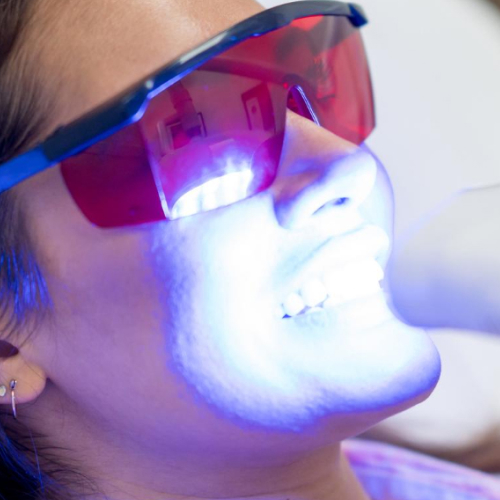
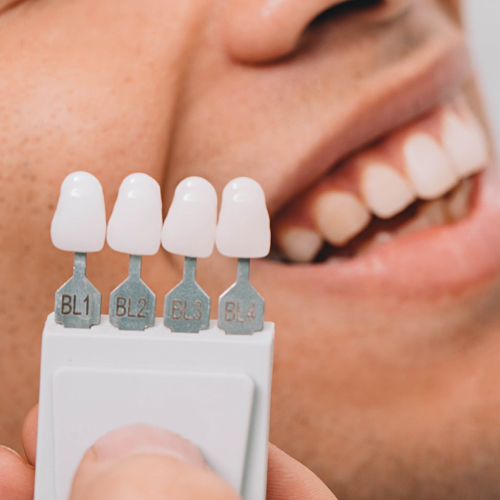
Teeth Whitening Before Veneers or Bonding: What You Need to Know First
Planning veneers or bonding? Discover why teeth whitening first is key for a seamless smile. Learn how long to wait and book with Cypress Family Dental today!
Read More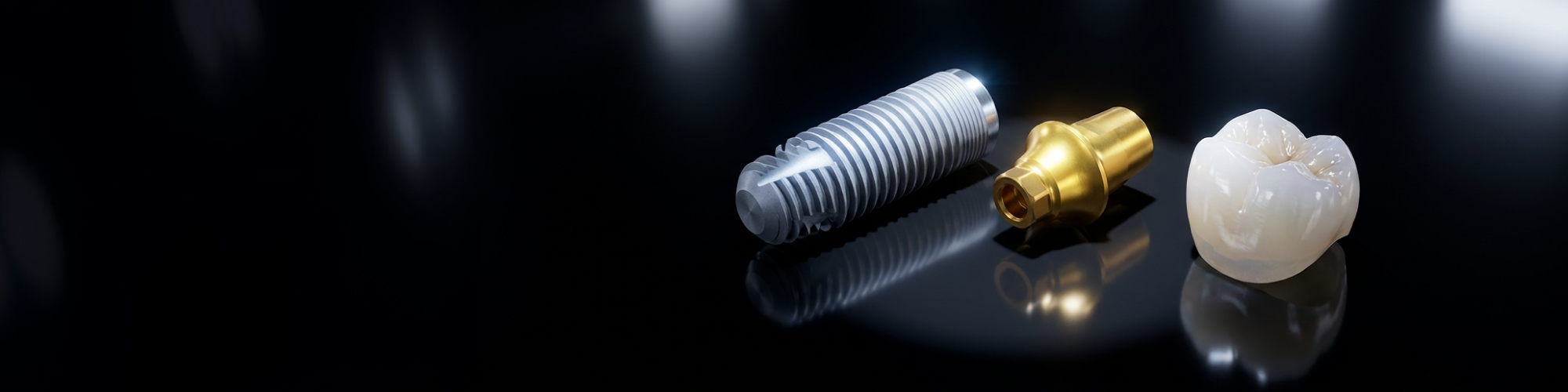
Dental implants are one of the most effective tooth replacement options available, but the experience involves more than managing pain and waiting for healing. Understanding the sensory realities, neurological changes, and specialized hygiene demands beforehand makes the entire process far less surprising.
Most patients ask me about pain. Almost nobody asks about sound. For Cypress-area patients, understanding the sensory experience is the first step.
Here's what catches people off guard: because your jawbone connects directly to your skull, the drilling during implant placement travels through bone conduction straight to your inner ear. The osteotomy — the process of preparing the implant site — produces a deep, resonant vibration that you feel more than hear. Then comes the torque wrench, which makes a distinct mechanical ratcheting sound as the implant is seated. Both are amplified internally in a way that nothing in your everyday life prepares you for.
The anesthesia handles pain beautifully. It does nothing for sound.
I always tell patients: bring noise-canceling headphones and a playlist you love. Focused breathing — slow inhales, controlled exhales — also helps regulate the startle response when vibrations peak. Knowing these sensations are normal and expected completely changes how patients experience them.
The procedure itself is typically outpatient, performed under local anesthesia or sedation, as Mayo Clinic explains. Most people return to daily activities the following day. The physical recovery is genuinely manageable. The sensory surprise, however, is the part worth preparing for in advance.
Natural teeth aren't fused to bone — they're suspended by the periodontal ligament (PDL), a thin layer of tissue containing pressure-sensing nerves. Those nerves tell your brain how hard you're biting and what texture you're eating. They function as both a shock absorber and a sensory interface.
Implants fuse directly to bone through osseointegration. There is no PDL. That sensory feedback disappears entirely.
What this means practically: in the weeks after your tooth crown is placed, you may misjudge bite force, accidentally bite your tongue or cheek, or notice a "clunking" sensation on hard foods. Some patients describe their implant as feeling "dead" compared to natural teeth. That isn't a complication — it's neurology. Your brain is recalibrating how it interprets pressure signals from that area of your mouth.
According to the American Academy of Periodontology, implants integrate with the jawbone to create a stable anchor — but that stability comes at the cost of the proprioceptive feedback natural teeth provide. Most patients adapt within a few months. Soft foods during early healing, followed by gradual reintroduction of harder textures, helps the brain adjust.
This is also why bite alignment matters so much at your crown placement appointment. Without PDL feedback, you can't always feel when a crown is sitting too high. Tell your dentist if anything feels "off" — even slightly — because uneven forces on an implant without a shock absorber can cause long-term stress on the surrounding bone.
"Brush and floss like normal" is technically incomplete advice for implant patients.
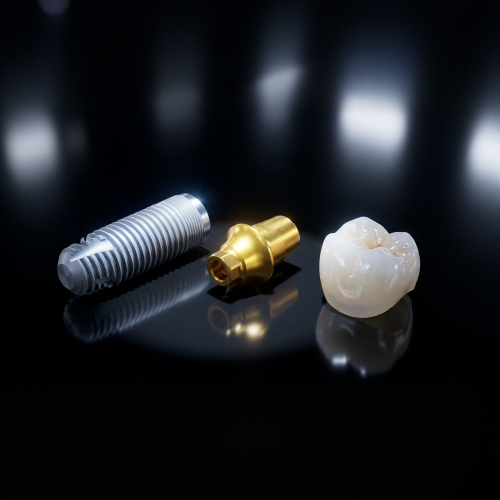
The crown of an implant is often wider than the titanium post beneath it, creating what's called an emergence profile — the zone where the crown widens out from the gumline. This bell-shaped contour creates food traps that standard floss slides past without actually cleaning. Bacteria accumulating in that cuff cause gum disease around implants that is the leading cause of late implant failure, according to WebMD.
What actually works:
The goal is reaching slightly under the gumline at the implant site — not just between the teeth. I recommend patients practice this with a mirror before their first post-placement appointment so we can confirm technique together.
Cleveland Clinic notes that with proper care, implants can last a lifetime. That longevity depends almost entirely on daily hygiene that goes beyond what most patients were taught for natural teeth.
Implants have an impressive track record — Healthline reports survival rates around 96.8% at 10 years. But that number reflects patients who were well-selected and well-maintained. Understanding what affects your personal outcome matters.
The factors that genuinely influence success:
Bone volume: Sufficient healthy jawbone is required to hold the implant. If you've had a missing tooth for years, bone resorption may require a graft first. This adds healing time but significantly improves outcomes.
Systemic health: Uncontrolled diabetes, autoimmune conditions, and certain medications that affect bone metabolism all slow osseointegration. Smoking increases implant failure rates to roughly 11% compared to 5% in non-smokers.
Timing of the evaluation: The process from consultation to final crown typically takes 6 to 12 months. Rushing any phase — particularly osseointegration — compromises the foundation everything else depends on.
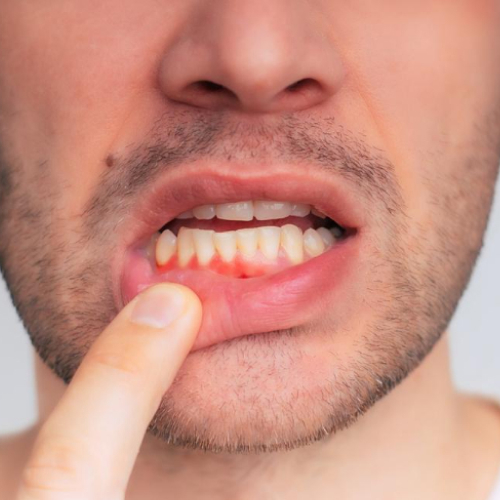
Ongoing maintenance visits: Implants need professional monitoring, not just home care. Peri-implant bone loss is rarely symptomatic until it's significant, making regular cleaning and exam appointments with radiographic checks essential.
The best conversation you can have before committing to implants is an honest one about your health history, habits, and realistic timeline — not just a discussion of cost and aesthetics.
If you're considering implants and want a clear, honest picture of what the process involves for your specific situation, I'd welcome that conversation. At Cypress Family Dental, we serve patients throughout Cypress and the broader North Orange County area, and we take the time to walk through every stage — from tooth extraction to final restoration — before you commit to anything. Reach out to schedule a consultation.
Medical disclaimer: This article is intended for general informational purposes only and does not constitute professional dental or medical advice. Individual treatment needs vary. Please consult a qualified dental professional for an evaluation specific to your oral health.
Fresh news from the dental world


Mon - Fri 8AM - 5PM
Sat & Sun Closed
Check out what our patients are saying in Cypress...
..png)

“They're All Top Notch”
I'm so happy to have found this awesome dentist with an awesome staff. I am completely confident in the doctor's skill level, and completely comfortable relying on him to work on me without allowing me to experience unnecessary pain. In addition to having a good relationship with the dentist, being able to relate with the office staff is equally important to me. From the hygienist to the dental assistants to the front desk, they're all top notch.

“A Very Pleasant Experience”
My visit to the Cypress Family Dental office today was a very pleasant experience. The front desk staff greeted me upon entering the office and efficiently confirmed my scheduled appointment. I'm seen within a short time by professional, knowledgeable and comfortable staff. They're open to various types of insurance and are flexible on terms. Overall, I would definitely recommend Cypress Family Dental.

“They Are So Efficient”
This is the best dentist I have been to and I have been to several. The team is professional and welcoming. They are never over-booked and I have never waited more than 5 minutes in the lobby. They are so efficient, no matter what I go in for, I am out in 45 minutes or less. I highly recommend Cypress Family Dental.

“The Staff Did A Great Job”
Came to Cypress Family Dental a year ago for my sleep apnea device. No more snoring! The staff did a great job fitting me for this oral appliance. Better yet, they were there to support me when I needed some adjustments later on. The front office staff couldn't have been more accommodating to schedule me in. Easy to recommend.
..png)
“The Doctors Are Just Stellar”
The sweetest people work here, I'm convinced! The ladies at the front desk always go out of their way to be kind and helpful, the hygienists listen to your concerns and will address them to their best ability, and the doctors are just stellar. I drive over 40 min from where I live to go here because it's rare to find a dental office this fantastic.

“They Truly Care”
The dentist and his staff are wonderful people! In the past, I have had horrible experiences at other dentist offices and then I found this place and I don't think I would ever go anywhere else again. I live about 45 min away from their office but the drive is well worth it. They truly care about their patients. I would recommend this office to anyone.
“They're All Top Notch”
I'm so happy to have found this awesome dentist with an awesome staff. I am completely confident in the doctor's skill level, and completely comfortable relying on him to work on me without allowing me to experience unnecessary pain. In addition to having a good relationship with the dentist, being able to relate with the office staff is equally important to me. From the hygienist to the dental assistants to the front desk, they're all top notch.
“A Very Pleasant Experience”
My visit to the Cypress Family Dental office today was a very pleasant experience. The front desk staff greeted me upon entering the office and efficiently confirmed my scheduled appointment. I'm seen within a short time by professional, knowledgeable and comfortable staff. They're open to various types of insurance and are flexible on terms. Overall, I would definitely recommend Cypress Family Dental.
Check out our accreditations, sources, and relationships in the wide world of dentistry...


Check us out and follow our Cypress dental practice on social media...


