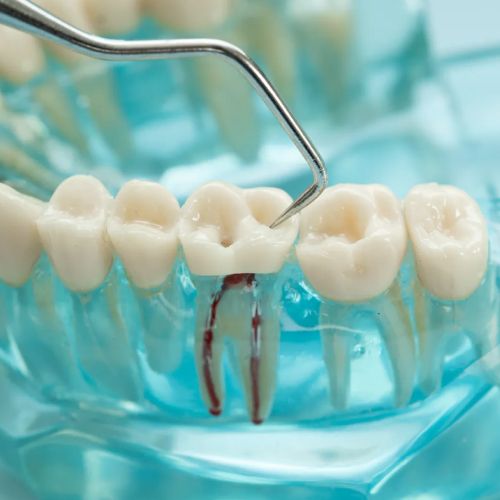
Root Canals and Pain: What Your Dentist Wants You to Know Before Your Appointment
Are you nervous about root canal pain? Learn why this dental procedure isn't as scary as you think and how we prioritize your comfort. Book your exam today!
Read More
Scaling and root planing, also referred to as conventional periodontal therapy, non-surgical periodontal therapy, or deep cleaning, is a procedure that involves removing dental plaque and calculus (scaling or debridement), followed by the smoothing or planing of the exposed surfaces of the roots. This involves removing cementum, or dentine, that has been contaminated with calculus, toxins, or microorganisms, the triggers of inflammation. It is a component of periodontal non-surgical therapy. This promotes the development of a periodontium that is free of periodontal disease. Some of the instruments used are periodontal scalers and curettes.
What Are Plaque And Calculus? Plaque is a soft, yellowish-grayish substance that sticks to the surfaces of both natural and artificially restored teeth. It is a well-organized biofilm made mostly of bacteria embedded in a matrix of extracellular polysaccharides and glycoproteins. By applying sprays or washes, this matrix prevents the plaque from being removed. Plaque like Materia Alba is easily removed with rinses and sprays because it lacks the structure of other plaque. However, if the biofilm isn't removed by brushing or flossing after 24 hours in the oral environment, it starts to absorb the mineral content of the saliva. Oral biofilm is changed from its soft, easily removed form into a hard substance known as calculus by this absorption of calcium and phosphorus from the saliva. Calculus, also referred to as tartar, commonly forms over time and serves as a foundation for new plaque biofilm layers to adhere to. Brushing and flossing cannot get rid of calculus.
Why Do You Need Scaling And Root Planing? Plaque is a sticky bacterial coating that contributes to gum disease. Plaque is constantly growing on your teeth, but if they aren't cleaned thoroughly, the bacteria in them can cause gum inflammation. Your gums will peel away from your teeth in this situation, forming pockets. When plaque is caught in these pockets, it is impossible to wipe away. Gum disease can cause tooth and bone loss if left untreated. Professional cleaning is all that is necessary if gum disease is detected early and hasn't already harmed the structures beneath the gum line. However, scaling and root planing could be required if the spaces between your gums and teeth are too wide.
What Can I Expect After Scaling And Root Planing? After scaling and root planing, your gum tissue progresses toward normalizing function. The bleeding is reduced and your gingiva color turns pink. You feel comfortable and fresh. However, you could feel a little soreness around the teeth for a few days after scaling and root planing are finished. For up to six weeks, you might have a little heat or cold sensitivity (as well as occasionally a sweet tooth). Healing usually proceeds in this way.
How Long Does It Take For Scaling And Root Planing? Typically, scaling and root planing requires two appointments. In the first appointment, the dentist will clean one half of the mouth; in the second, the other half. An appointment could last for many hours, depending on how much plaque needs to be removed. Each patient should receive a time estimate from the dentist. To ensure that no underlying medical issues may affect the scaling and root planning process, the dentist will request a medical history from each patient. Before the consultation, patients who take specific drugs could be requested to stop taking them for a few days.
Is Scaling And Root Planing Painful? The simple answer is no, the procedure is not painful. Even though you will feel discomfort afterward, the process itself can be finished with the application of a local anesthetic to the soft tissue to lessen any uncomfortable symptoms.
Benefits Of Scaling And Root Planing -Brighten your teeth; Calculus is a hard substance that can accumulate over time on your teeth and turn yellow. Before your teeth are properly polished and certain surface stains are lifted, your dentist scaling and cleaning removes all hardened calculus, which makes your teeth brighter. -Prevent gum infection; Your risk of gum disease is decreased by routinely eliminating the bacteria that cause calculus. -Prevents bad breath; You'll certainly notice that after having your teeth properly cleaned, your mouth feels exceptionally clean, which has a significant impact on your breath. -Good for your general health; Gum disease has been related to several significant medical disorders, including diabetes, heart disease, dementia, and even some types of cancer. A simple approach to lower your risk is to have a professional scale and clean your teeth. -The cost of prevention is lower; Attending routine hygiene checkups helps to lower your dental expenditures since, over time, treating oral disease is much more expensive than preventing it.
What Happens To Your Teeth After Scaling And Root Planing? When you are done with your scaling, moderate discomfort is common. Your teeth may become sensitive to hot and cold. Occasionally, bleeding from the gums is also experienced in some patients. To avoid this, you should follow these guidelines. -Gently brush your teeth; Following a root scaling procedure, use a soft-bristled toothbrush and gentle, circular motions to brush your teeth to reduce pain. -Use dental floss; Using dental floss, the teeth should be cleaned at least twice daily. The teeth should be flossed not only in the morning and evening but also following any meal or snack where food particles have become noticeably stuck between the teeth. -Gargle with salt water; Make a gentle salt water rinse to relax the gums, especially after a heavy meal. Without further scrubbing, particles can be released using salt water. Additionally, it can reduce slight irritation and redness. -Schedule your dental appointment; After your root scaling or planing procedure, be careful to schedule routine dental appointments. Before they notice any significant changes in their general gum health, many patients need to undergo numerous scaling treatments. Regular examinations and cleanings will prevent tartar and plaque accumulation and guarantee long-term results after treatment.
Fresh news from the dental world



Mon - Fri 8AM - 5PM
Sat & Sun Closed
Check out what our patients are saying in Cypress...
..png)

“The Doctors Are Just Stellar”
The sweetest people work here, I'm convinced! The ladies at the front desk always go out of their way to be kind and helpful, the hygienists listen to your concerns and will address them to their best ability, and the doctors are just stellar. I drive over 40 min from where I live to go here because it's rare to find a dental office this fantastic.

“They Are So Efficient”
This is the best dentist I have been to and I have been to several. The team is professional and welcoming. They are never over-booked and I have never waited more than 5 minutes in the lobby. They are so efficient, no matter what I go in for, I am out in 45 minutes or less. I highly recommend Cypress Family Dental.

“They Truly Care”
The dentist and his staff are wonderful people! In the past, I have had horrible experiences at other dentist offices and then I found this place and I don't think I would ever go anywhere else again. I live about 45 min away from their office but the drive is well worth it. They truly care about their patients. I would recommend this office to anyone.

“The Staff Did A Great Job”
Came to Cypress Family Dental a year ago for my sleep apnea device. No more snoring! The staff did a great job fitting me for this oral appliance. Better yet, they were there to support me when I needed some adjustments later on. The front office staff couldn't have been more accommodating to schedule me in. Easy to recommend.

“A Very Pleasant Experience”
My visit to the Cypress Family Dental office today was a very pleasant experience. The front desk staff greeted me upon entering the office and efficiently confirmed my scheduled appointment. I'm seen within a short time by professional, knowledgeable and comfortable staff. They're open to various types of insurance and are flexible on terms. Overall, I would definitely recommend Cypress Family Dental.
..png)
“They're All Top Notch”
I'm so happy to have found this awesome dentist with an awesome staff. I am completely confident in the doctor's skill level, and completely comfortable relying on him to work on me without allowing me to experience unnecessary pain. In addition to having a good relationship with the dentist, being able to relate with the office staff is equally important to me. From the hygienist to the dental assistants to the front desk, they're all top notch.
“The Doctors Are Just Stellar”
The sweetest people work here, I'm convinced! The ladies at the front desk always go out of their way to be kind and helpful, the hygienists listen to your concerns and will address them to their best ability, and the doctors are just stellar. I drive over 40 min from where I live to go here because it's rare to find a dental office this fantastic.
“They Are So Efficient”
This is the best dentist I have been to and I have been to several. The team is professional and welcoming. They are never over-booked and I have never waited more than 5 minutes in the lobby. They are so efficient, no matter what I go in for, I am out in 45 minutes or less. I highly recommend Cypress Family Dental.
Check out our accreditations, sources, and relationships in the wide world of dentistry...


Check us out and follow our Cypress dental practice on social media...


