Filling, Inlay, or Crown: Which Restoration Actually Protects Your Tooth?
Is an inlay better than a filling? Learn if a large filling is better than a dental crown for long-term protection. Visit Cypress Family Dental to find out!
Read More
Oral prophylaxis, in standard terms, is called “professional cleaning of teeth.” It is a procedure where your dental hygienist uses ultrasonic or hand scalers to remove the plaque and tartar buildup on teeth and help you maintain oral hygiene. Let’s get into details about the perks of getting your teeth professionally cleaned below. WHAT IS PLAQUE, TARTAR, OR CALCULUS? Plaque is a biofilm stuck to teeth. It is made up of bacteria, saliva, and food particles. When left untreated, this plaque calcifies to form tartar (also called CALCULUS), which is very difficult to remove with brushing alone. Brushing alone doesn’t help us eliminate all the plaque and tartar on teeth. Not all of the food particles that we consume are cleaned away by saliva. Some of it remains stuck to the teeth along with other components to form a layer called plaque. WHAT HAPPENS WHEN PLAQUE REMAINS? When plaque stays on the tooth surface, it attracts more and more bacteria and minerals to it. This leads to the following phenomena: ● Redness of gums ● Swelling of gums ● Bleeding from gums ● Pus oozing from gums ● Bad breath ● Gum level recedes ● Loss of bone around tooth structure ● Mobility of teeth ● Eventually, teeth fall out Hence it is imperative to ensure that plaque is not accumulated around the tooth. So professional help is needed at this point, where a dental hygienist or a dentist professionally cleans your teeth.
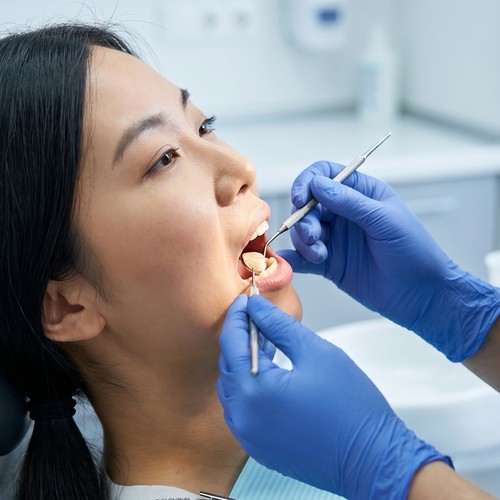
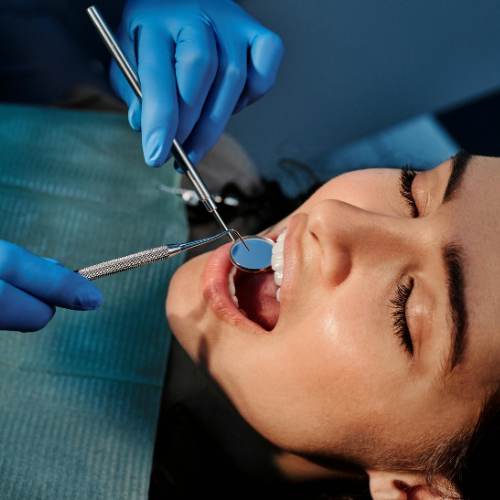
WHAT IS PROFESSIONAL TEETH CLEANING? Professional teeth cleaning is done by a professional dental hygienist or dentist as per requirement. Professional teeth cleaning has the following steps: ● Intraoral examination ● Scaling and root planing ● Polishing teeth ● Mouth rinse Intraoral examination: The dental hygienist examines your mouth with a mirror and probe to determine if oral conditions like gingivitis are present and to assess the amount of calculus or plaque present. If bleeding from gums is severe, extra care is taken to rule out systemic diseases, and additional appointments are scheduled. Scaling and root planing: Scaling is done with specialized tools like ultrascalers. If calculus is on the teeth roots, then planing is done with instruments called “curettes.” The time this process takes depends on the amount of calculus present. Polishing teeth: Teeth polishing is done following ultrascaling of teeth. A prophylactic paste is used, similar to regular toothpaste. This paste is dispensed on a small rubber cup called a prophy cup and gently rubbed on the tooth to remove stains or plaque. Mouth rinse: After your teeth have been polished, the dental hygienist asks you to rinse with a mouth wash, usually a chlorhexidine mouthwash. Special conditions require other kinds of mouthwashes, such as betadine, which will be determined by your dentist. IS PROPHYLAXIS A DEEP CLEANING? Dental prophylaxis, commonly called a prophy, is a procedure that includes polishing the teeth to remove bacteria adhered to the teeth and beneath the gum line. A prophy is usually performed twice per year, or every six months, to maintain healthy gums and teeth. A deep cleaning is needed when the level of bacteria and plaque beneath the gum line is higher than average and causes irritation of the gums. A deep cleaning can stop the progression of periodontal disease before it advances to this level. Deep cleaning visits are generally scheduled more frequently – approximately every three months – to maintain periodontal health.
HOW OFTEN SHOULD YOU HAVE PROPHYLAXIS? Dentists usually recommend oral prophylaxis twice every year for people with good oral hygiene. However, the requirement for dental prophylaxis depends upon patients’ diagnoses. A person with chronic generalized periodontitis or deep gum disease needs professional teeth cleaning more often than a person with good oral health. Do consult your dentist to discuss this. WHY DO TEETH FEEL WEIRD AFTER CLEANING? In severe gum recession or diseases, it is the tartar that clings to teeth and binds the loose teeth firmly to gums. Once the tartar is removed, teeth may feel a little loose for a week. It is a common phenomenon. Do not worry and consult your dentist if they are wobbly even after a week. WHAT ARE THE ADVANTAGES OF GETTING ORAL PROPHYLAXIS? ● Keeps gums in good health ● Removes debris, plaque, tartar ● Makes teeth white and shiny ● Removes bad breath ● Removes teeth stains It is recommended that you get your teeth professionally cleaned at least once every 6 months, in addition to regular oral hygiene practices like brushing teeth twice daily with fluoridated toothpaste and flossing once a day. Remember, dentistry is not expensive, but your neglect is. So visit your dentist regularly to keep your pearly whites clean.
Fresh news from the dental world


Mon - Fri 8AM - 5PM
Sat & Sun Closed
Check out what our patients are saying in Cypress...
..png)

“They're All Top Notch”
I'm so happy to have found this awesome dentist with an awesome staff. I am completely confident in the doctor's skill level, and completely comfortable relying on him to work on me without allowing me to experience unnecessary pain. In addition to having a good relationship with the dentist, being able to relate with the office staff is equally important to me. From the hygienist to the dental assistants to the front desk, they're all top notch.

“They Are So Efficient”
This is the best dentist I have been to and I have been to several. The team is professional and welcoming. They are never over-booked and I have never waited more than 5 minutes in the lobby. They are so efficient, no matter what I go in for, I am out in 45 minutes or less. I highly recommend Cypress Family Dental.

“The Staff Did A Great Job”
Came to Cypress Family Dental a year ago for my sleep apnea device. No more snoring! The staff did a great job fitting me for this oral appliance. Better yet, they were there to support me when I needed some adjustments later on. The front office staff couldn't have been more accommodating to schedule me in. Easy to recommend.

“A Very Pleasant Experience”
My visit to the Cypress Family Dental office today was a very pleasant experience. The front desk staff greeted me upon entering the office and efficiently confirmed my scheduled appointment. I'm seen within a short time by professional, knowledgeable and comfortable staff. They're open to various types of insurance and are flexible on terms. Overall, I would definitely recommend Cypress Family Dental.

“They Truly Care”
The dentist and his staff are wonderful people! In the past, I have had horrible experiences at other dentist offices and then I found this place and I don't think I would ever go anywhere else again. I live about 45 min away from their office but the drive is well worth it. They truly care about their patients. I would recommend this office to anyone.
..png)
“The Doctors Are Just Stellar”
The sweetest people work here, I'm convinced! The ladies at the front desk always go out of their way to be kind and helpful, the hygienists listen to your concerns and will address them to their best ability, and the doctors are just stellar. I drive over 40 min from where I live to go here because it's rare to find a dental office this fantastic.
“They're All Top Notch”
I'm so happy to have found this awesome dentist with an awesome staff. I am completely confident in the doctor's skill level, and completely comfortable relying on him to work on me without allowing me to experience unnecessary pain. In addition to having a good relationship with the dentist, being able to relate with the office staff is equally important to me. From the hygienist to the dental assistants to the front desk, they're all top notch.
“They Are So Efficient”
This is the best dentist I have been to and I have been to several. The team is professional and welcoming. They are never over-booked and I have never waited more than 5 minutes in the lobby. They are so efficient, no matter what I go in for, I am out in 45 minutes or less. I highly recommend Cypress Family Dental.
Check out our accreditations, sources, and relationships in the wide world of dentistry...


Check us out and follow our Cypress dental practice on social media...


