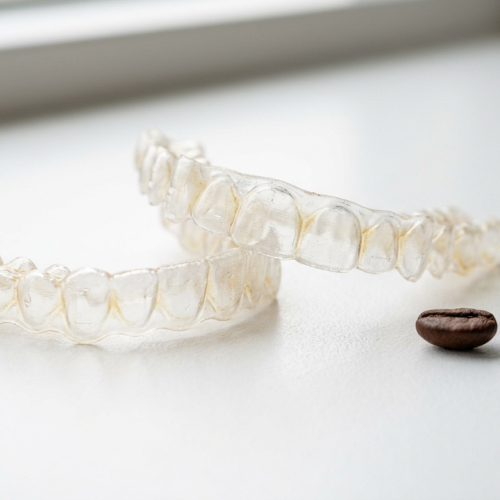
Does Invisalign Stain from Coffee or Tea? What Cypress Patients Need to Know
Cypress patients: do coffee and tea actually stain Invisalign trays? See what causes staining, how to prevent it, and cleaning fixes that work. Book today.
Read More
Most people do not expect gum disease to become a major dental problem. It often starts small. A little redness while brushing. A bit of bleeding when flossing. Maybe some tenderness that comes and goes. It is easy to brush those things off, especially if your teeth do not hurt.
That is part of what makes periodontal disease so tricky.
Periodontal disease is an infection of the gums and the structures that support your teeth. It usually begins as gingivitis, which is the earliest stage of gum disease. At that point, the gums may look irritated or bleed easily, but the damage can still be reversed with proper care. If it is not treated, though, it can move deeper below the gumline and begin affecting the bone and tissues that hold your teeth in place.
At Cypress Family Dental, we often see patients who had no idea their gum health had become a bigger issue. They thought bleeding gums were normal. They assumed bad breath was just something they had to live with. In reality, those signs can point to a condition that deserves attention sooner rather than later.
Your gums do much more than frame your smile. They protect the roots of your teeth and help hold everything in place. When periodontal disease begins to progress, it can slowly weaken that support system.
Over time, untreated gum disease can lead to:
One of the hardest parts is that periodontal disease does not always feel dramatic in the beginning. Many patients do not notice a real problem until the damage has already started.
Common warning signs to watch for include:
If any of those sound familiar, it is worth getting checked. Early treatment is always easier than trying to manage advanced gum disease later.
This is one of the most common questions people ask after they start improving their brushing and flossing habits or after a professional cleaning.
The good news is that gingivitis can improve. Since gingivitis is the earliest stage of gum disease, it often responds well when plaque is removed and daily oral hygiene becomes more consistent. But improvement does not always happen overnight.
In most cases, signs that your gingivitis is getting better include:
That said, it is important not to judge progress only by what you see in the mirror. Sometimes the gums look a little better on the surface while inflammation is still present. That is why follow-up visits matter.
If your gingivitis is improving, you will usually notice a pattern of healing, not just one good day. Your gums should gradually become calmer, less reactive, and easier to clean without discomfort.
If you have been trying to improve things at home and you still notice bleeding after a couple of weeks, that may be a sign that the problem is more than simple gingivitis. Periodontal disease can develop below the gumline, where brushing alone cannot fully reach.
People often hope there is one perfect toothpaste that can solve gum disease, but the truth is a little more nuanced.
The best toothpaste for periodontal disease is usually one that helps reduce plaque, supports gum health, and fits your specific needs. Some patients do well with a fluoride toothpaste that also helps with sensitivity. Others may benefit from an antibacterial formula or a product recommended by their dentist based on their gum condition.
In general, a good toothpaste for gum health should help with:
What matters most is not just the toothpaste itself, but how consistently and effectively you use it. Even a good product cannot do much if brushing is rushed, inconsistent, or missing the gumline where plaque tends to build up.
It also helps to remember this: toothpaste supports treatment, but it does not replace treatment.
If you already have periodontal disease, toothpaste is only one part of the picture. Professional cleanings, deeper periodontal care, and good home habits all work together. Using the right toothpaste can absolutely help maintain healthier gums, but deeper infection needs more than a product from the store.
When patients hear the term periodontal procedures, they sometimes imagine something extreme or intimidating. In reality, periodontal procedures simply refer to treatments used to manage gum disease, reduce infection, and protect the teeth and supporting bone.
The right procedure depends on how far the disease has progressed.
Some of the most common periodontal procedures include:
Scaling and root planing: This is often one of the first treatments for periodontal disease. It involves removing plaque and tartar from below the gumline and smoothing the root surfaces so the gums can begin to heal and reattach more effectively.
Periodontal maintenance cleanings: After active gum disease treatment, some patients need more frequent cleanings to keep bacteria under control and prevent the condition from coming back.
Antibacterial therapy: In some cases, your dentist may recommend localized antibiotics or antimicrobial rinses as part of treatment.
Gum evaluation and pocket measurements: This may not sound like a procedure in the traditional sense, but it is a very important part of periodontal care. Measuring the spaces between your gums and teeth helps track the severity of the disease and how well treatment is working.
For more advanced cases, some patients may need specialized procedures from a periodontist, especially when there is significant gum recession, deep pockets, or bone loss.
The goal of periodontal procedures is not just to clean the teeth. It is to protect the foundation that keeps your teeth stable and healthy over time.
Professional treatment matters, but what you do every day at home plays a big role too. Small habits can either help your gums recover or make inflammation harder to control.
Here are a few habits worth focusing on:
Consistency matters more than perfection. You do not need a complicated routine. You just need a solid one that you actually stick to.
A lot of people hope gum problems will settle down on their own. Sometimes they improve their brushing for a few days and assume that is enough. But when periodontal disease is involved, waiting can allow the problem to move deeper and become harder to treat.
If your gums bleed regularly, feel swollen, look like they are pulling away from your teeth, or you have been told you have gingivitis before, it is worth taking the next step. Getting answers early can make treatment simpler, more comfortable, and more effective.
At Cypress Family Dental, we are here to help you understand what is happening with your gums and what to do next. Whether you are dealing with early gingivitis or signs of more advanced periodontal disease, the best time to address it is before it progresses further.
Schedule an appointment with Cypress Family Dental today to have your gums evaluated and get a treatment plan that helps protect your smile for the long term.
Fresh news from the dental world




Mon - Fri 8AM - 5PM
Sat & Sun Closed
Check out what our patients are saying in Cypress...
..png)

“The Doctors Are Just Stellar”
The sweetest people work here, I'm convinced! The ladies at the front desk always go out of their way to be kind and helpful, the hygienists listen to your concerns and will address them to their best ability, and the doctors are just stellar. I drive over 40 min from where I live to go here because it's rare to find a dental office this fantastic.

“They Are So Efficient”
This is the best dentist I have been to and I have been to several. The team is professional and welcoming. They are never over-booked and I have never waited more than 5 minutes in the lobby. They are so efficient, no matter what I go in for, I am out in 45 minutes or less. I highly recommend Cypress Family Dental.

“A Very Pleasant Experience”
My visit to the Cypress Family Dental office today was a very pleasant experience. The front desk staff greeted me upon entering the office and efficiently confirmed my scheduled appointment. I'm seen within a short time by professional, knowledgeable and comfortable staff. They're open to various types of insurance and are flexible on terms. Overall, I would definitely recommend Cypress Family Dental.

“They Truly Care”
The dentist and his staff are wonderful people! In the past, I have had horrible experiences at other dentist offices and then I found this place and I don't think I would ever go anywhere else again. I live about 45 min away from their office but the drive is well worth it. They truly care about their patients. I would recommend this office to anyone.

“The Staff Did A Great Job”
Came to Cypress Family Dental a year ago for my sleep apnea device. No more snoring! The staff did a great job fitting me for this oral appliance. Better yet, they were there to support me when I needed some adjustments later on. The front office staff couldn't have been more accommodating to schedule me in. Easy to recommend.
..png)
“They're All Top Notch”
I'm so happy to have found this awesome dentist with an awesome staff. I am completely confident in the doctor's skill level, and completely comfortable relying on him to work on me without allowing me to experience unnecessary pain. In addition to having a good relationship with the dentist, being able to relate with the office staff is equally important to me. From the hygienist to the dental assistants to the front desk, they're all top notch.
“The Doctors Are Just Stellar”
The sweetest people work here, I'm convinced! The ladies at the front desk always go out of their way to be kind and helpful, the hygienists listen to your concerns and will address them to their best ability, and the doctors are just stellar. I drive over 40 min from where I live to go here because it's rare to find a dental office this fantastic.
“They Are So Efficient”
This is the best dentist I have been to and I have been to several. The team is professional and welcoming. They are never over-booked and I have never waited more than 5 minutes in the lobby. They are so efficient, no matter what I go in for, I am out in 45 minutes or less. I highly recommend Cypress Family Dental.
Check out our accreditations, sources, and relationships in the wide world of dentistry...


Check us out and follow our Cypress dental practice on social media...


