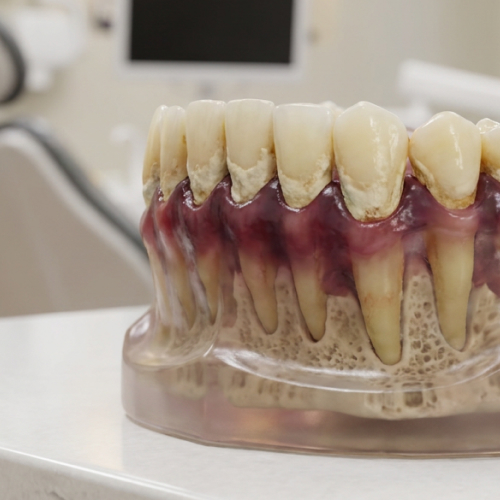
Can Gum Disease Be Reversed or Is Periodontitis Permanent?
Can gum disease be reversed, or is periodontitis permanent? Learn the stages of gum infection and how to protect your smile. Schedule an exam with us today!
Read More
Replacing all your teeth is a major decision with several paths forward — traditional dentures, snap-on dentures, and full-arch implants each come with very different long-term realities. Before focusing on the sticker price, understand what you're actually committing to over five years or more.
Most patients compare options by upfront cost alone. For Cypress-area patients, that framing is incomplete — and sometimes costly.
Traditional dentures require ongoing professional maintenance as your jawbone naturally shrinks following tooth loss. According to Cleveland Clinic, the average lifespan of a denture is seven to ten years with proper care — but that lifespan assumes regular adjustments. Soft relines keep the denture fitting against changing gum tissue. Hard relines rebuild the denture base more substantially. Skip these, and you end up with loose, uncomfortable appliances that accelerate the very bone resorption causing the problem.
Snap-on dentures (implant-retained dentures) improve stability significantly because they anchor to implants in the jaw. But they rely on small plastic locator attachments — sometimes called O-rings or caps — that lose retention over time and require periodic replacement by a dentist. These visits add up across years of ownership.
Fixed implant-supported dentures sit at the other end of the spectrum. The American Academy of Periodontology notes that full-mouth dental implants integrate with your jawbone, actively preserving bone density rather than allowing it to deteriorate. That bone preservation is what reduces long-term maintenance needs — and protects your facial structure over decades.
When evaluating any full-arch replacement, ask your dentist for a realistic five-year picture: how many adjustment visits, relines, or attachment replacements should you expect? That conversation reframes the decision from "what's cheapest today" to "what's most sustainable for my life."
When all remaining teeth need extraction before dentures, many patients encounter a situation they weren't prepared for.
Immediate dentures are placed the same day as extractions so you never go without teeth. Healthline explains that immediate dentures aren't custom-fitted to a healed mouth — they're made from pre-extraction impressions. As your gums and jawbone heal and reshape over the following months, these dentures become progressively looser. Tissue conditioners and temporary relines help short-term, but most patients eventually need either a permanent reline or an entirely new set of final dentures.
This is the two-denture timeline: you pay for a temporary solution, then pay again for a permanent one. Patients who weren't told this upfront often feel blindsided.
The smarter approach is to ask your dentist directly about a transition package before treatment begins. A well-structured plan should bundle tooth extraction, the immediate temporary denture, tissue conditioning appointments, and the final permanent denture into a single, clearly quoted treatment plan. This way, the full scope is financed as one package — not discovered in installments.
Questions worth asking:
Getting these answers in writing before extractions begin protects you from financial surprises during an already stressful process.
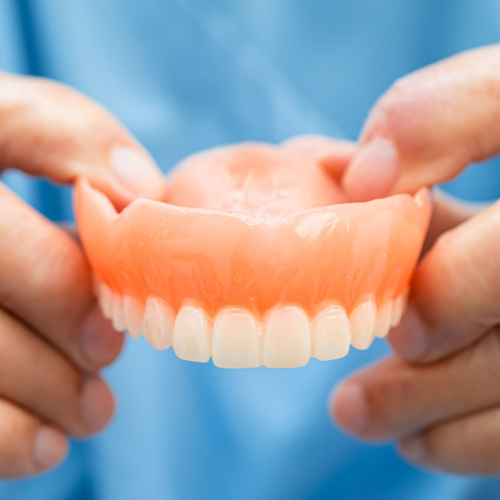
Traditional Dentures Full removable dentures replace an entire arch and rest on the gums. They're the most accessible entry point for full-arch replacement. The tradeoff is stability — traditional dentures can shift during eating and speaking, and they do nothing to slow jawbone loss. WebMD notes that bone and gum tissue shrink over time, particularly during the healing period after extractions, which is why ongoing adjustments become necessary.
Snap-On (Implant-Retained) Dentures These attach to two to six implants per jaw, dramatically improving stability over traditional dentures. Healthline's overview of snap-in dentures highlights improved chewing ability, better fit, and reduced friction on the gums as key advantages. You can still remove them for cleaning, which simplifies daily maintenance. The implants also help slow bone resorption — a meaningful long-term benefit.
Fixed Implant-Supported Dentures Non-removable and anchored permanently to implants, these are the closest experience to natural teeth. Only your dentist removes them for maintenance. They require thorough daily cleaning with floss threaders and interproximal brushes but eliminate the inconvenience of removable appliances. Mayo Clinic describes dental implants as fusing with your jawbone so they won't slip, make noise, or cause the bone damage that fixed bridgework or dentures can over time.
Candidacy matters for all implant-based options. Sufficient jawbone density is required, and patients with certain health conditions or who smoke may face complications. A thorough cleaning and exam — including imaging — determines which options are actually on the table for you.
Choosing the right full-arch replacement isn't just about the type of appliance. It's about whether the treatment plan is complete and honest.
A few questions that protect you:
On scope: Does this quote include extractions, temporary teeth, and the final restoration — or only one phase?
On bone health: Will I need a bone graft, and is that included or separate? Research published on NIH's Bookshelf confirms that implants improve bone maintenance at edentulous sites — but only when placed with adequate bone support.
On timeline: How long between extractions and final delivery? For implant-based options, osseointegration alone takes three to nine months.
On ongoing care: What does maintenance look like in years two through five? Get specifics on reline schedules, attachment replacements, and follow-up visit frequency.
At Cypress Family Dental in Cypress, California, we walk patients through all of these questions before any treatment begins. Serving North Orange County including La Palma, our team offers comprehensive aesthetic dentistry and restorative solutions to help you understand the full picture — not just the first appointment.
This article is for informational purposes only and does not constitute medical or dental advice. Individual treatment needs vary. Please consult a licensed dental professional for a comprehensive evaluation and personalized recommendations.
Fresh news from the dental world
Mon - Fri 8AM - 5PM
Sat & Sun Closed
Check out what our patients are saying in Cypress...
..png)

“The Doctors Are Just Stellar”
The sweetest people work here, I'm convinced! The ladies at the front desk always go out of their way to be kind and helpful, the hygienists listen to your concerns and will address them to their best ability, and the doctors are just stellar. I drive over 40 min from where I live to go here because it's rare to find a dental office this fantastic.

“They Are So Efficient”
This is the best dentist I have been to and I have been to several. The team is professional and welcoming. They are never over-booked and I have never waited more than 5 minutes in the lobby. They are so efficient, no matter what I go in for, I am out in 45 minutes or less. I highly recommend Cypress Family Dental.

“A Very Pleasant Experience”
My visit to the Cypress Family Dental office today was a very pleasant experience. The front desk staff greeted me upon entering the office and efficiently confirmed my scheduled appointment. I'm seen within a short time by professional, knowledgeable and comfortable staff. They're open to various types of insurance and are flexible on terms. Overall, I would definitely recommend Cypress Family Dental.
..png)
“They're All Top Notch”
I'm so happy to have found this awesome dentist with an awesome staff. I am completely confident in the doctor's skill level, and completely comfortable relying on him to work on me without allowing me to experience unnecessary pain. In addition to having a good relationship with the dentist, being able to relate with the office staff is equally important to me. From the hygienist to the dental assistants to the front desk, they're all top notch.

“They Truly Care”
The dentist and his staff are wonderful people! In the past, I have had horrible experiences at other dentist offices and then I found this place and I don't think I would ever go anywhere else again. I live about 45 min away from their office but the drive is well worth it. They truly care about their patients. I would recommend this office to anyone.

“The Staff Did A Great Job”
Came to Cypress Family Dental a year ago for my sleep apnea device. No more snoring! The staff did a great job fitting me for this oral appliance. Better yet, they were there to support me when I needed some adjustments later on. The front office staff couldn't have been more accommodating to schedule me in. Easy to recommend.
“The Doctors Are Just Stellar”
The sweetest people work here, I'm convinced! The ladies at the front desk always go out of their way to be kind and helpful, the hygienists listen to your concerns and will address them to their best ability, and the doctors are just stellar. I drive over 40 min from where I live to go here because it's rare to find a dental office this fantastic.
“They Are So Efficient”
This is the best dentist I have been to and I have been to several. The team is professional and welcoming. They are never over-booked and I have never waited more than 5 minutes in the lobby. They are so efficient, no matter what I go in for, I am out in 45 minutes or less. I highly recommend Cypress Family Dental.
Check out our accreditations, sources, and relationships in the wide world of dentistry...


Check us out and follow our Cypress dental practice on social media...


