Can Gum Disease Be Cured Without Surgery? What Cypress Patients Need to Know
Wondering if gum disease can be cured without surgery? Discover non-surgical options for periodontitis at Cypress Family Dental. Schedule your consultation now!
Read More
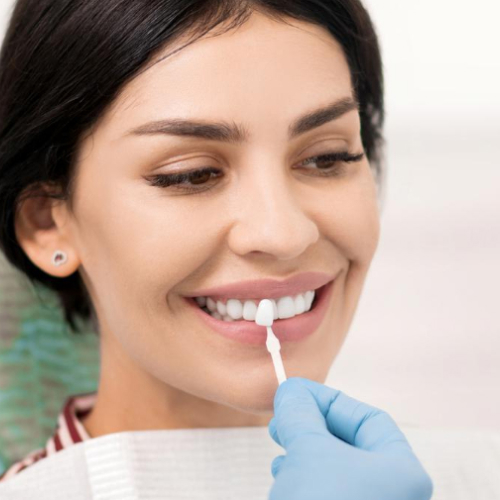
Most people assume a veneer simply "covers" a stain. That's partly true — but the story gets complicated with severe intrinsic discoloration from tetracycline, old trauma, or a tooth that's had a root canal. For Cypress-area patients considering this procedure, understanding the material science is key.
Here's the problem: standard high-translucency porcelain mimics natural enamel beautifully because it lets light pass through. That same translucency is exactly what causes failures with dark stumps. The underlying grey or brown tooth "bleeds through," and the final veneer looks chalky or flat rather than lifelike.
To block that dark background, I need to consider either a thicker veneer, an opaque internal layer, or a more opaque ceramic core. Research published in PMC confirms that thicker porcelain restorations are the most effective means of masking severe discoloration — each 0.2mm increase in thickness meaningfully reduces light transmission. But thicker veneers require more tooth reduction, which is a real biological trade-off.
The alternative — using opaque resin cement or an internal opaque layer — can stabilize the color without as much enamel removal. However, push the opacity too far and the result looks artificial, like painted plastic rather than a tooth.
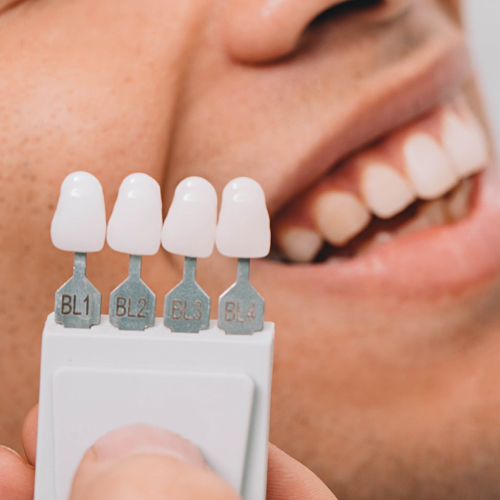
For tetracycline staining specifically, a clinical case study from PMC demonstrates that a stratified masking technique with fluorescent porcelains can achieve natural results while minimizing additional tooth reduction. According to the ADA, mild discoloration responds well to conservative approaches like professional teeth whitening or resin infiltration — but moderate to severe cases often require indirect restorations with adequate masking ability. The severity of your specific stain determines which ceramic system I recommend.
Veneers can make a rotated or slightly grouped tooth appear straight. What most patients don't hear is the biological price of that correction.
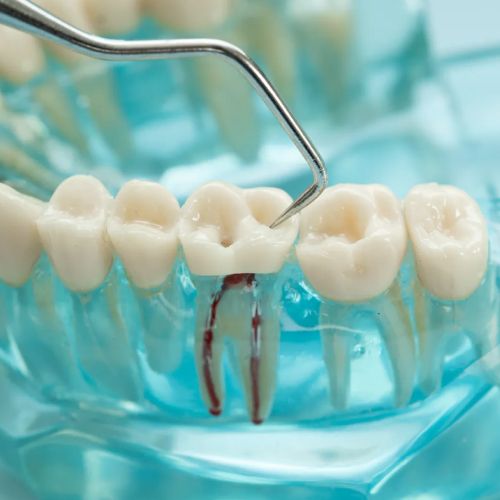
When a tooth protrudes or rotates, making it look straight with a veneer requires grinding down the prominent part significantly — sometimes aggressively. That reduction can bring the preparation dangerously close to the pulp (the nerve). The result: permanent sensitivity, or in some cases, an endodontic root canal becomes necessary down the line.
I think of this as your "enamel budget." Additive dentistry — where porcelain fills a gap or adds length — costs almost nothing biologically. Reductive dentistry — grinding healthy tooth structure to correct a rotation — spends that budget fast. Cleveland Clinic notes that veneers require some enamel removal and are considered an irreversible procedure. For straight teeth with mild spacing, that trade-off is minimal. For a significantly rotated tooth, it's a serious clinical conversation.
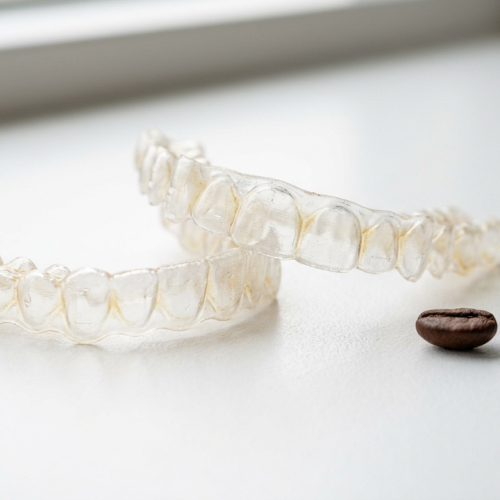
My recommendation for patients with moderate misalignment: consider Invisalign clear aligner treatment first. Moving the roots into better position before placing veneers means the porcelain is supported by properly positioned enamel — and I remove far less healthy tooth structure to achieve the same aesthetic result.
Veneers close diastemas beautifully — within limits. What those limits are is something most patients never hear explained clearly.
When a gap is large, a portion of the veneer extends beyond the edge of the natural tooth with no enamel underneath it. Every bite creates a shear force on that unsupported porcelain. Over time, that lever effect chips or debonds the restoration. The veneer didn't fail because of poor craftsmanship — it failed because the physics were working against it from day one.
There's also a proportionality problem. If I close a very wide gap by simply making each veneer wider, the teeth end up looking unnaturally "fat" relative to their height. The width-to-height ratio matters. Healthline's overview of composite veneers notes that veneers cover part of the tooth — they work best when adequate tooth structure exists to support the restoration at its edges.
My rule of thumb: if closing a gap would require extending the veneer more than about 2mm beyond the natural tooth margin, pre-treatment tooth movement with teeth straightening braces or aligners is the more durable path. Moving the roots closer together first means the porcelain sits on enamel throughout — dramatically improving long-term survival. Mouthhealthy.org emphasizes that only a licensed dentist should place veneers, partly because these structural judgments require clinical examination, not just cosmetic assessment.
Every discoloration type, every gap size, and every degree of misalignment calls for a different solution. What works beautifully for one patient can fail another if the material selection or prep design isn't matched to the specific clinical situation.
If you're in the Cypress or La Palma area and want an honest conversation about whether veneers are the right choice — and which type — I'd be glad to walk through it with you. Schedule a dental cleaning and exam or consultation at Cypress Family Dental and we'll look at your specific case together.
This article is intended for general informational purposes only and does not constitute dental or medical advice. Always consult a licensed dental professional for diagnosis and treatment recommendations specific to your situation.
Fresh news from the dental world



Mon - Fri 8AM - 5PM
Sat & Sun Closed
Check out what our patients are saying in Cypress...
..png)

“The Doctors Are Just Stellar”
The sweetest people work here, I'm convinced! The ladies at the front desk always go out of their way to be kind and helpful, the hygienists listen to your concerns and will address them to their best ability, and the doctors are just stellar. I drive over 40 min from where I live to go here because it's rare to find a dental office this fantastic.

“They Are So Efficient”
This is the best dentist I have been to and I have been to several. The team is professional and welcoming. They are never over-booked and I have never waited more than 5 minutes in the lobby. They are so efficient, no matter what I go in for, I am out in 45 minutes or less. I highly recommend Cypress Family Dental.

“The Staff Did A Great Job”
Came to Cypress Family Dental a year ago for my sleep apnea device. No more snoring! The staff did a great job fitting me for this oral appliance. Better yet, they were there to support me when I needed some adjustments later on. The front office staff couldn't have been more accommodating to schedule me in. Easy to recommend.

“They Truly Care”
The dentist and his staff are wonderful people! In the past, I have had horrible experiences at other dentist offices and then I found this place and I don't think I would ever go anywhere else again. I live about 45 min away from their office but the drive is well worth it. They truly care about their patients. I would recommend this office to anyone.

“A Very Pleasant Experience”
My visit to the Cypress Family Dental office today was a very pleasant experience. The front desk staff greeted me upon entering the office and efficiently confirmed my scheduled appointment. I'm seen within a short time by professional, knowledgeable and comfortable staff. They're open to various types of insurance and are flexible on terms. Overall, I would definitely recommend Cypress Family Dental.
..png)
“They're All Top Notch”
I'm so happy to have found this awesome dentist with an awesome staff. I am completely confident in the doctor's skill level, and completely comfortable relying on him to work on me without allowing me to experience unnecessary pain. In addition to having a good relationship with the dentist, being able to relate with the office staff is equally important to me. From the hygienist to the dental assistants to the front desk, they're all top notch.
“The Doctors Are Just Stellar”
The sweetest people work here, I'm convinced! The ladies at the front desk always go out of their way to be kind and helpful, the hygienists listen to your concerns and will address them to their best ability, and the doctors are just stellar. I drive over 40 min from where I live to go here because it's rare to find a dental office this fantastic.
“They Are So Efficient”
This is the best dentist I have been to and I have been to several. The team is professional and welcoming. They are never over-booked and I have never waited more than 5 minutes in the lobby. They are so efficient, no matter what I go in for, I am out in 45 minutes or less. I highly recommend Cypress Family Dental.
Check out our accreditations, sources, and relationships in the wide world of dentistry...


Check us out and follow our Cypress dental practice on social media...


