Filling, Inlay, or Crown: Which Restoration Actually Protects Your Tooth?
Is an inlay better than a filling? Learn if a large filling is better than a dental crown for long-term protection. Visit Cypress Family Dental to find out!
Read More
In the world of modern orthodontics, Invisalign has quickly moved from a trend to a trusted solution for people of all ages. But what actually makes Invisalign different, and smart enough, to straighten your teeth with such subtlety and precision? At Cypress Family Dental, we’ve worked with plenty of patients who love how Invisalign fits into their lifestyle, but the real beauty lies beneath the surface.
Let’s walk through what makes Invisalign tick, why it stands apart from the crowd, and whether it might be right for your smile.
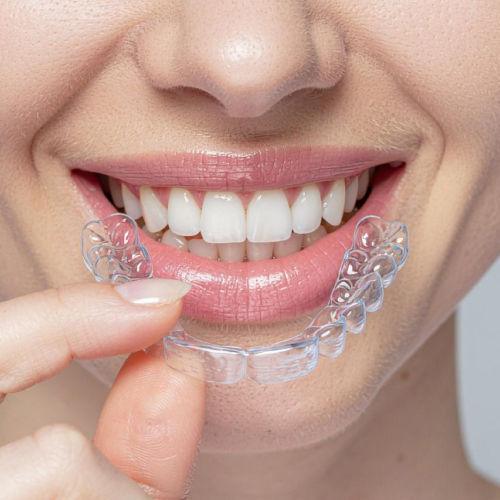
Not all clear aligners are created equal. Invisalign might look similar to other brands at a glance, but the technology that powers it is anything but ordinary.
1. Patented SmartTrack material: At the heart of Invisalign is its proprietary SmartTrack material. This isn't your average plastic, it’s engineered to apply consistent, gentle force across each tooth. The result? More predictable movements and often shorter treatment times.
Many off-brand aligners use basic thermoplastics that may look similar but don’t offer the same level of control or comfort. SmartTrack is designed to hug your teeth more snugly, so the aligners don’t just fit better, they work better.
2. Precision mapping with ClinCheck software: Before you even receive your first aligner, Invisalign’s ClinCheck software creates a 3D map of your mouth. This map is built using digital scans, not goopy molds, allowing your dentist to preview every tooth movement before treatment starts.
That means fewer surprises, fewer delays, and a digital roadmap you can actually see. You get to view your “after” smile before your treatment begins, which is a powerful motivator for sticking with the plan.
3. Attachments and tooth-specific movements: Unlike other brands that rely solely on the plastic trays, Invisalign often uses small tooth-colored attachments to help with more difficult movements. These little helpers give the aligners something to grip onto, which increases precision, especially in rotations or root movement.
The trays are custom-fitted to work with these attachments and move individual teeth in a specific order. It’s a system of checks and balances, all mapped in advance.
4. Ongoing check-ins and customization: Another big difference? Invisalign works best with regular check-ins from your dentist. That may sound inconvenient, but it’s actually what keeps your treatment on track. Some direct-to-consumer aligners leave you on your own, which can lead to issues if something doesn’t go as planned.
At Cypress Family Dental, we monitor your progress in person, so if a tweak is needed, we catch it early. That keeps your timeline (and your smile) moving forward smoothly.
The short answer is: yes, more than most people think.
Invisalign has come a long way since its early days, where it was often seen as a solution for mild cases only. Today, thanks to advancements in material science and digital planning, Invisalign can address a range of issues, from simple crowding to more involved bite problems.
1. Crowding and spacing: Invisalign is highly effective for mild to moderate crowding and spacing problems. By applying controlled force to each tooth, it gradually creates the right amount of space or closes gaps, often without the need for extractions.
2. Overbites and underbites: For years, braces were the only game in town for correcting bite issues. But Invisalign can now manage many overbite, underbite, and crossbite cases, particularly when combined with elastics or other tools your dentist may use.
With the help of precision staging, moving certain teeth before others, your dentist can guide your bite into a healthier alignment over time.
3. Tooth rotation and intrusion: Some of the most impressive Invisalign results involve rotated teeth or teeth that are too high or low in the gumline. Using attachments and carefully programmed aligners, Invisalign can gradually rotate or reposition these teeth more gently than traditional methods.
4. Teens and growing mouths: Invisalign also has a version made for teens that includes eruption tabs, which allow room for growing molars. This makes it a viable option for teenagers who want straighter teeth without the brackets and wires.
Limitations still exist: That said, Invisalign isn’t for every single case. Extremely complex jaw alignment issues or surgical orthodontic needs may still be better handled with traditional braces or other interventions. That’s why a personal consultation matters, there’s no one-size-fits-all.
If you’re unsure whether your dental issues qualify, it’s worth getting an opinion. At Cypress Family Dental, we evaluate your entire mouth and bite before making any recommendations.
Invisalign isn’t just a product, it’s a service. The cost of treatment varies depending on the complexity of your case, how long treatment takes, and the number of aligners you’ll need. Simpler adjustments typically cost less, while complex movements or bite correction may require a longer timeline and more planning.
What impacts the cost?
Is Invisalign worth it? That’s the real question, and for many, the answer is yes. Invisalign doesn’t just align teeth; it aligns with your life. You can remove the trays when eating, brushing, or for special occasions. You don’t have to avoid popcorn or chew around brackets. There are fewer emergency visits, no pokey wires, and no brackets to break.
Plus, the results speak for themselves. When you consider the convenience, comfort, and discretion Invisalign offers, alongside the health benefits of properly aligned teeth, it’s often a worthwhile investment in yourself.
Insurance and financing options: Many dental insurance plans cover a portion of Invisalign treatment, especially if it’s considered medically necessary. And most clinics, including ours, offer flexible financing to help spread the cost over manageable payments.
If you’re curious about what your plan covers, we’re happy to check that for you. Just bring in your insurance details to your consultation.
For starters, it works. Not just in theory or in celebrity testimonials, but in real life, for real patients. If you’ve avoided straightening your teeth because you didn’t want the hassle, Invisalign changes the game. No metal mouth. No constant adjustments. No “brace face” photos.
But more than that, Invisalign gives you control over the process. You’ll know what’s happening, when it’s happening, and what to expect next. That’s a kind of clarity that goes beyond just your aligners.
You’ll smile more, during treatment, not just after. And you’ll notice subtle changes that add up over time, improving your confidence, your bite, and your oral health.
Ready to explore Invisalign for yourself? At Cypress Family Dental, we don’t believe in cookie-cutter smiles. Every Invisalign treatment is planned with precision, care, and a deep understanding of what makes your smile unique. Whether you’re new to orthodontics or returning after years, we’ll help you decide if Invisalign is the right fit.
Schedule your Invisalign consultation today and let’s start mapping out your new smile, one aligner at a time.
Fresh news from the dental world


Mon - Fri 8AM - 5PM
Sat & Sun Closed
Check out what our patients are saying in Cypress...
..png)

“They're All Top Notch”
I'm so happy to have found this awesome dentist with an awesome staff. I am completely confident in the doctor's skill level, and completely comfortable relying on him to work on me without allowing me to experience unnecessary pain. In addition to having a good relationship with the dentist, being able to relate with the office staff is equally important to me. From the hygienist to the dental assistants to the front desk, they're all top notch.

“They Are So Efficient”
This is the best dentist I have been to and I have been to several. The team is professional and welcoming. They are never over-booked and I have never waited more than 5 minutes in the lobby. They are so efficient, no matter what I go in for, I am out in 45 minutes or less. I highly recommend Cypress Family Dental.

“The Staff Did A Great Job”
Came to Cypress Family Dental a year ago for my sleep apnea device. No more snoring! The staff did a great job fitting me for this oral appliance. Better yet, they were there to support me when I needed some adjustments later on. The front office staff couldn't have been more accommodating to schedule me in. Easy to recommend.

“A Very Pleasant Experience”
My visit to the Cypress Family Dental office today was a very pleasant experience. The front desk staff greeted me upon entering the office and efficiently confirmed my scheduled appointment. I'm seen within a short time by professional, knowledgeable and comfortable staff. They're open to various types of insurance and are flexible on terms. Overall, I would definitely recommend Cypress Family Dental.

“They Truly Care”
The dentist and his staff are wonderful people! In the past, I have had horrible experiences at other dentist offices and then I found this place and I don't think I would ever go anywhere else again. I live about 45 min away from their office but the drive is well worth it. They truly care about their patients. I would recommend this office to anyone.
..png)
“The Doctors Are Just Stellar”
The sweetest people work here, I'm convinced! The ladies at the front desk always go out of their way to be kind and helpful, the hygienists listen to your concerns and will address them to their best ability, and the doctors are just stellar. I drive over 40 min from where I live to go here because it's rare to find a dental office this fantastic.
“They're All Top Notch”
I'm so happy to have found this awesome dentist with an awesome staff. I am completely confident in the doctor's skill level, and completely comfortable relying on him to work on me without allowing me to experience unnecessary pain. In addition to having a good relationship with the dentist, being able to relate with the office staff is equally important to me. From the hygienist to the dental assistants to the front desk, they're all top notch.
“They Are So Efficient”
This is the best dentist I have been to and I have been to several. The team is professional and welcoming. They are never over-booked and I have never waited more than 5 minutes in the lobby. They are so efficient, no matter what I go in for, I am out in 45 minutes or less. I highly recommend Cypress Family Dental.
Check out our accreditations, sources, and relationships in the wide world of dentistry...


Check us out and follow our Cypress dental practice on social media...


