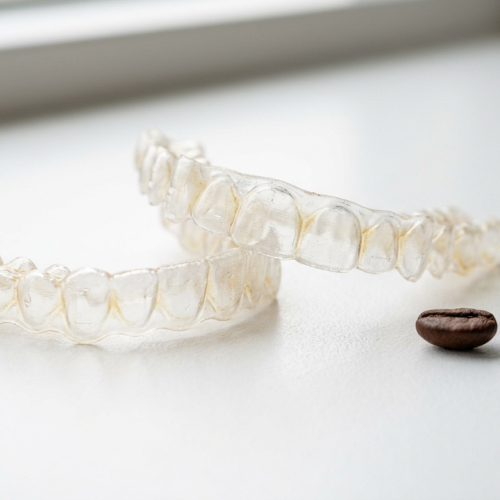
Does Invisalign Stain from Coffee or Tea? What Cypress Patients Need to Know
Cypress patients: do coffee and tea actually stain Invisalign trays? See what causes staining, how to prevent it, and cleaning fixes that work. Book today.
Read More
There are days when a tiny zing of tooth sensitivity shows up at the worst possible moment. Maybe it’s when you take that first sip of something cold. Maybe it hits when you’re brushing and the toothbrush grazes the wrong spot. Or maybe your gums feel irritated for no huge reason, yet the ache lingers just long enough to be annoying. If you’ve ever had one of those moments, you know the kind of instant relief you wish you could snap your fingers and feel.
That is exactly why numbing gel has become my new favorite thing to share with patients at Cypress Family Dental. It’s simple, quick, and sometimes surprisingly helpful whether you are dealing with sudden sensitivity, irritated gums, or preparing for a dental procedure. There is something satisfying about having an option that calms discomfort almost immediately without needing anything complicated.
A lot of patients overlook numbing gel simply because they think it’s too basic to make a difference. But many of the best things in dentistry are simple. Small tools often have the biggest impact when they show up at the right time.
Numbing gel is especially helpful for:
Parents love it when their children have sore gums from new teeth coming in. Adults appreciate it when a cold drink suddenly triggers a sharp zing. And patients who feel nervous before routine procedures find comfort knowing we can ease the initial sensitivity before we begin.
Even though it is not meant to completely replace in office anesthesia, numbing gel fills a gap many people didn’t realize existed. It is the small calm in between everyday sensitivity and full dental treatment.
This is one of the first questions patients ask, and with good reason. Anything that works quickly often makes people wonder whether it’s safe. Used correctly and in moderation, numbing gel is generally safe for most adults and older children. The key is using it as intended and not turning it into a repeated everyday habit without checking in with your dentist.
If you reach for numbing gel frequently, that can be a sign that something deeper needs attention. Sensitivity can point to gum recession, enamel wear, grinding, early decay, or even brushing too aggressively. While the gel can calm the sensation, it shouldn’t replace a proper checkup if the discomfort keeps coming back.
Another important point is that overuse of benzocaine based gels can sometimes irritate your tissue or cause redness. This is rare when used responsibly, but it’s one reason we always encourage patients to ask us first if they plan on using it regularly at home.
For most people, occasional use during flare ups is perfectly fine. It’s safe, quick, and effective as long as you follow instructions and treat it like a short term solution rather than a long term substitute for dental care.
There are several situations where numbing gel becomes a small lifesaver in your daily routine.
For example:
People often think these small discomforts mean something serious is happening, but most of the time, they’re minor irritations that calm down quickly. Numbing gel simply helps make that waiting period more comfortable.
However, if any of these problems last beyond a few days or keep coming back, that’s when you should schedule a visit at Cypress Family Dental so we can make sure there’s nothing more involved.
For most gels, relief begins within a minute or two. Sometimes even sooner. That is part of what makes it so appealing. It doesn’t require preparation, waiting, or planning ahead. A small amount can be enough to settle the area quickly.
The relief typically lasts anywhere from 15 to 30 minutes. Some gels might last a little longer, but the effect is intentionally temporary. That short duration allows it to be used safely while still helping you through a moment of discomfort.
Think of it as a brief window of calm to get you through the toughest part of what you are feeling. It’s not designed to numb your mouth for an hour or two. That type of extended effect only comes from in office anesthesia.
In fact, its shorter duration is part of what makes numbing gel practical for everyday sensitivity. You get enough comfort to continue your day without staying numb long after the discomfort has already faded.
Numbing gel is absolutely helpful during dental procedures, and we use it often at Cypress Family Dental. It is especially useful for patients who feel anxious about injections. Before delivering local anesthesia, we apply numbing gel to the gum area. This takes away the initial pinch sensation and makes the process smoother and more comfortable.
We also use it during certain procedures that do not require full anesthesia, such as:
It is never meant to replace numbing injections for more involved treatments like fillings, extractions, or root canals, but it is a great tool for improving patient comfort throughout the visit.
On the at home side, numbing gel can help calm mild irritation after certain dental treatments. For example, after deep cleanings, patients sometimes notice tenderness in the gums for a day or two. A tiny bit of numbing gel can make brushing and flossing more comfortable as the tissue heals.
It should always be used with guidance from your dentist so that you are using it safely and at the right times. But its benefits extend far beyond at home sensitivity relief. It plays a helpful supporting role in your overall dental care experience.
Even though numbing gel is wonderful for what it is designed to handle, it does have limitations. It cannot replace full anesthesia for treatments involving deeper layers of the tooth. It cannot solve the root problem behind chronic sensitivity. And it cannot be used freely without considering dosage guidelines.
Knowing what numbing gel can and cannot do helps patients use it more effectively. We want you to enjoy the comfort it provides, but we also want you to understand when it is time to set it aside and let a dental appointment give you the proper solution.
If you notice any of the following, numbing gel alone will not be enough:
These signs point to underlying concerns that need more than temporary numbing. Visiting Cypress Family Dental ensures that we find the cause and treat it instead of masking the symptoms.
Our approach is simple. We use numbing gel to make your experience more comfortable, never to replace deeper treatment. Whenever sensitivity makes you hesitant or nervous, we take our time, listen to what you’re feeling, and use numbing gel when it helps ease you into the process.
It can be a comfort booster during:
A dental visit should feel manageable, not stressful. Sometimes even the idea of discomfort makes a patient tense, and that tension alone can make sensations feel stronger. A little numbing gel changes the whole tone of the appointment by giving your mouth a softer start.
While numbing gel is wonderful for occasional flare ups, it shouldn’t become something you rely on daily. If you find yourself applying it more than a couple of times a week, that is your sign to schedule a visit.
Chronic sensitivity could signal:
These problems are treatable when caught early, and many of them improve significantly once the underlying cause is addressed. Masking the discomfort without treating the source can delay healing and lead to bigger problems over time.
You deserve more than temporary relief. You deserve a mouth that feels comfortable without needing daily help from a gel.
Numbing gel may be simple, but sometimes simple things are exactly what you need. It offers quick relief when a sensitive spot catches you off guard. It supports comfort during appointments. It eases anxiety for patients who get nervous about dental procedures. And it buys you a few minutes of peace when discomfort interrupts your day.
It won’t solve deeper dental issues, but for the moments where your mouth needs a little calm, it truly feels like a small lifesaver.
If sensitivity has been visiting you more often than usual, or if you’ve been reaching for numbing gel a little too frequently, we’re here to help you figure out why. You deserve lasting comfort, not just temporary silence from a sore spot.
Cypress Family Dental is here to help you get to the root of your sensitivity and restore long lasting comfort. Schedule an appointment today and let us take care of your smile.
Fresh news from the dental world



Mon - Fri 8AM - 5PM
Sat & Sun Closed
Check out what our patients are saying in Cypress...
..png)

“The Doctors Are Just Stellar”
The sweetest people work here, I'm convinced! The ladies at the front desk always go out of their way to be kind and helpful, the hygienists listen to your concerns and will address them to their best ability, and the doctors are just stellar. I drive over 40 min from where I live to go here because it's rare to find a dental office this fantastic.

“They Are So Efficient”
This is the best dentist I have been to and I have been to several. The team is professional and welcoming. They are never over-booked and I have never waited more than 5 minutes in the lobby. They are so efficient, no matter what I go in for, I am out in 45 minutes or less. I highly recommend Cypress Family Dental.

“A Very Pleasant Experience”
My visit to the Cypress Family Dental office today was a very pleasant experience. The front desk staff greeted me upon entering the office and efficiently confirmed my scheduled appointment. I'm seen within a short time by professional, knowledgeable and comfortable staff. They're open to various types of insurance and are flexible on terms. Overall, I would definitely recommend Cypress Family Dental.

“They Truly Care”
The dentist and his staff are wonderful people! In the past, I have had horrible experiences at other dentist offices and then I found this place and I don't think I would ever go anywhere else again. I live about 45 min away from their office but the drive is well worth it. They truly care about their patients. I would recommend this office to anyone.

“The Staff Did A Great Job”
Came to Cypress Family Dental a year ago for my sleep apnea device. No more snoring! The staff did a great job fitting me for this oral appliance. Better yet, they were there to support me when I needed some adjustments later on. The front office staff couldn't have been more accommodating to schedule me in. Easy to recommend.
..png)
“They're All Top Notch”
I'm so happy to have found this awesome dentist with an awesome staff. I am completely confident in the doctor's skill level, and completely comfortable relying on him to work on me without allowing me to experience unnecessary pain. In addition to having a good relationship with the dentist, being able to relate with the office staff is equally important to me. From the hygienist to the dental assistants to the front desk, they're all top notch.
“The Doctors Are Just Stellar”
The sweetest people work here, I'm convinced! The ladies at the front desk always go out of their way to be kind and helpful, the hygienists listen to your concerns and will address them to their best ability, and the doctors are just stellar. I drive over 40 min from where I live to go here because it's rare to find a dental office this fantastic.
“They Are So Efficient”
This is the best dentist I have been to and I have been to several. The team is professional and welcoming. They are never over-booked and I have never waited more than 5 minutes in the lobby. They are so efficient, no matter what I go in for, I am out in 45 minutes or less. I highly recommend Cypress Family Dental.
Check out our accreditations, sources, and relationships in the wide world of dentistry...


Check us out and follow our Cypress dental practice on social media...


