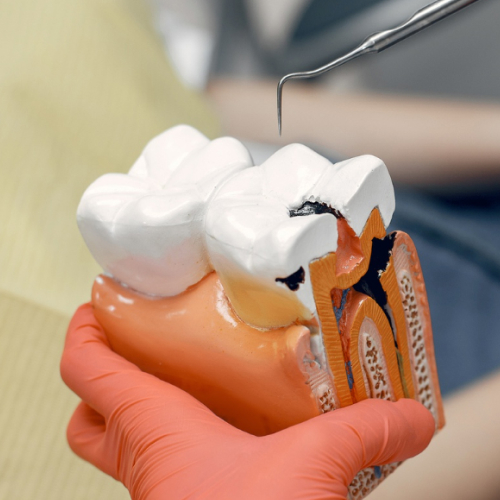
What Adults at 30 Really Need to Know About Cavity Fillings
Are you facing cavity fillings in your 30s? Learn what to expect, your material options, and how to protect your smile. Schedule your visit with us today!
Read More
Early gum disease (gingivitis) is fully reversible with proper care. Once it advances to periodontitis, the bone loss is permanent—but the infection can be controlled. Whether you need surgery depends on how deep your gum pockets are and whether non-surgical treatment has moved the needle.
Most people searching for ways to "shrink gum pockets at home" are working against a physical reality they don't know about. For Cypress-area patients, understanding the limits of home care is the first step.
A toothbrush bristle and dental floss can reach roughly 2–3mm below the gumline. That's enough for a healthy mouth, where pockets typically measure 1–3mm. But according to the NIDCR, gum disease causes pockets to deepen as gums pull away from teeth—and once a pocket reaches 5mm or more, no amount of brushing can physically clean the base of it.
This isn't a motivation problem. It's geometry.
At that depth, bacteria colonize the root surface in a protected biofilm that home tools simply cannot touch. The infection continues progressing whether the patient brushes twice a day or four times. This is why Healthline notes that home remedies can help manage early gingivitis but cannot resolve established periodontitis—only professional care can reach subgingival bacteria at that depth.
Scaling and Root Planing (SRP), sometimes called a "deep cleaning," is the clinical answer. A trained provider uses specialized instruments to debride the root surface below the gumline—the one area that is physically inaccessible to the patient. The ADA's nonsurgical periodontitis guideline identifies SRP as the recommended initial treatment for chronic periodontitis, with evidence showing moderate benefit in reducing pocket depth and controlling infection.
The takeaway: if your dentist tells you that you have 5mm+ pockets, home care is supportive—not curative. Professional debridement is the only way to physically access the problem. If you're unsure where your gum health stands, a cleaning and exam is the right place to start.
SRP works well for many patients. But some cases don't respond—and waiting too long to recognize this leads to preventable tooth loss.
Clinicians use a re-evaluation appointment 6–8 weeks after SRP to assess outcomes. Here are three specific markers to ask your dentist about at that visit:
1. Persistent Bleeding on Probing (BOP). Some bleeding after SRP is expected initially. But if bleeding continues at multiple sites despite improved home hygiene, it signals ongoing active infection. Healthy tissue doesn't bleed on gentle probing.
2. Stationary pocket depths after two SRP cycles. Pocket depth should decrease as gum tissue tightens and inflammation resolves. If probing measurements haven't improved after two full rounds of treatment, the anatomy of the defect likely requires surgical access to properly clean.
3. Continued radiographic bone loss. If X-rays taken at re-evaluation show bone levels still declining, non-surgical therapy has not arrested the disease. Bone loss from periodontitis is irreversible—waiting longer does not improve outcomes.
Cases that fail to respond to thorough non-surgical treatment are sometimes classified as refractory periodontitis. At this point, periodontal surgery—such as flap surgery to directly access root surfaces—becomes the clinically appropriate next step, not an optional upgrade. Patients dealing with advanced infection should understand their options, including when a dental emergency evaluation may be warranted.
Biologically, yes. The bone and attachment lost to periodontitis do not regenerate on their own. Harvard Health explains that while treating gum disease reduces the body's burden of infection and inflammation, the structural changes to the jaw remain.
But there's a second, less-discussed dimension of permanence: what happens to your dental insurance classification.
Once bone loss is documented, you are permanently reclassified from a Prophylaxis patient (standard preventive cleaning) to a Periodontal Maintenance patient. In dental billing, this is coded as D4910. These are not the same procedure. Periodontal maintenance involves more frequent visits—typically every 3–4 months—and includes subgingival debridement to prevent recolonization of treated pockets.
Most patients are surprised to learn this shift is lifelong. Even when periodontitis is well-controlled and stable, the clinical guidelines and insurance industry recognize that a previously periodontitis-affected mouth requires ongoing management that a standard cleaning does not provide. There is no pathway back to "routine" status once bone loss has occurred.
This doesn't mean the disease is unmanageable. It means managing it becomes a consistent part of your healthcare—closer to managing blood pressure than curing a cold. In cases where teeth cannot be saved, tooth extraction may become necessary, followed by restorative options such as dental implants to restore function and appearance.
The decision between non-surgical and surgical treatment isn't arbitrary. It comes down to three factors: pocket depth, anatomy of the bone defect, and how the tissue responds to initial therapy.
Research published in PMC notes that sites with probing depths of 5mm or less after SRP are generally managed non-surgically, while sites measuring 6mm or deeper at re-evaluation are likely to benefit from surgical access. This threshold gives patients and providers a concrete benchmark rather than a judgment call.
Bone defect shape also matters. Vertical defects—where bone loss is angled rather than flat—sometimes respond to regenerative procedures like bone grafting or guided tissue regeneration, which can only be performed surgically. These procedures don't just clean the area; they attempt to rebuild lost support.
Smoking, diabetes, and genetics all influence treatment response. Smokers, in particular, show blunted healing after both SRP and surgery, which is why smoking cessation is considered part of active periodontal treatment—not just a lifestyle suggestion.
The bottom line for patients in Cypress and La Palma: non-surgical treatment is always the starting point. Surgery is not a failure—it's the appropriate escalation when anatomy or disease severity demands it. Understanding the full picture of gum disease and gingivitis can help patients make informed decisions at every stage of treatment.
If you've noticed bleeding gums, persistent bad breath, or teeth that feel loose, these aren't symptoms to wait out. Cypress Family Dental serves patients throughout Cypress and the surrounding North Orange County communities with evidence-based periodontal evaluation and treatment. Early intervention keeps more options on the table. If your condition has progressed to the point where an endodontic root canal or other restorative care is needed, our team can guide you through the right course of action. Contact our office to schedule your appointment.
This article is for informational purposes only and does not constitute medical or dental advice. Always consult a licensed dental professional for diagnosis and treatment recommendations specific to your condition.
Fresh news from the dental world


Mon - Fri 8AM - 5PM
Sat & Sun Closed
Check out what our patients are saying in Cypress...
..png)

“They're All Top Notch”
I'm so happy to have found this awesome dentist with an awesome staff. I am completely confident in the doctor's skill level, and completely comfortable relying on him to work on me without allowing me to experience unnecessary pain. In addition to having a good relationship with the dentist, being able to relate with the office staff is equally important to me. From the hygienist to the dental assistants to the front desk, they're all top notch.

“They Are So Efficient”
This is the best dentist I have been to and I have been to several. The team is professional and welcoming. They are never over-booked and I have never waited more than 5 minutes in the lobby. They are so efficient, no matter what I go in for, I am out in 45 minutes or less. I highly recommend Cypress Family Dental.

“The Staff Did A Great Job”
Came to Cypress Family Dental a year ago for my sleep apnea device. No more snoring! The staff did a great job fitting me for this oral appliance. Better yet, they were there to support me when I needed some adjustments later on. The front office staff couldn't have been more accommodating to schedule me in. Easy to recommend.

“A Very Pleasant Experience”
My visit to the Cypress Family Dental office today was a very pleasant experience. The front desk staff greeted me upon entering the office and efficiently confirmed my scheduled appointment. I'm seen within a short time by professional, knowledgeable and comfortable staff. They're open to various types of insurance and are flexible on terms. Overall, I would definitely recommend Cypress Family Dental.

“They Truly Care”
The dentist and his staff are wonderful people! In the past, I have had horrible experiences at other dentist offices and then I found this place and I don't think I would ever go anywhere else again. I live about 45 min away from their office but the drive is well worth it. They truly care about their patients. I would recommend this office to anyone.
..png)
“The Doctors Are Just Stellar”
The sweetest people work here, I'm convinced! The ladies at the front desk always go out of their way to be kind and helpful, the hygienists listen to your concerns and will address them to their best ability, and the doctors are just stellar. I drive over 40 min from where I live to go here because it's rare to find a dental office this fantastic.
“They're All Top Notch”
I'm so happy to have found this awesome dentist with an awesome staff. I am completely confident in the doctor's skill level, and completely comfortable relying on him to work on me without allowing me to experience unnecessary pain. In addition to having a good relationship with the dentist, being able to relate with the office staff is equally important to me. From the hygienist to the dental assistants to the front desk, they're all top notch.
“They Are So Efficient”
This is the best dentist I have been to and I have been to several. The team is professional and welcoming. They are never over-booked and I have never waited more than 5 minutes in the lobby. They are so efficient, no matter what I go in for, I am out in 45 minutes or less. I highly recommend Cypress Family Dental.
Check out our accreditations, sources, and relationships in the wide world of dentistry...


Check us out and follow our Cypress dental practice on social media...


