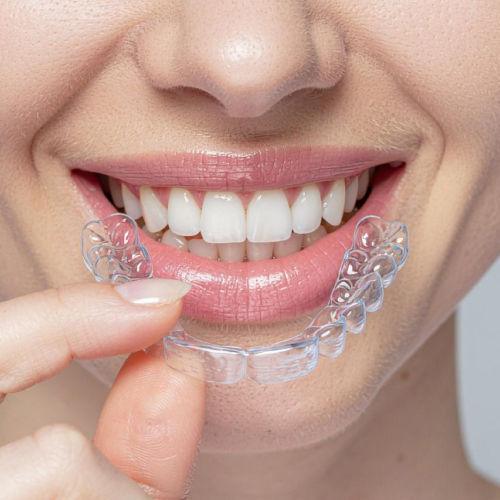
Why Your Invisalign Trays Aren't Fitting—And What to Do About It
Invisalign tray not fitting right in Cypress? Learn why gaps happen, what tracking means, and when refinements are needed. Call Cypress Family Dental.
Read More
Written by Dr. Tokin Kim, DDS | USC Graduate
Medically Reviewed by Dr. Bo Ram Um, DDS
If you're wearing Invisalign and something feels off—a gap at the bottom of your tray, teeth that don't seem to be moving the way they should—you're not imagining it. I hear this from patients in Cypress and the surrounding North Orange County area pretty regularly. And honestly, it's one of those things that sounds simple but has a lot of layers to it. Invisalign works by applying gentle, consistent pressure through custom-fit trays, so when the fit isn't right, the whole treatment can get thrown off. Below, I'll walk through the three questions I get asked most often about Invisalign fit, tracking, and refinements.
Here's the thing—a small gap between your tray and your teeth isn't automatically a crisis. But it does mean something's going on, and it's worth figuring out what.
Invisalign trays are made from a thermoplastic material that's engineered to hug your teeth tightly. Research actually shows the average gap between an aligner and the tooth surface is around 269 micrometers—tiny, but measurable, according to a peer-reviewed study. That's by design. But when the gap becomes visible, especially along the gumline or at the bottom edge of the tray, that's a different story.
A few things cause this.
The most common one I see? Not wearing the trays long enough. Aligners need to be in your mouth at least 20–22 hours a day, and studies suggest they actually fit best after about 15 days of consistent wear—the tray adapts slightly to your mouth over time. If you're popping them out for long stretches, that adaptation never fully happens.
Tray deformation is another big one. Hot water, leaving trays in a car on a warm day, bending them while putting them in—all of that can warp the plastic. And once it's warped, it's warped. I had a patient last month who'd been rinsing her trays with warm tap water every night. The trays looked fine visually, but they'd lost enough shape that she had persistent gaps at her lower molars.
And then there's attachment fit. Those small tooth-colored bumps bonded to your teeth help the aligner grip and move specific teeth. If an attachment comes off or wasn't bonded with a high-viscosity composite, the tray won't seat the way it should.
Bottom line? A gap at the bottom usually means one of three things: not enough wear time, a damaged tray, or an attachment issue. Call your dentist before moving to the next tray.
"Tracking" is the word we use to describe how closely your actual tooth movement matches the digital treatment plan—called ClinCheck—that was created at the start of your Invisalign journey. Good tracking means your teeth are moving on schedule. Poor tracking means they're not.
Not always obvious to the patient, though.
Here's how I explain it: imagine your ClinCheck plan as a GPS route. Tracking is whether you're still on that route or whether you've taken a wrong turn three miles back. The aligners are designed for where your teeth should be, not necessarily where they are. If your teeth fall behind the plan, the tray won't fit snugly—and that gap we talked about earlier? That's often the first sign.
Different movements track differently, which is something a lot of patients don't realize. Tipping movements—where a tooth tilts—tend to track pretty well. But rotations, extrusions (pulling a tooth down), and torque movements are notoriously harder to predict. Overall accuracy for Invisalign tooth movement sits somewhere around 50–73%, depending on the movement type. Honestly, that number surprises people. But it's why monitoring matters.
At our office, we check tracking at every appointment. I'm looking to see whether the tray seats fully, whether the attachments are engaging properly, and whether the teeth look like they match the ClinCheck model for that stage. Remote monitoring tools—like Dental Monitoring—can also catch tracking issues between visits, which helps us course-correct faster.
If you're off-track, we don't just keep going and hope for the best. We pause, reassess, and sometimes go back to a previous tray. And if the deviation is significant enough? That's when refinements come in.
Refinements are additional sets of aligners made after your initial series is complete—or sometimes mid-treatment—to address whatever movements didn't happen quite as planned. Think of them as a second (or third) pass at getting things right.
And here's the part that surprises most of my patients in Cypress: refinements are extremely common. Like, the norm, not the exception. Research shows that about 94% of Invisalign patients need at least one refinement. The average is 2–3 refinements per patient, and total treatment time often runs around 22–23 months—about five months longer than the initial estimate.
Actually, scratch that—it's not that Invisalign is failing. It's that tooth movement is genuinely complex, and no software can perfectly predict how every tooth in every mouth will respond. Refinements are built into the process.
Here's how it works: once your initial trays are done, we take a new digital scan to see where your teeth actually landed. That scan gets submitted to Invisalign, new aligners are fabricated, and you start a new series targeting whatever's left.
The good news? The first refinement tends to make a big difference—improvement rates after the first refinement run between 64–78% depending on case complexity. But here's my slightly controversial opinion: if someone needs more than four rounds of refinements, I think it's worth having a real conversation about whether continuing with aligners is the right call, or whether a different approach might get you there faster. The research backs this up—improvement rates after four-plus refinements drop off significantly.
Look, refinements aren't a sign that something went wrong. They're part of how aligner therapy works.
If your trays aren't fitting right, your teeth don't seem to be moving, or you're wondering whether you're on track—don't wait. These things don't usually resolve on their own. At Cypress Family Dental, we work with patients across Cypress, La Palma, and the rest of North Orange County to make sure Invisalign treatment stays on course. Come in, let us take a look, and we'll give you a straight answer about where you stand and what comes next.
This content is for informational purposes only and does not replace professional medical advice, diagnosis, or treatment. Always consult with a qualified healthcare provider.
Fresh news from the dental world





Mon - Fri 8AM - 5PM
Sat & Sun Closed
Check out what our patients are saying in Cypress...
..png)

“The Doctors Are Just Stellar”
The sweetest people work here, I'm convinced! The ladies at the front desk always go out of their way to be kind and helpful, the hygienists listen to your concerns and will address them to their best ability, and the doctors are just stellar. I drive over 40 min from where I live to go here because it's rare to find a dental office this fantastic.

“They Are So Efficient”
This is the best dentist I have been to and I have been to several. The team is professional and welcoming. They are never over-booked and I have never waited more than 5 minutes in the lobby. They are so efficient, no matter what I go in for, I am out in 45 minutes or less. I highly recommend Cypress Family Dental.

“A Very Pleasant Experience”
My visit to the Cypress Family Dental office today was a very pleasant experience. The front desk staff greeted me upon entering the office and efficiently confirmed my scheduled appointment. I'm seen within a short time by professional, knowledgeable and comfortable staff. They're open to various types of insurance and are flexible on terms. Overall, I would definitely recommend Cypress Family Dental.

“The Staff Did A Great Job”
Came to Cypress Family Dental a year ago for my sleep apnea device. No more snoring! The staff did a great job fitting me for this oral appliance. Better yet, they were there to support me when I needed some adjustments later on. The front office staff couldn't have been more accommodating to schedule me in. Easy to recommend.

“They Truly Care”
The dentist and his staff are wonderful people! In the past, I have had horrible experiences at other dentist offices and then I found this place and I don't think I would ever go anywhere else again. I live about 45 min away from their office but the drive is well worth it. They truly care about their patients. I would recommend this office to anyone.
..png)
“They're All Top Notch”
I'm so happy to have found this awesome dentist with an awesome staff. I am completely confident in the doctor's skill level, and completely comfortable relying on him to work on me without allowing me to experience unnecessary pain. In addition to having a good relationship with the dentist, being able to relate with the office staff is equally important to me. From the hygienist to the dental assistants to the front desk, they're all top notch.
“The Doctors Are Just Stellar”
The sweetest people work here, I'm convinced! The ladies at the front desk always go out of their way to be kind and helpful, the hygienists listen to your concerns and will address them to their best ability, and the doctors are just stellar. I drive over 40 min from where I live to go here because it's rare to find a dental office this fantastic.
“They Are So Efficient”
This is the best dentist I have been to and I have been to several. The team is professional and welcoming. They are never over-booked and I have never waited more than 5 minutes in the lobby. They are so efficient, no matter what I go in for, I am out in 45 minutes or less. I highly recommend Cypress Family Dental.
Check out our accreditations, sources, and relationships in the wide world of dentistry...


Check us out and follow our Cypress dental practice on social media...


