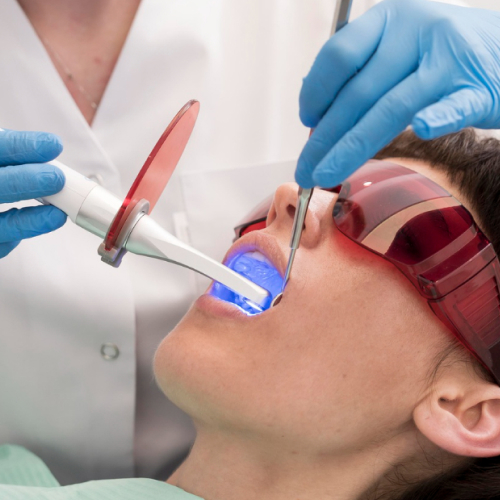
Teeth Whitening vs. Veneers vs. Bonding: Which Smile Upgrade Is Right for You?
Want a brighter smile? Compare teeth whitening, veneers, and bonding to find your perfect fit. Contact Cypress Family Dental today to book your consultation!
Read More
Orthodontic quotes can vary wildly — not just between providers, but between different versions of the same treatment. Before you evaluate any number a provider gives you, you need to understand what tier of treatment you're being quoted, how insurance actually pays out over time, and whether your health history affects your candidacy at all.
For Cypress-area patients, when they receive a quote for Invisalign, they often assume they're being quoted for the same product their friend or coworker received. They're frequently not.
Invisalign isn't a single product — it's a tiered system with meaningfully different scopes of treatment. The four main tiers are Invisalign Express, Lite, Moderate, and Comprehensive. Each tier differs in the number of aligners included, the complexity of movement it can address, and the wholesale lab fees a provider pays Align Technology for the case.
Here's why this matters. Invisalign Express is designed for minor cosmetic corrections — typically five to seven aligners for very limited tooth movement. Invisalign Comprehensive, on the other hand, includes unlimited aligners and refinements for up to five years of treatment. These are fundamentally different products. A quote that seems high for Express may be entirely reasonable for Comprehensive.
The practical takeaway: when you receive a treatment quote, ask your provider to show you your Invisalign Patient Agreement and identify the specific product tier being prescribed. That single piece of information changes how you interpret the quote entirely.
According to Healthline, Invisalign treatment ranges broadly depending on case complexity, provider location, and the amount of work required — all of which map directly to which tier a patient actually needs. A patient with mild crowding who genuinely needs Express should not be paying the same as a patient with a moderate overbite requiring Comprehensive treatment.
The bottom line: no quote exists in a vacuum. Before comparing numbers, compare the scope of treatment behind them.
Most people assume that if their dental plan includes an orthodontic maximum, that amount gets paid to the provider at the start of treatment. That's not how it works.
Insurance companies typically distribute orthodontic benefits in monthly or quarterly installments spread across the estimated treatment duration. For example, a plan with a lifetime orthodontic maximum might pay a fixed amount per month over 24 months. If treatment is estimated at 18 months, the total benefit is divided across those 18 payments — not delivered as a lump sum.
This creates a specific financial risk that most patients don't anticipate: mid-treatment job changes. If you switch employers, lose coverage, or your employer changes dental carriers while you're in active orthodontic treatment, those installment payments stop immediately. You become personally responsible for the remaining balance.
Here's how to protect yourself:
The ADA's guidance on coordination of benefits notes that only group (employer) plans are required to coordinate benefits — meaning an individual policy you purchase privately may not pick up where your employer plan left off.
Understanding this mechanism before treatment starts is far more valuable than comparing quotes after the fact.
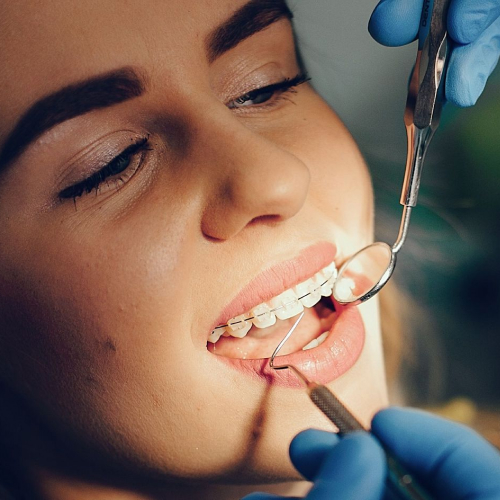
Traditional metal teeth straightening braces remain a clinically reliable orthodontic option, and for many patients — particularly those with more complex bite issues or significant crowding — they're still the most effective path to a functional, stable result.
A Healthline overview of braces costs places standard metal braces in a broad range, with ceramic braces running higher due to materials, and lingual braces (placed behind the teeth) carrying the highest price point of all fixed appliance options. Ceramic braces offer a less visible alternative to metal, though Healthline's review of ceramic braces notes they are more prone to fracture and may cause greater gum sensitivity due to larger bracket size.
For adults considering orthodontics later in life, one biological factor rarely discussed publicly is the role of bone-density medications. Orthodontic tooth movement depends on a process called bone remodeling: osteoclasts break down bone ahead of a moving tooth, while osteoblasts build new bone behind it. Bisphosphonates — medications commonly prescribed for osteopenia and osteoporosis (brand names include Fosamax, Boniva, and Reclast) — work by suppressing osteoclast activity. This is precisely what makes them effective for bone preservation.
The problem: if osteoclasts are suppressed, teeth cannot move predictably. Attempting orthodontic treatment in patients on long-term bisphosphonate therapy carries real risks, including root damage and a rare but serious condition called Medication-Related Osteonecrosis of the Jaw (MRONJ). Research published in PMC on long-term orthodontic outcomes underscores that treatment planning must account for individual patient health factors — not just dental alignment measurements.
Any adult considering orthodontic treatment should disclose all current medications to their provider before a treatment plan is finalized.
Coverage exists, but it's patchwork. Most employer-sponsored dental plans include some orthodontic benefit — commonly a lifetime maximum — but the specifics vary significantly by plan. WebMD's overview of free and low-cost dental care confirms that even with insurance, expensive services routinely result in meaningful out-of-pocket costs.
A few points worth knowing:
The clearest path forward is to call your insurance carrier directly, ask whether orthodontic benefits are included, confirm whether the benefit applies to adults or dependents only, and ask specifically how benefits are disbursed during active treatment. Staying current with your cleaning and exam appointments throughout treatment also helps your provider monitor overall oral health alongside your orthodontic progress.
Orthodontic treatment is a significant commitment — in time, in biology, and in planning. The right starting point isn't a price comparison. It's a conversation with a provider who can evaluate your specific case, identify the appropriate treatment tier, and walk you through what insurance will and won't cover before you commit to anything.
Cypress Family Dental serves patients throughout Cypress and the broader North Orange County area. If you're considering Invisalign, traditional braces, or want to explore aesthetic dentistry options to complement your orthodontic results, we're here to help you make a fully informed decision — not just a fast one.
This article is intended for informational purposes only and does not constitute dental or medical advice. Consult a licensed dental professional for guidance specific to your oral health needs.
Fresh news from the dental world



Mon - Fri 8AM - 5PM
Sat & Sun Closed
Check out what our patients are saying in Cypress...
..png)

“They're All Top Notch”
I'm so happy to have found this awesome dentist with an awesome staff. I am completely confident in the doctor's skill level, and completely comfortable relying on him to work on me without allowing me to experience unnecessary pain. In addition to having a good relationship with the dentist, being able to relate with the office staff is equally important to me. From the hygienist to the dental assistants to the front desk, they're all top notch.

“They Are So Efficient”
This is the best dentist I have been to and I have been to several. The team is professional and welcoming. They are never over-booked and I have never waited more than 5 minutes in the lobby. They are so efficient, no matter what I go in for, I am out in 45 minutes or less. I highly recommend Cypress Family Dental.

“A Very Pleasant Experience”
My visit to the Cypress Family Dental office today was a very pleasant experience. The front desk staff greeted me upon entering the office and efficiently confirmed my scheduled appointment. I'm seen within a short time by professional, knowledgeable and comfortable staff. They're open to various types of insurance and are flexible on terms. Overall, I would definitely recommend Cypress Family Dental.

“The Staff Did A Great Job”
Came to Cypress Family Dental a year ago for my sleep apnea device. No more snoring! The staff did a great job fitting me for this oral appliance. Better yet, they were there to support me when I needed some adjustments later on. The front office staff couldn't have been more accommodating to schedule me in. Easy to recommend.

“They Truly Care”
The dentist and his staff are wonderful people! In the past, I have had horrible experiences at other dentist offices and then I found this place and I don't think I would ever go anywhere else again. I live about 45 min away from their office but the drive is well worth it. They truly care about their patients. I would recommend this office to anyone.
..png)
“The Doctors Are Just Stellar”
The sweetest people work here, I'm convinced! The ladies at the front desk always go out of their way to be kind and helpful, the hygienists listen to your concerns and will address them to their best ability, and the doctors are just stellar. I drive over 40 min from where I live to go here because it's rare to find a dental office this fantastic.
“They're All Top Notch”
I'm so happy to have found this awesome dentist with an awesome staff. I am completely confident in the doctor's skill level, and completely comfortable relying on him to work on me without allowing me to experience unnecessary pain. In addition to having a good relationship with the dentist, being able to relate with the office staff is equally important to me. From the hygienist to the dental assistants to the front desk, they're all top notch.
“They Are So Efficient”
This is the best dentist I have been to and I have been to several. The team is professional and welcoming. They are never over-booked and I have never waited more than 5 minutes in the lobby. They are so efficient, no matter what I go in for, I am out in 45 minutes or less. I highly recommend Cypress Family Dental.
Check out our accreditations, sources, and relationships in the wide world of dentistry...


Check us out and follow our Cypress dental practice on social media...


