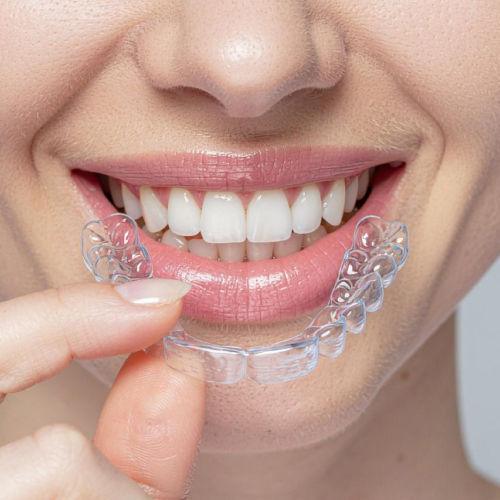
Why Your Invisalign Trays Aren't Fitting—And What to Do About It
Invisalign tray not fitting right in Cypress? Learn why gaps happen, what tracking means, and when refinements are needed. Call Cypress Family Dental.
Read More
Almost everyone has had a moment where they wonder, “Is my breath okay?” Maybe you wake up with a strange taste in your mouth. Maybe you notice an unpleasant smell after coffee. Or maybe someone close to you gently hints that something seems off.
Occasional bad breath happens to all of us. But when it starts showing up regularly, it can feel embarrassing, confusing, and frustrating. You brush. You floss. You rinse. And yet, the problem keeps coming back.
That is usually a sign that your breath is trying to tell you something.
Bad breath, also known as halitosis, is not a condition on its own. It is a symptom. It points to something happening inside your mouth or sometimes elsewhere in your body. The key is understanding where it is coming from and why it persists.
At Cypress Family Dental, we see many patients who assume bad breath is simply about brushing better. In reality, it is often connected to deeper oral health issues that need professional attention. Once the true cause is identified, lasting solutions become much easier.
Let’s take a closer look at what bad breath really means, where it starts, and what you can do about it.
Bad breath develops when odor producing bacteria break down food particles, dead cells, and proteins in your mouth. This process releases sulfur compounds, which create the unpleasant smells commonly associated with halitosis.
Several factors can contribute:
Common causes inside the mouth include:
Other contributing factors may include:
While breath mints and mouthwash can temporarily mask odors, they do not address the source. That is why persistent bad breath usually needs a professional evaluation.
Many people notice that their breath is worst in the morning or seems to worsen later in the day, even if they brush regularly. This is completely normal, but it also reveals how bacteria behave in the mouth.
During sleep, saliva production drops significantly. Saliva plays an important role in washing away bacteria and neutralizing acids. When saliva flow decreases, bacteria multiply more easily.
This leads to:
That familiar “morning breath” is simply the result of this overnight process. However, if bad breath returns quickly after brushing, something else may be contributing.
Possible reasons include:
Brushing your teeth is essential, but it is only one piece of the puzzle.
To improve breath throughout the day:
If these steps help only slightly or not at all, there may be an underlying oral health issue that needs attention.
Yes, it absolutely can.
While most cases of halitosis originate in the mouth, the nose, sinuses, and throat can also contribute.
Tonsil stones form when debris, bacteria, and mucus collect in the crevices of the tonsils. Over time, this material hardens and produces a strong odor.
Sinus infections and chronic congestion can cause postnasal drip. This mucus drains into the throat, feeding odor producing bacteria and contributing to bad breath.
Signs your breath may be related to tonsils or sinuses include:
That said, oral bacteria and throat issues often overlap. A dental exam can help rule out oral causes, while your dentist may also suggest seeing an ENT or primary care physician if non dental sources are suspected.
The goal is collaboration. Identifying the true origin leads to proper treatment rather than guessing.
This is one of the most common and misunderstood situations.
Cavities are not the only oral health problem that can cause bad breath. In fact, some of the biggest culprits include conditions that are not always painful or obvious.
Possible causes include:
Gum disease often begins quietly. Gums may bleed slightly or feel tender, but many people do not notice any discomfort. Meanwhile, bacteria accumulate beneath the gumline and release odor causing compounds.
Even if your teeth are cavity free, your gums and supporting structures still need careful evaluation.
If you have been told you have no cavities but still struggle with bad breath, it is worth asking specifically about gum health and bacterial levels.
The surface of the tongue contains thousands of tiny grooves. These grooves trap bacteria, dead cells, and food particles. Over time, a visible coating may form.
This coating is one of the leading sources of halitosis.
Brushing your teeth without cleaning your tongue leaves a major bacterial reservoir untouched.
Simple ways to reduce tongue related odor:
This small habit can make a noticeable difference for many patients.
Saliva acts as the mouth’s natural cleansing system. When saliva production is reduced, bacteria thrive.
Dry mouth can be caused by:
When saliva is limited, odors build up faster.
Helpful strategies include:
If dry mouth is persistent, your dentist can help identify contributing factors and suggest appropriate solutions.
Beyond obvious culprits, diet patterns also matter.
High protein diets, low carbohydrate diets, and prolonged fasting can increase ketone production, which creates a distinct breath odor.
Sugary snacks feed bacteria, increasing acid production and odor.
Balanced eating supports better breath:
Food choices alone rarely cause chronic halitosis, but they can amplify existing issues.
Although most cases are oral in origin, persistent halitosis can occasionally point to systemic conditions such as:
If dental causes are ruled out and bad breath persists, a medical evaluation may be recommended.
Your dentist can help guide this process by first ensuring oral health factors are addressed.
Many people rely heavily on mouthwash to control bad breath. While mouthwash can temporarily reduce odor, it does not eliminate the bacteria responsible.
Some mouthwashes contain alcohol, which can dry out the mouth and actually worsen halitosis over time.
Think of mouthwash as a short term freshener, not a cure.
Long term improvement comes from:
Professional care plays a central role.
At Cypress Family Dental, evaluating bad breath goes beyond checking for cavities.
Your visit may include:
Based on findings, we may recommend:
The goal is not just to mask odor, but to resolve the source.
Consistency matters more than perfection.
A strong routine includes:
Small changes practiced consistently often lead to big improvements.
Halitosis is common. It is manageable. And in most cases, it is very treatable. If you have tried multiple products without success, that does not mean nothing can be done. It usually means the real cause has not been identified yet.
At Cypress Family Dental, we take a thorough, respectful approach to concerns about breath. You deserve answers that make sense and solutions that work.
If bad breath has been bothering you, we invite you to schedule an appointment with our team. A simple evaluation can uncover what is happening and help you move toward lasting freshness and better oral health.
Fresh breath is not about covering up a problem. It is about caring for your mouth at its foundation.
Fresh news from the dental world



Mon - Fri 8AM - 5PM
Sat & Sun Closed
Check out what our patients are saying in Cypress...
..png)

“The Doctors Are Just Stellar”
The sweetest people work here, I'm convinced! The ladies at the front desk always go out of their way to be kind and helpful, the hygienists listen to your concerns and will address them to their best ability, and the doctors are just stellar. I drive over 40 min from where I live to go here because it's rare to find a dental office this fantastic.

“They Are So Efficient”
This is the best dentist I have been to and I have been to several. The team is professional and welcoming. They are never over-booked and I have never waited more than 5 minutes in the lobby. They are so efficient, no matter what I go in for, I am out in 45 minutes or less. I highly recommend Cypress Family Dental.

“A Very Pleasant Experience”
My visit to the Cypress Family Dental office today was a very pleasant experience. The front desk staff greeted me upon entering the office and efficiently confirmed my scheduled appointment. I'm seen within a short time by professional, knowledgeable and comfortable staff. They're open to various types of insurance and are flexible on terms. Overall, I would definitely recommend Cypress Family Dental.

“The Staff Did A Great Job”
Came to Cypress Family Dental a year ago for my sleep apnea device. No more snoring! The staff did a great job fitting me for this oral appliance. Better yet, they were there to support me when I needed some adjustments later on. The front office staff couldn't have been more accommodating to schedule me in. Easy to recommend.

“They Truly Care”
The dentist and his staff are wonderful people! In the past, I have had horrible experiences at other dentist offices and then I found this place and I don't think I would ever go anywhere else again. I live about 45 min away from their office but the drive is well worth it. They truly care about their patients. I would recommend this office to anyone.
..png)
“They're All Top Notch”
I'm so happy to have found this awesome dentist with an awesome staff. I am completely confident in the doctor's skill level, and completely comfortable relying on him to work on me without allowing me to experience unnecessary pain. In addition to having a good relationship with the dentist, being able to relate with the office staff is equally important to me. From the hygienist to the dental assistants to the front desk, they're all top notch.
“The Doctors Are Just Stellar”
The sweetest people work here, I'm convinced! The ladies at the front desk always go out of their way to be kind and helpful, the hygienists listen to your concerns and will address them to their best ability, and the doctors are just stellar. I drive over 40 min from where I live to go here because it's rare to find a dental office this fantastic.
“They Are So Efficient”
This is the best dentist I have been to and I have been to several. The team is professional and welcoming. They are never over-booked and I have never waited more than 5 minutes in the lobby. They are so efficient, no matter what I go in for, I am out in 45 minutes or less. I highly recommend Cypress Family Dental.
Check out our accreditations, sources, and relationships in the wide world of dentistry...


Check us out and follow our Cypress dental practice on social media...


