
Root Canal vs Tooth Extraction
Not sure whether you need a root canal or extraction? Learn the differences, benefits, and how dentists determine the right treatment.
Read More
Hearing that a tooth may need major treatment can feel overwhelming. For many patients, the conversation usually comes down to two options: saving the tooth with a root canal or removing it with an extraction. Both treatments can stop pain and address infection, but they serve different purposes and can lead to very different long term outcomes.
It is easy to assume that pulling a tooth is the fastest fix. It is also common for people to feel anxious about root canals because of outdated stories they have heard over the years. The truth is that neither option is automatically better in every case. The right answer depends on the health of the tooth, the extent of the damage, and whether keeping it is still realistic.
Whenever possible, dentists usually want to preserve a natural tooth. Your natural teeth help you bite properly, chew comfortably, and maintain the structure of your smile. Still, there are times when a tooth is too compromised to save, and removal becomes the healthier decision.
At Cypress Family Dental, we believe patients make better decisions when they understand what each treatment actually involves. If you are trying to make sense of your options, it helps to look at how root canals and extractions compare, when each one is recommended, and what the pros and cons may be.
In many situations, yes. If the tooth can still be restored successfully, a root canal is often the preferred option. Saving the tooth allows you to keep your natural bite more intact and usually helps avoid some of the long term issues that can happen after losing a tooth.
A root canal is used when the inside of the tooth has become infected or badly inflamed. Inside each tooth is a soft center called the pulp. That area contains nerves and blood vessels. If bacteria reach that space because of deep decay, an injury, a crack, or repeated dental procedures, the tooth can become painful, sensitive, swollen, or infected.
During root canal treatment, the damaged tissue inside the tooth is removed. The inner space is then cleaned thoroughly, disinfected, and sealed. Afterward, the tooth is usually restored, often with a crown, so it can continue functioning normally and withstand daily chewing pressure.
The biggest benefit of a root canal is simple: it removes the infection while allowing you to keep your own tooth. That is important because natural teeth support the surrounding teeth, help preserve bone in the jaw, and maintain normal function.
However, a root canal is not always the right solution. If the tooth is broken too far down, has a deep crack into the root, or does not have enough healthy structure left to support a restoration, saving it may not be predictable. In those cases, extraction may be the better path.
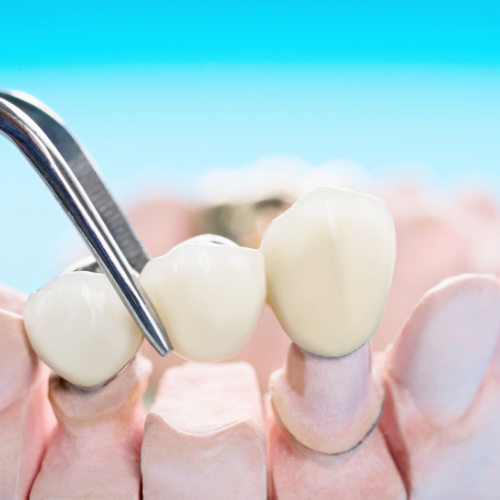
Many patients need to replace the missing tooth with a bridge, implant, or denture to keep the other teeth from shifting and to restore proper chewing ability. That means extraction may solve one problem, but it can also create the need for additional treatment.
So while a root canal is often the better option when the tooth is savable, extraction may be the wiser choice when the tooth has too much damage to remain healthy and functional over time.
This decision starts with a careful exam and dental imaging. A tooth cannot be judged accurately based on pain alone. Some teeth that hurt badly can still be saved, while others that seem less severe may have damage that makes them poor candidates for restoration.
One of the first things a dentist looks at is how much solid tooth structure remains. If too much of the tooth has been lost to decay or breakage, there may not be enough left to rebuild it securely. Even if the infection can be removed, the tooth still needs to be strong enough to support a filling or crown afterward.
The kind of damage matters too. A cavity that reaches the nerve may still be treatable with a root canal if the rest of the tooth is stable. A crack that extends below the gumline or down the root is much more serious. Some fractures can be restored, but others make long term success very unlikely.
Your gums and bone support are also part of the picture. If a tooth has advanced gum disease, major bone loss, or looseness, saving it may not be the best investment in your oral health. A root canal treats the inside of the tooth, but it does not fix poor support around the outside of it.
Dentists also consider where the tooth is located and how important it is to your bite. Molars handle a lot of pressure, so they need to be strong enough to hold up during chewing. Front teeth play a major role in appearance and speech. The position of the tooth can influence whether it makes sense to save it or replace it.
Your overall treatment goals matter as well. Some patients strongly prefer to keep their natural teeth whenever possible. Others may be more focused on cost, timing, or reducing the chance of future retreatment. These are all valid concerns, and a good treatment recommendation should take them into account.
Cost is often part of the conversation too. An extraction may seem less expensive at first, but that is not always the full story. If you later need an implant or bridge to replace the missing tooth, the total treatment cost may end up being higher than saving the tooth in the first place. Looking only at the immediate step can sometimes be misleading.
In short, the choice between a root canal and extraction depends on whether the tooth can be restored predictably, whether it has healthy support, and which option offers the better long term result for your smile.
Both treatments have benefits, and both have drawbacks. The better option depends on the condition of the tooth and what outcome is most realistic.
One of the biggest advantages of root canal treatment is that it preserves your natural tooth. That may not seem like a big deal at first, but it matters a lot. A natural tooth helps keep your bite stable, allows you to chew more normally, and helps maintain the bone around the root. Keeping the tooth in place can also help prevent neighboring teeth from shifting.
Another advantage is that modern root canal treatment is usually much easier than people expect. Many patients picture it as extremely painful, but with current techniques and anesthesia, the procedure is often similar to having a deep filling or crown done. In many cases, patients feel better after the infected tissue is removed because the source of the pain has been addressed.
A successful root canal can also offer long lasting results. When the tooth is restored properly and cared for well, it may remain functional for many years. Still, root canal treatment is not perfect. In many cases, the tooth will need a crown afterward, which adds time and expense. A treated tooth can also become weaker over time, especially if a lot of the original structure was already lost. And if the tooth has hidden cracks or severe structural damage, the long term outlook may be less certain.
Tooth extraction has its own benefits. When a tooth is too damaged to save, removing it can eliminate pain and infection and prevent the problem from spreading. In some cases, extraction is the most predictable and straightforward treatment. This is especially true when the tooth has severe decay below the gumline, advanced mobility, or a crack that extends into the root.
Another potential benefit is that extraction may prevent repeated treatment on a tooth with a poor prognosis. If the chance of success is very low, removing the tooth may spare you future discomfort and added expense.
But there are downsides to extraction too. Once the tooth is gone, there is an empty space in your mouth. That gap can affect how you chew and may allow nearby teeth to drift out of place. Over time, the jawbone in that area can also begin to shrink because it no longer has a root stimulating it.
That is why extraction often leads to another step, such as a dental implant, bridge, or partial denture. Replacing the tooth can restore function and appearance, but it also means more treatment, more time, and potentially more cost.
There is also the simple fact that once a natural tooth is removed, it is gone for good. Even excellent replacements do not fully duplicate everything a healthy natural tooth can do. That is why dentists usually try to save a tooth first when the odds of success are reasonable.
The pros and cons really come down to this: root canal treatment is usually best when the tooth can be saved and restored with confidence, while extraction is often best when the tooth is too damaged or unstable to remain healthy over time.
If you are facing this decision, it is important not to rely on fear or assumptions alone. Some patients think an extraction will always be easier. Others assume a root canal is automatically the smarter choice. The truth is that each situation is different. What matters most is the actual condition of the tooth and the long term outlook.
A thorough exam can reveal whether the tooth has enough healthy structure left, whether the roots are sound, and whether the surrounding bone and gums can support it. Once those pieces are clear, the right path usually becomes much easier to see.
At Cypress Family Dental, we take the time to explain what is happening and why one treatment may be more appropriate than the other. Our goal is not just to stop the immediate problem, but to help you make the choice that supports your comfort, function, and oral health in the long run.
If you have ongoing tooth pain, swelling, sensitivity, or signs of infection, do not ignore it. Problems like these often worsen with time, and waiting can reduce the chances of saving the tooth. Getting an evaluation early can make a big difference.
If you are trying to decide between a root canal and a tooth extraction, schedule an appointment with Cypress Family Dental. We can examine the tooth, walk you through your options, and help you choose the treatment that makes the most sense for your smile and your long term health.
Fresh news from the dental world







Mon - Fri 8AM - 5PM
Sat & Sun Closed
Check out what our patients are saying in Cypress...
..png)

“The Doctors Are Just Stellar”
The sweetest people work here, I'm convinced! The ladies at the front desk always go out of their way to be kind and helpful, the hygienists listen to your concerns and will address them to their best ability, and the doctors are just stellar. I drive over 40 min from where I live to go here because it's rare to find a dental office this fantastic.

“They Are So Efficient”
This is the best dentist I have been to and I have been to several. The team is professional and welcoming. They are never over-booked and I have never waited more than 5 minutes in the lobby. They are so efficient, no matter what I go in for, I am out in 45 minutes or less. I highly recommend Cypress Family Dental.

“A Very Pleasant Experience”
My visit to the Cypress Family Dental office today was a very pleasant experience. The front desk staff greeted me upon entering the office and efficiently confirmed my scheduled appointment. I'm seen within a short time by professional, knowledgeable and comfortable staff. They're open to various types of insurance and are flexible on terms. Overall, I would definitely recommend Cypress Family Dental.

“They Truly Care”
The dentist and his staff are wonderful people! In the past, I have had horrible experiences at other dentist offices and then I found this place and I don't think I would ever go anywhere else again. I live about 45 min away from their office but the drive is well worth it. They truly care about their patients. I would recommend this office to anyone.
..png)
“They're All Top Notch”
I'm so happy to have found this awesome dentist with an awesome staff. I am completely confident in the doctor's skill level, and completely comfortable relying on him to work on me without allowing me to experience unnecessary pain. In addition to having a good relationship with the dentist, being able to relate with the office staff is equally important to me. From the hygienist to the dental assistants to the front desk, they're all top notch.

“The Staff Did A Great Job”
Came to Cypress Family Dental a year ago for my sleep apnea device. No more snoring! The staff did a great job fitting me for this oral appliance. Better yet, they were there to support me when I needed some adjustments later on. The front office staff couldn't have been more accommodating to schedule me in. Easy to recommend.
“The Doctors Are Just Stellar”
The sweetest people work here, I'm convinced! The ladies at the front desk always go out of their way to be kind and helpful, the hygienists listen to your concerns and will address them to their best ability, and the doctors are just stellar. I drive over 40 min from where I live to go here because it's rare to find a dental office this fantastic.
“They Are So Efficient”
This is the best dentist I have been to and I have been to several. The team is professional and welcoming. They are never over-booked and I have never waited more than 5 minutes in the lobby. They are so efficient, no matter what I go in for, I am out in 45 minutes or less. I highly recommend Cypress Family Dental.
Check out our accreditations, sources, and relationships in the wide world of dentistry...


Check us out and follow our Cypress dental practice on social media...


