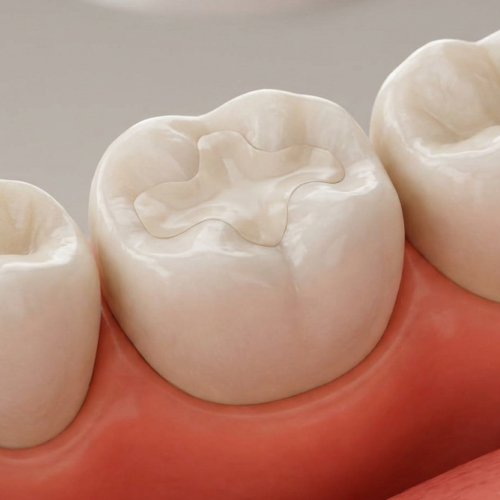
When Does a Cavity Actually Need a Dental Filling or Onlay?
Wondering if you need a dental filling or onlay? Learn when dentists treat decay and how to protect your smile. Book your visit to Cypress Family Dental today!
Read More
Porcelain veneers typically last 10–20 years, but "lasting" doesn't always mean the porcelain broke — gum recession, cement breakdown, and hidden decay are often the real reasons veneers eventually need replacement. Understanding what happens at the 15- and 20-year marks helps you make a smarter long-term decision before your first appointment.
For Cypress-area patients, most people researching veneers focus on the porcelain itself. Will it chip? Will it stain? Those are fair questions. But the more common reasons veneers fail after 15–20 years have nothing to do with the porcelain at all.
Gum recession and margin exposure are among the leading causes of long-term veneer replacement. Over two decades, the gum line naturally recedes with age — a process sometimes called senile recession — or it pulls back from aggressive brushing. When that happens, the margin (the seam where the veneer meets the natural tooth) becomes visible. Patients notice a dark line near the gumline. That line isn't just cosmetic. It creates a physical ledge that traps plaque and exposes the underlying tooth structure to bacterial acid. Root-surface decay can follow.
In some cases, a dentist can evaluate whether gum grafting would restore tissue coverage over the margin, potentially extending the life of the veneer without replacing the porcelain. But that's a case-by-case clinical decision.
There's also the less visible problem: bonding degradation and silent under-veneer decay. The resin cement holding a porcelain veneer to your tooth is not permanent in a chemical sense. Years of thermal cycling — the constant micro-expansion and contraction from hot coffee, cold water, and chewing pressure — gradually create micro-leakage at the bond. Bacteria enter through microscopic gaps. Because the porcelain covers the front surface, decay can progress on the underlying tooth without any visible sign or sensitivity until it reaches the nerve.
Dentists use transillumination (shining high-intensity light through the tooth) and digital X-rays to detect this kind of silent decay beneath aging veneers before it escalates to a root canal. According to WebMD, the veneer procedure typically requires multiple dental visits for evaluation — and that ongoing monitoring matters just as much after placement as it does before.
Veneers are often described as permanent, and in one sense that's accurate — the enamel removed during preparation cannot grow back. A Healthline overview of dental veneers explains that applying traditional veneers involves grinding down tooth structure, sometimes removing enamel past the surface, making the procedure irreversible.
But there's a second layer to that permanence that matters enormously for younger patients: your enamel budget.
Every replacement cycle — and veneers will need replacing, typically every 10–15 years — requires a dentist to remove old bonding resin and re-prep the tooth surface. Each cycle removes a small additional fraction of natural tooth structure. A person who gets veneers at age 22 may go through two or three replacement cycles by age 55. At some point, there is simply not enough natural enamel remaining to bond a new veneer reliably. The clinical path at that stage typically leads to full-coverage dental crowns, which require even more tooth reduction. Eventually, if a tooth is severely compromised, an implant becomes the long-term conversation.
This isn't a reason to avoid veneers — it's a reason to choose them thoughtfully, with a dentist who evaluates your tooth structure, age, and bite before recommending them. Cleveland Clinic notes that veneers are only appropriate for patients free of extensive cavities and gum disease, and that they improve appearance without necessarily strengthening the underlying tooth.
No-prep and minimal-prep veneers exist precisely to preserve more of that enamel budget. A Healthline overview of no-prep veneers notes they can last 5–7 years or longer and require significantly less tooth alteration — a meaningful trade-off for patients who want to preserve future options.
Not all veneers age the same way. The material you choose shapes both how long your veneers last and what maintenance looks like over time.
Porcelain veneers are the gold standard for longevity and aesthetics. Porcelain resists staining better than composite resin because it is non-porous, and its light-reflecting quality closely mimics natural enamel. With proper care, porcelain veneers regularly reach the 15-year mark, and some research documents success rates beyond 20 years.
Composite resin veneers cost less and can often be placed in a single visit, since the material is applied directly to the tooth rather than fabricated in a lab. The trade-off is durability — composite is more prone to chipping and staining over time. A Healthline overview of composite veneers notes that composite veneers require a highly skilled provider for a successful outcome, and that indirect composite versions (made outside the mouth, then bonded) resist fractures better than direct application.
For patients with minor cosmetic concerns — a small chip, a slight gap — composite may be a practical starting point. For patients seeking a dramatic, long-lasting smile transformation, porcelain remains the more durable choice. Our aesthetic dentistry services can help you determine which option best fits your goals.
Mouthhealthy.org from the American Dental Association emphasizes that only a licensed dentist should place veneers — an important reminder given the rise of unlicensed cosmetic providers who may place veneers over unhealthy teeth without proper evaluation.
At Cypress Family Dental, we serve patients throughout Cypress and the North Orange County area who want honest, thorough guidance before committing to any cosmetic treatment. That includes a full evaluation of your enamel, gum health, and long-term goals — not just a conversation about the porcelain. We recommend starting with a cleaning and exam to ensure your teeth and gums are in the best possible condition before any cosmetic work begins.
If you're considering veneers and want to understand exactly what they mean for your smile over the next 10, 20, or 30 years, we're here to walk through it with you. Schedule a consultation with our Cypress team today.
This article is intended for informational purposes only and does not constitute professional dental or medical advice. Individual results vary. Please consult a licensed dental professional to determine the treatment options appropriate for your specific oral health needs.
Fresh news from the dental world
Mon - Fri 8AM - 5PM
Sat & Sun Closed
Check out what our patients are saying in Cypress...
..png)

“The Doctors Are Just Stellar”
The sweetest people work here, I'm convinced! The ladies at the front desk always go out of their way to be kind and helpful, the hygienists listen to your concerns and will address them to their best ability, and the doctors are just stellar. I drive over 40 min from where I live to go here because it's rare to find a dental office this fantastic.

“They Are So Efficient”
This is the best dentist I have been to and I have been to several. The team is professional and welcoming. They are never over-booked and I have never waited more than 5 minutes in the lobby. They are so efficient, no matter what I go in for, I am out in 45 minutes or less. I highly recommend Cypress Family Dental.

“A Very Pleasant Experience”
My visit to the Cypress Family Dental office today was a very pleasant experience. The front desk staff greeted me upon entering the office and efficiently confirmed my scheduled appointment. I'm seen within a short time by professional, knowledgeable and comfortable staff. They're open to various types of insurance and are flexible on terms. Overall, I would definitely recommend Cypress Family Dental.

“They Truly Care”
The dentist and his staff are wonderful people! In the past, I have had horrible experiences at other dentist offices and then I found this place and I don't think I would ever go anywhere else again. I live about 45 min away from their office but the drive is well worth it. They truly care about their patients. I would recommend this office to anyone.

“The Staff Did A Great Job”
Came to Cypress Family Dental a year ago for my sleep apnea device. No more snoring! The staff did a great job fitting me for this oral appliance. Better yet, they were there to support me when I needed some adjustments later on. The front office staff couldn't have been more accommodating to schedule me in. Easy to recommend.
..png)
“They're All Top Notch”
I'm so happy to have found this awesome dentist with an awesome staff. I am completely confident in the doctor's skill level, and completely comfortable relying on him to work on me without allowing me to experience unnecessary pain. In addition to having a good relationship with the dentist, being able to relate with the office staff is equally important to me. From the hygienist to the dental assistants to the front desk, they're all top notch.
“The Doctors Are Just Stellar”
The sweetest people work here, I'm convinced! The ladies at the front desk always go out of their way to be kind and helpful, the hygienists listen to your concerns and will address them to their best ability, and the doctors are just stellar. I drive over 40 min from where I live to go here because it's rare to find a dental office this fantastic.
“They Are So Efficient”
This is the best dentist I have been to and I have been to several. The team is professional and welcoming. They are never over-booked and I have never waited more than 5 minutes in the lobby. They are so efficient, no matter what I go in for, I am out in 45 minutes or less. I highly recommend Cypress Family Dental.
Check out our accreditations, sources, and relationships in the wide world of dentistry...


Check us out and follow our Cypress dental practice on social media...


