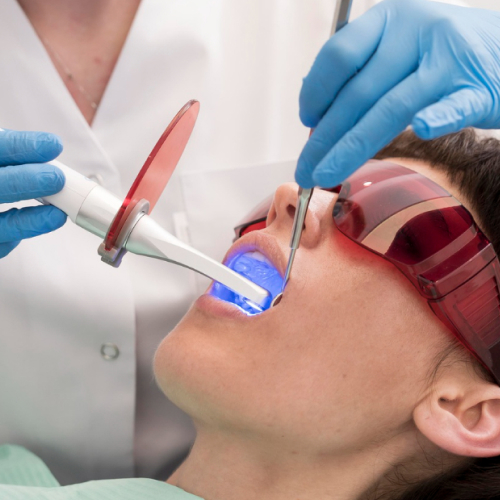
Teeth Whitening vs. Veneers vs. Bonding: Which Smile Upgrade Is Right for You?
Want a brighter smile? Compare teeth whitening, veneers, and bonding to find your perfect fit. Contact Cypress Family Dental today to book your consultation!
Read More
Most articles quote a per-tooth price for veneers and stop there. But the real financial picture depends on your age, your specific clinical situation, and whether your insurance might cover more than you think. Here's what patients in Cypress and La Palma need to understand before committing to porcelain veneers.
Veneers are not a one-time purchase. They are a permanent commitment to a replacement cycle that compounds over decades — and the younger you are at first placement, the more significant the long-term picture becomes.
According to Healthline, traditional porcelain veneers last roughly 10 to 15 years on average, with some research showing success rates extending toward 20 years under ideal conditions. Composite veneers tend to require replacement sooner.
Here is what that replacement cycle actually means in practice:
A patient in their mid-20s who chooses a full smile makeover — typically six to eight veneers across the front teeth — is likely facing two to four full replacement cycles before retirement age. Each replacement requires the same prep work, the same lab fees, and potentially additional restorative procedures if the underlying tooth has been stressed by repeated enamel reduction.
There are compounding factors beyond the veneers themselves:
A 55-year-old considering veneers faces a fundamentally different calculation than a 25-year-old. This is not a reason to avoid veneers — it is a reason to have an honest conversation with your dentist about timing, material selection, and realistic expectations before the first appointment.
The standard answer online is: insurance does not cover cosmetic procedures, so veneers are out-of-pocket. That answer is incomplete.
The clinical line between "cosmetic" and "restorative" is not always obvious, and it matters for coverage. Dental insurance plans — including most PPO plans common in North Orange County — evaluate procedures based on clinical necessity, not patient motivation.
Veneers placed to cover structural damage, significant enamel erosion from acid reflux or bruxism, or fractures resulting from trauma may qualify for partial coverage under certain CDT billing codes. Your dentist's documentation is what drives that determination. Insurers look for evidence such as intraoral photographs demonstrating substantial enamel loss, radiographs showing structural compromise, or clinical notes confirming the tooth cannot be adequately restored by a less invasive approach.
The ADA's guidance on least-expensive alternative treatment clauses explains that insurers routinely apply cost-containment measures — meaning they may cover a portion of treatment while directing benefit toward the least expensive clinically acceptable option. Understanding this framework helps patients ask the right questions before assuming full out-of-pocket responsibility.
What this means practically: if your veneers are being placed because of documented structural damage rather than purely cosmetic preference, your dentist's clinical notes and diagnostic records become a meaningful part of your financial picture. Ask your provider to review your specific situation and submit for predetermination before treatment begins. In some cases, a tooth crown may be the alternative restoration an insurer points to under a least-expensive alternative treatment clause.
"Can you just do one tooth?" is one of the most common questions dentists hear about veneers. The answer is yes — but there is a significant technical challenge most patients are not warned about.
Natural teeth are optically complex. They transmit light differently at different depths, exhibit natural fluorescence under UV light, and vary in translucency from the incisal edge to the gum line. A single porcelain veneer on a central incisor must match all of that — on a tooth that sits directly next to an untouched natural tooth under the same lighting conditions your friends and family see every day.
Research published in PMC on ceramic laminate veneer workflows highlights that achieving ideal esthetics in the anterior region requires precise communication between the clinician and the ceramist — and that the complexity increases significantly when the restoration must integrate seamlessly with adjacent natural dentition.
In practice, matching a single central incisor often requires custom shade-matching sessions with a master ceramist, additional lab iterations, and sometimes multiple try-in appointments. The cost of that extra labor is real and often surprises patients who expected a single-tooth solution to be straightforward.
The more predictable clinical approach in many cases is treating teeth in pairs. Veneering both central incisors, or a central and lateral together, gives the ceramist a matched set to work with rather than a single restoration that must perfectly replicate the optical properties of a natural neighbor. Your dentist can walk you through whether this applies to your specific situation. Patients who are not candidates for veneers at all may find that aesthetic dentistry options like bonding or contouring offer a less invasive path to similar results.
For the right patient, yes — with clear eyes about what "worth it" actually means.
WebMD's overview of veneers outlines the range of conditions veneers address well: discoloration resistant to whitening, chipped or worn teeth, gaps, and minor shape irregularities. Mouthhealthy.org from the ADA adds an important caution: only trust a licensed dentist to place veneers, as unlicensed providers risk placing restorations over unhealthy teeth, leading to infection or nerve damage.
Veneers deliver durable, stain-resistant, natural-looking results that pro teeth whitening and bonding cannot replicate in more complex cases. Porcelain in particular resists staining better than composite and mimics the light-reflective properties of natural enamel. The tradeoff is permanence — once enamel is reduced, that decision cannot be reversed.
Whether veneers are the right investment depends on your age, oral health baseline, the number of teeth involved, and what problem you are actually trying to solve. For patients with structurally sound teeth seeking minor color improvements, there may be less invasive alternatives worth exploring first. For patients with significant discoloration, worn enamel, or multiple cosmetic concerns, veneers often represent the most durable long-term solution available.
The best way to evaluate veneers is a conversation with a dentist who can assess your specific teeth, document your clinical situation for insurance purposes, and help you think through the full picture — not just the first appointment. A cleaning and exam is often the right first step, giving your provider the baseline records needed to evaluate whether veneers are clinically appropriate for your situation.
Cypress Family Dental serves patients throughout Cypress and the surrounding North Orange County area. Schedule a consultation to discuss your smile goals and get an honest assessment of what veneers would mean for your unique situation.
This article is intended for general informational purposes only and does not constitute dental or medical advice. Always consult a licensed dental professional regarding your specific oral health needs and treatment options.
Fresh news from the dental world



Mon - Fri 8AM - 5PM
Sat & Sun Closed
Check out what our patients are saying in Cypress...
..png)

“They're All Top Notch”
I'm so happy to have found this awesome dentist with an awesome staff. I am completely confident in the doctor's skill level, and completely comfortable relying on him to work on me without allowing me to experience unnecessary pain. In addition to having a good relationship with the dentist, being able to relate with the office staff is equally important to me. From the hygienist to the dental assistants to the front desk, they're all top notch.

“They Are So Efficient”
This is the best dentist I have been to and I have been to several. The team is professional and welcoming. They are never over-booked and I have never waited more than 5 minutes in the lobby. They are so efficient, no matter what I go in for, I am out in 45 minutes or less. I highly recommend Cypress Family Dental.

“A Very Pleasant Experience”
My visit to the Cypress Family Dental office today was a very pleasant experience. The front desk staff greeted me upon entering the office and efficiently confirmed my scheduled appointment. I'm seen within a short time by professional, knowledgeable and comfortable staff. They're open to various types of insurance and are flexible on terms. Overall, I would definitely recommend Cypress Family Dental.

“The Staff Did A Great Job”
Came to Cypress Family Dental a year ago for my sleep apnea device. No more snoring! The staff did a great job fitting me for this oral appliance. Better yet, they were there to support me when I needed some adjustments later on. The front office staff couldn't have been more accommodating to schedule me in. Easy to recommend.

“They Truly Care”
The dentist and his staff are wonderful people! In the past, I have had horrible experiences at other dentist offices and then I found this place and I don't think I would ever go anywhere else again. I live about 45 min away from their office but the drive is well worth it. They truly care about their patients. I would recommend this office to anyone.
..png)
“The Doctors Are Just Stellar”
The sweetest people work here, I'm convinced! The ladies at the front desk always go out of their way to be kind and helpful, the hygienists listen to your concerns and will address them to their best ability, and the doctors are just stellar. I drive over 40 min from where I live to go here because it's rare to find a dental office this fantastic.
“They're All Top Notch”
I'm so happy to have found this awesome dentist with an awesome staff. I am completely confident in the doctor's skill level, and completely comfortable relying on him to work on me without allowing me to experience unnecessary pain. In addition to having a good relationship with the dentist, being able to relate with the office staff is equally important to me. From the hygienist to the dental assistants to the front desk, they're all top notch.
“They Are So Efficient”
This is the best dentist I have been to and I have been to several. The team is professional and welcoming. They are never over-booked and I have never waited more than 5 minutes in the lobby. They are so efficient, no matter what I go in for, I am out in 45 minutes or less. I highly recommend Cypress Family Dental.
Check out our accreditations, sources, and relationships in the wide world of dentistry...


Check us out and follow our Cypress dental practice on social media...


