How Much Does Invisalign Cost and What Is Included in the Price?
Curious about Invisalign cost? Learn what is included in the price and if the cost is normal. Read our guide and schedule your consultation today!
Read More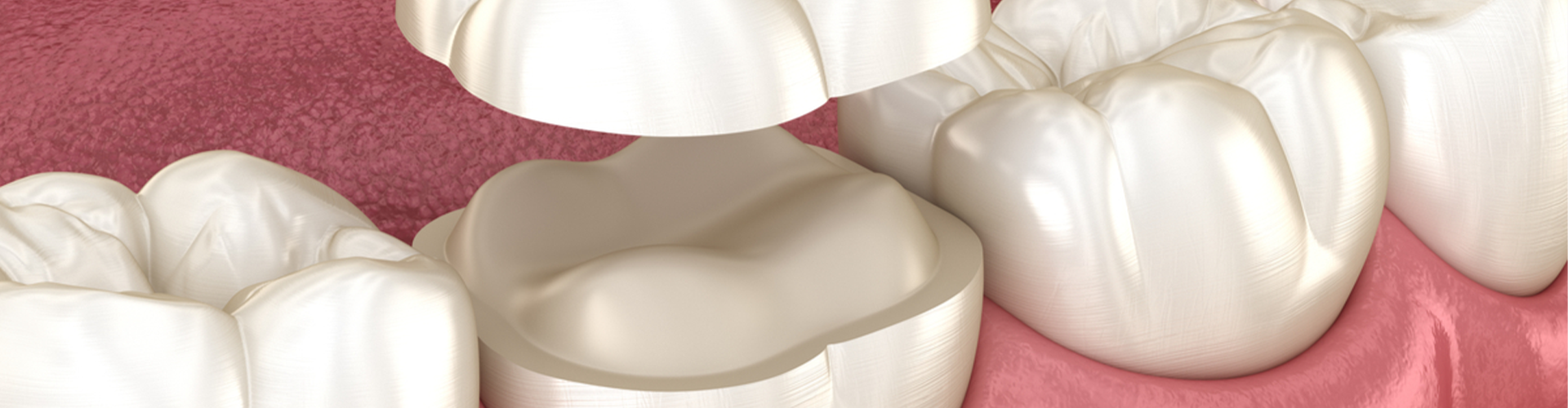
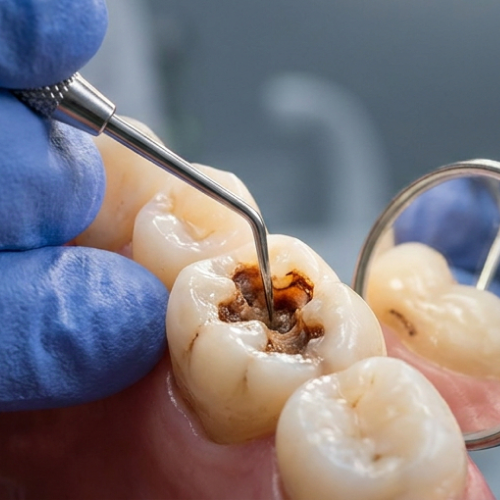
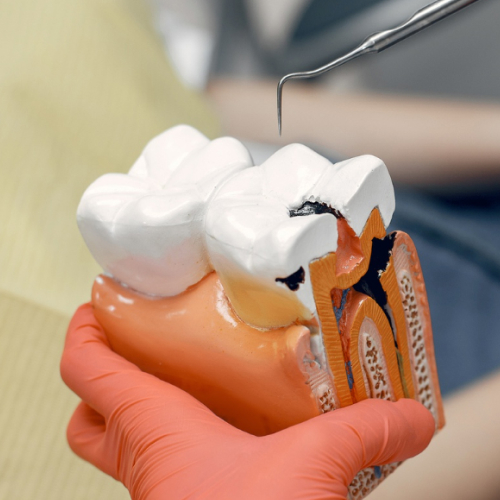
Cavities and loss of tooth structure are the main reasons for patients to show up at the dental office. Your dentist uses different techniques or measures to fill the cavity and restore the lost tooth structure. Other filling materials like silver fillings and gold fillings have been used in the past. The filling is done if there is a cavity on the tooth surface. A crown is given when major tooth structure is lost. But what can be given if the tooth structure loss is more than a cavity? Placing an entire crown might require excessive removal of the existing natural teeth. Hence the middle ground options came into existence. Those are inlays and onlays. WHAT IS AN INLAY? An inlay is an intra-coronal restoration. They are used to fill a large area of damage inside the tooth and are not recommended if the damage or decay extends beyond the cusps. WHAT IS THE DIFFERENCE BETWEEN A FILLING AND AN INLAY? A filling covers only a small defect in tooth structure, whereas an inlay helps fill the defects larger than cavities that do not extend beyond cusps.
WHAT DOES A DENTAL INLAY LOOK LIKE? A dental inlay looks like a partial crown shaped in the form of the cavity. It is custom-made extra-orally to fit into the cavity. It can be made with different materials like gold, composite, ceramic, or metals. An impression of the shape of the cavity is first recorded in wax and then processed in the laboratory with the required material to form the inlay. This custom-made inlay is bonded to the tooth structure using resin cement. WHAT IS AN ONLAY? An onlay is very similar to an inlay, but it is an intra-coronal restoration that is partly intra-coronal and partly extra-coronal that covers all the cusps in posterior teeth. It looks similar to a partial crown but extends only till cusps and not beyond that. It can be made with different materials like gold, composite, ceramic, or metals. DOES GETTING AN INLAY HURT? Usually, these restorations are given when a large amount of tooth structure is damaged. Removal of a large amount of decayed tooth structure might lead to sensitivity as we are approaching the pulp cavity with nerves and blood vessels. Your dentist will numb you with a local anesthetic while preparing the tooth, removing caries, and bonding the inlay till the procedure is completed, and this anesthetic wears off after 2 hours. If the tooth is already root canal treated, you might not even feel the pain anyway throughout the procedure. So, there would not be any need for anesthesia during the process. If any discomfort continues for a day or two, your dentist prescribes some over-the-counter painkillers.
WHAT ARE THE ADVANTAGES OF INLAYS AND ONLAYS? Since dentistry is progressing towards minimally invasive dentistry, inlays and onlays are a welcome choice. The advantages of these are: ● Requires less destruction of natural tooth structure ● Provides strength to the tooth and restoration as the most amount of natural tooth is preserved ● More esthetic as a natural tooth can be saved in esthetic zones ● Ceramic inlays and onlays are biocompatible and chemically inert Patient selection is equally important for inlays and onlays as they are not indicated for all. They are contraindicated in patients with: ● High caries index ● Poor oral hygiene ● More loss of tooth structure ● Bruxism patients ● Improper enamel and dentin formation in syndromic patients Getting an inlay or onlay is a technique-sensitive procedure. The decision of suggesting an inlay or onlay entirely depends on your diagnosis and treatment plan given by your dentist. So, consult your dentist to get more information regarding this minimally invasive procedure.
Fresh news from the dental world


Mon - Fri 8AM - 5PM
Sat & Sun Closed
Check out what our patients are saying in Cypress...
..png)

“The Doctors Are Just Stellar”
The sweetest people work here, I'm convinced! The ladies at the front desk always go out of their way to be kind and helpful, the hygienists listen to your concerns and will address them to their best ability, and the doctors are just stellar. I drive over 40 min from where I live to go here because it's rare to find a dental office this fantastic.

“They Are So Efficient”
This is the best dentist I have been to and I have been to several. The team is professional and welcoming. They are never over-booked and I have never waited more than 5 minutes in the lobby. They are so efficient, no matter what I go in for, I am out in 45 minutes or less. I highly recommend Cypress Family Dental.

“The Staff Did A Great Job”
Came to Cypress Family Dental a year ago for my sleep apnea device. No more snoring! The staff did a great job fitting me for this oral appliance. Better yet, they were there to support me when I needed some adjustments later on. The front office staff couldn't have been more accommodating to schedule me in. Easy to recommend.

“A Very Pleasant Experience”
My visit to the Cypress Family Dental office today was a very pleasant experience. The front desk staff greeted me upon entering the office and efficiently confirmed my scheduled appointment. I'm seen within a short time by professional, knowledgeable and comfortable staff. They're open to various types of insurance and are flexible on terms. Overall, I would definitely recommend Cypress Family Dental.

“They Truly Care”
The dentist and his staff are wonderful people! In the past, I have had horrible experiences at other dentist offices and then I found this place and I don't think I would ever go anywhere else again. I live about 45 min away from their office but the drive is well worth it. They truly care about their patients. I would recommend this office to anyone.
..png)
“They're All Top Notch”
I'm so happy to have found this awesome dentist with an awesome staff. I am completely confident in the doctor's skill level, and completely comfortable relying on him to work on me without allowing me to experience unnecessary pain. In addition to having a good relationship with the dentist, being able to relate with the office staff is equally important to me. From the hygienist to the dental assistants to the front desk, they're all top notch.
“The Doctors Are Just Stellar”
The sweetest people work here, I'm convinced! The ladies at the front desk always go out of their way to be kind and helpful, the hygienists listen to your concerns and will address them to their best ability, and the doctors are just stellar. I drive over 40 min from where I live to go here because it's rare to find a dental office this fantastic.
“They Are So Efficient”
This is the best dentist I have been to and I have been to several. The team is professional and welcoming. They are never over-booked and I have never waited more than 5 minutes in the lobby. They are so efficient, no matter what I go in for, I am out in 45 minutes or less. I highly recommend Cypress Family Dental.
Check out our accreditations, sources, and relationships in the wide world of dentistry...


Check us out and follow our Cypress dental practice on social media...


