Why Your Invisalign Trays Aren't Fitting—And What to Do About It
Invisalign tray not fitting right in Cypress? Learn why gaps happen, what tracking means, and when refinements are needed. Call Cypress Family Dental.
Read More
Written by Dr. Tokin Kim, DDS | USC Graduate
Medically Reviewed by Dr. Bo Ram Um, DDS
Look, I get asked about whitening options at least three times a week here in Cypress. Patients want brighter smiles—who doesn't?—but they're confused about whether they should do it in our office or take trays home. And honestly, both work.
Here's the thing: the "best" choice isn't the same for everyone. Some folks want results yesterday. Others would rather gradually lighten their teeth while binging Netflix (fair enough). The science behind both methods is actually pretty solid, though the marketing can make things confusing.
At Cypress Family Dental, we've been helping North Orange County residents brighten their smiles for years, and I've noticed the questions tend to fall into three categories: What's actually different between the methods? Which one works faster? And if you've got sensitive teeth (so many of us do), which option won't make you miserable?
I'm going to break down each of these based on what the research actually shows—not what toothpaste commercials claim. We'll talk peroxide concentrations, timelines, sensitivity risks, all of it. Because making an informed choice beats guessing every time.
The main difference boils down to concentration and control. In-office whitening uses high-strength peroxide gels—we're talking 15% to 43% hydrogen peroxide or up to 16% carbamide peroxide—applied directly to your teeth after we've protected your gums with barriers. At-home kits? They typically use around 10% carbamide peroxide (roughly equivalent to 3% hydrogen peroxide), which you apply yourself using custom-fitted trays.
I had a patient last month who thought all whitening products were basically the same. Not even close.
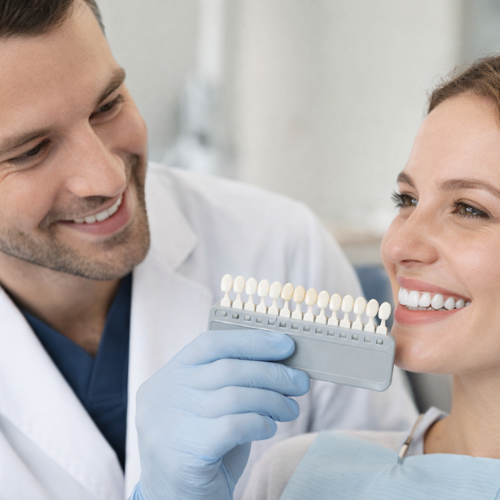
The in-office procedure takes about an hour. We apply the gel in timed intervals, sometimes use a light to activate it (though the evidence on whether that actually helps is murky), and you walk out noticeably whiter—often 3 to 8 shades lighter in one visit. Your soft tissues are protected the whole time, and we're monitoring everything.
At-home kits require you to wear the trays for 30 to 60 minutes daily over one to two weeks. You're in control of when and where. The peroxide concentration is lower, so there's less risk of gum irritation, but you need to be consistent.
Here's what surprises people: systematic reviews show that at the six-month mark, both methods deliver similar whitening results. The in-office route gets you there faster, but the destination is pretty much the same. The ADA has endorsed both approaches when done under dental supervision.
Cost is another major difference. In-office whitening typically runs $650 or more, while dentist-provided at-home kits cost between $100 and $400. OTC drugstore kits are cheaper but lack customization and professional oversight.
Bottom line? If you want immediate gratification and don't mind the price, in-office is your friend. If you prefer gradual results and value convenience, custom at-home trays work beautifully—at least in my experience.
Professional in-office whitening wins the speed race. No contest.
Look, when we use 35-40% hydrogen peroxide in our Cypress office, you're getting results in about an hour—sometimes even faster depending on how your teeth respond. One session. You walk in with stained teeth, walk out significantly whiter. I've seen patients lighten 3 to 8 shades in a single appointment, which honestly never gets old for me to witness.
At-home whitening trays? They're the tortoise to in-office's hare. You'll start seeing noticeable changes within a few days to two weeks, but maximum whitening takes two to four weeks of daily use. We're talking 30-60 minutes per day, every day, with that lower concentration peroxide doing its work gradually.
Here's a stat that puts it in perspective: one study found OTC bleaching took 16 days to achieve what a 7-day at-home tray system accomplished—and what a 1-day in-office procedure delivered. The concentration difference explains everything. Higher peroxide percentage means faster chemical breakdown of stains, which means quicker color change.
But faster isn't always better, and I get it. Some patients prefer the gradual approach because it feels less aggressive. And here's the thing—if you combine both methods (start with in-office, then maintain with at-home trays), you get the best of both worlds: immediate dramatic results that last longer. Research shows combined protocols maintain whiteness for up to two years compared to in-office alone.
I'm not 100% sure why some patients respond faster than others, but my theory is it relates to the type of staining—extrinsic surface stains from coffee and wine respond quicker than intrinsic discoloration from medications or aging.
So which should you choose? Depends on your timeline. Big event next week? In-office is your only realistic option. Got time and patience? At-home trays deliver comparable final results for less money.
Actually, scratch that—the research shows both carry similar sensitivity risks.
Honestly, this surprises most people. They assume professional in-office treatment must be gentler, but tooth sensitivity doesn't care about setting. Between 43% and 80% of patients experience temporary sensitivity after peroxide whitening—whether it happens in our office or at home.
I had a patient three weeks ago who avoided in-office whitening because she has sensitive teeth, thinking at-home would be gentler. The truth? Systematic reviews from 2023-2024 show no significant difference in sensitivity risk or intensity between the two methods when similar desensitizing additives (like potassium nitrate or sodium fluoride) are used in both.
Here's why: sensitivity comes from peroxide penetrating enamel and reaching the dentin layer, where your nerve endings hang out. Whether that's 35% hydrogen peroxide applied once or 10% carbamide peroxide applied daily for two weeks, you're getting peroxide exposure either way.
But professional supervision matters for managing sensitivity, not preventing it. In our office, we can adjust application time, use desensitizing treatments before and after, and protect your gums so irritation doesn't compound the problem. With at-home kits we provide, we include desensitizing gel and specific instructions.
One clinical trial found that in-office bleaching with 35% hydrogen peroxide caused sensitivity in all cases. All of them. That's not unusual to see your teeth noticeably lighten a few shades with regular use, according to Cleveland Clinic.
The lower concentration in at-home kits does mean slower peroxide release, which some find more tolerable. But you're extending exposure over days instead of hours.
My slightly controversial take? If you already have sensitive teeth, neither method is "safe" in the sense of zero discomfort. The question is whether you want it concentrated in one session or spread over weeks, and whether you value professional monitoring.
Look, whitening your teeth shouldn't be a guessing game. Whether you're leaning toward fast in-office treatment or prefer the convenience of custom trays you use at home, we can figure out what makes sense for your goals, budget, and sensitivity level.
At Cypress Family Dental, we've helped hundreds of patients in Cypress and throughout North Orange County get the brighter smiles they want without the confusion. We'll evaluate your teeth, discuss your timeline, and create a plan that actually fits your life.
Want to know which option is right for you? Let's have that conversation. Give us a call or stop by our office—we're here to answer your questions and get you started on the whitening approach that makes the most sense for your unique situation. Your brighter smile is closer than you think.
Medical Disclaimer: This content is for informational purposes only and does not replace professional medical advice, diagnosis, or treatment. Always consult with a qualified healthcare provider.
Fresh news from the dental world



Mon - Fri 8AM - 5PM
Sat & Sun Closed
Check out what our patients are saying in Cypress...
..png)

“The Doctors Are Just Stellar”
The sweetest people work here, I'm convinced! The ladies at the front desk always go out of their way to be kind and helpful, the hygienists listen to your concerns and will address them to their best ability, and the doctors are just stellar. I drive over 40 min from where I live to go here because it's rare to find a dental office this fantastic.

“They Are So Efficient”
This is the best dentist I have been to and I have been to several. The team is professional and welcoming. They are never over-booked and I have never waited more than 5 minutes in the lobby. They are so efficient, no matter what I go in for, I am out in 45 minutes or less. I highly recommend Cypress Family Dental.

“A Very Pleasant Experience”
My visit to the Cypress Family Dental office today was a very pleasant experience. The front desk staff greeted me upon entering the office and efficiently confirmed my scheduled appointment. I'm seen within a short time by professional, knowledgeable and comfortable staff. They're open to various types of insurance and are flexible on terms. Overall, I would definitely recommend Cypress Family Dental.

“The Staff Did A Great Job”
Came to Cypress Family Dental a year ago for my sleep apnea device. No more snoring! The staff did a great job fitting me for this oral appliance. Better yet, they were there to support me when I needed some adjustments later on. The front office staff couldn't have been more accommodating to schedule me in. Easy to recommend.

“They Truly Care”
The dentist and his staff are wonderful people! In the past, I have had horrible experiences at other dentist offices and then I found this place and I don't think I would ever go anywhere else again. I live about 45 min away from their office but the drive is well worth it. They truly care about their patients. I would recommend this office to anyone.
..png)
“They're All Top Notch”
I'm so happy to have found this awesome dentist with an awesome staff. I am completely confident in the doctor's skill level, and completely comfortable relying on him to work on me without allowing me to experience unnecessary pain. In addition to having a good relationship with the dentist, being able to relate with the office staff is equally important to me. From the hygienist to the dental assistants to the front desk, they're all top notch.
“The Doctors Are Just Stellar”
The sweetest people work here, I'm convinced! The ladies at the front desk always go out of their way to be kind and helpful, the hygienists listen to your concerns and will address them to their best ability, and the doctors are just stellar. I drive over 40 min from where I live to go here because it's rare to find a dental office this fantastic.
“They Are So Efficient”
This is the best dentist I have been to and I have been to several. The team is professional and welcoming. They are never over-booked and I have never waited more than 5 minutes in the lobby. They are so efficient, no matter what I go in for, I am out in 45 minutes or less. I highly recommend Cypress Family Dental.
Check out our accreditations, sources, and relationships in the wide world of dentistry...


Check us out and follow our Cypress dental practice on social media...


