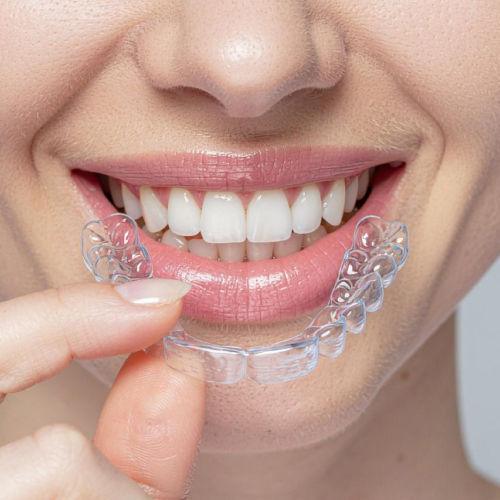
Why Your Invisalign Trays Aren't Fitting—And What to Do About It
Invisalign tray not fitting right in Cypress? Learn why gaps happen, what tracking means, and when refinements are needed. Call Cypress Family Dental.
Read More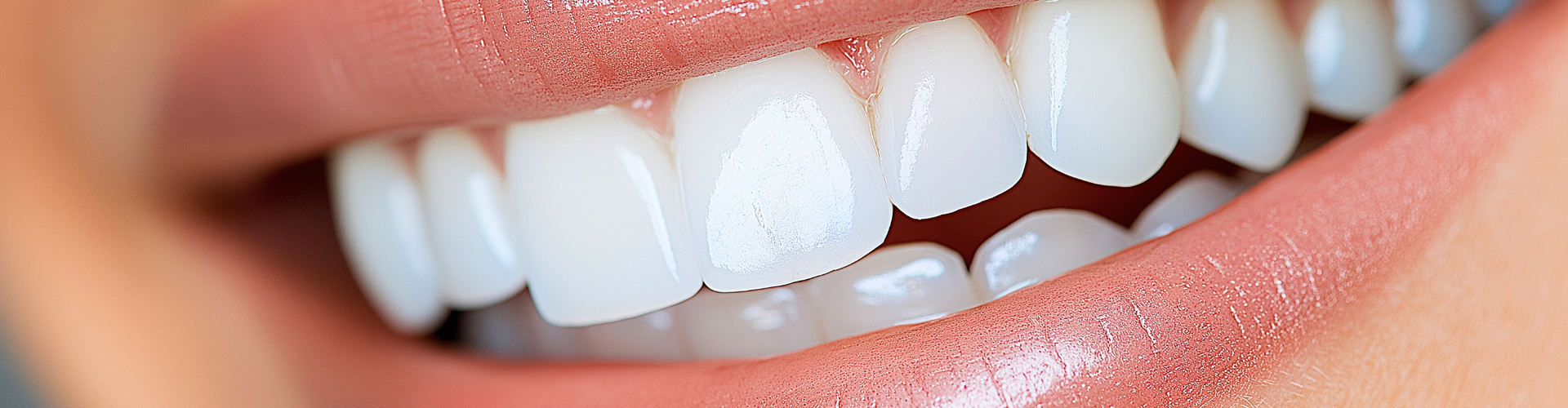
When people think about veneers, they often picture the final result: smooth, bright teeth that look natural and balanced. What usually gets less attention is the process behind them. Veneers are not pulled off a shelf or rushed into place. They are carefully designed, shaped, and refined through a detailed collaboration between your dentist and a dental laboratory.
At Cypress Family Dental, veneers are treated as a custom dental solution, not a cosmetic shortcut. Every step is intentional, from the first conversation to the moment your new smile is bonded in place. Understanding how veneers are made helps you appreciate why they look so natural and why the process matters just as much as the outcome.
The creation of dental veneers is a multi stage process that blends clinical precision with skilled craftsmanship. It begins in the dental chair and continues in a specialized dental lab before returning to your dentist for final placement.
1. The initial consultation and planning: Everything starts with a conversation. Your dentist evaluates your teeth, your bite, and your overall oral health. Veneers are not placed on unhealthy teeth, so this visit helps confirm that veneers are the right option for you.
During this stage, your dentist may:
This planning stage is critical. Veneers are designed to enhance your natural smile, not overpower it.
2. Preparing the teeth: Once a plan is agreed on, the teeth receiving veneers are prepared. This usually involves removing a very thin layer of enamel from the front surface of the tooth. This creates space for the veneer so it sits flush and looks natural.
The amount of enamel removed is minimal, but it serves several important purposes:
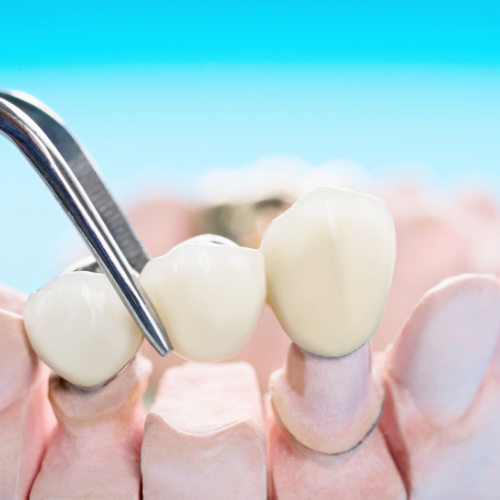
After preparation, your dentist takes precise impressions or digital scans. These are sent to a dental lab where your custom veneers are created.
3. Temporary veneers: While your permanent veneers are being made, temporary veneers may be placed. These protect your prepared teeth and give you a preview of how your smile may look.
Temporary veneers:
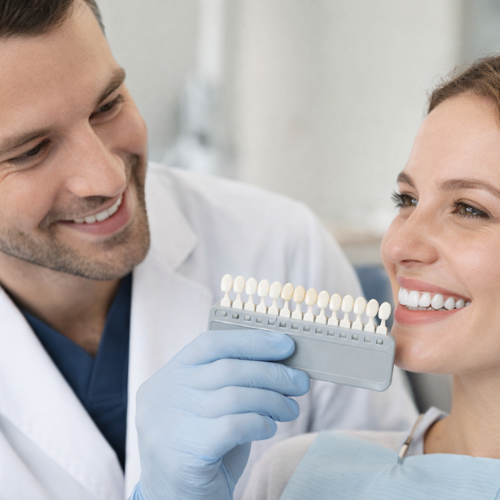
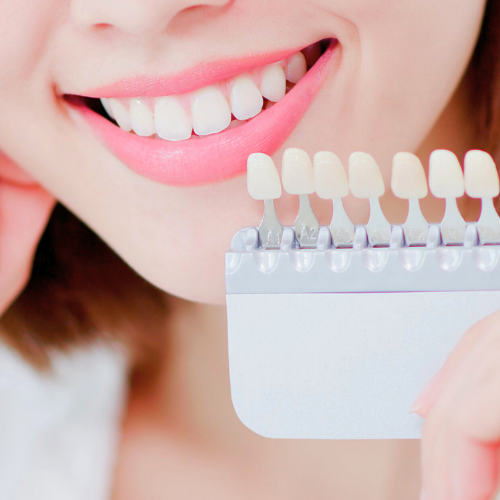
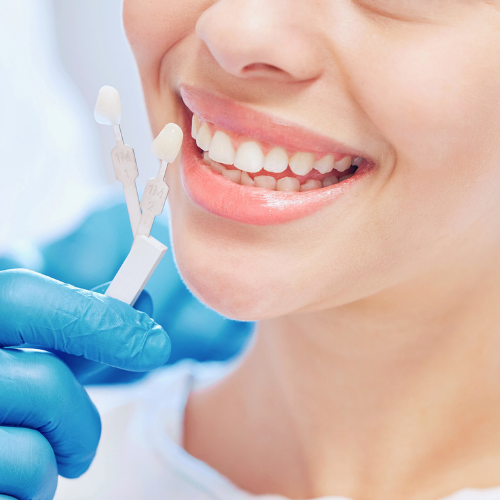
4. Laboratory craftsmanship: This is where artistry takes center stage. Skilled dental technicians use your impressions, photos, and shade selections to craft veneers that match your natural teeth.
Each veneer is:
This process takes time because every veneer is built individually.
5. Final fitting and bonding: Once the veneers return from the lab, your dentist checks the fit, color, and overall harmony with your smile. Adjustments can be made before bonding.
When everything looks right:
The result is a secure, natural looking enhancement designed to last.
Not all veneers are made from the same materials, and the choice can influence appearance, durability, and how the veneer interacts with light.
Porcelain veneers
Benefits of porcelain veneers include:
Porcelain veneers are often chosen for their ability to reflect light in a way that closely matches natural teeth.
Ceramic based veneers: Advanced ceramics are also used in modern veneer fabrication. These materials allow for precision and customization.
Ceramic veneers offer:
They are especially useful when aesthetics and durability need to be balanced.
Composite veneers: Composite materials can also be used, typically applied directly in the dental office.
While composite veneers may:
They generally do not last as long as porcelain or ceramic veneers and may stain more easily over time.
How material choice affects appearance. Material selection impacts:
Your dentist helps guide this choice based on your goals, bite, and oral health.
Veneers are not a one day procedure. The timeline reflects the level of customization involved.
Typical veneer timeline: Most veneer treatments take place over several appointments:
From start to finish, the process often takes two to three weeks.
Why the timeline matters: Rushing veneer creation can compromise:
The goal is not speed but precision. Custom veneers are meant to feel like your own teeth, not like an add on.
Veneers are sometimes described as cosmetic, but the process behind them is deeply clinical and highly technical. Every step, from enamel preparation to laboratory layering, influences how the veneers function and look over time.
Well made veneers:
Poorly planned veneers can lead to discomfort or unnatural results, which is why experience and attention to detail matter.
Once veneers are placed, caring for them is straightforward but important.
To maintain your veneers:
With good care, veneers can last many years while maintaining their appearance.
Veneers are not about creating a perfect smile. They are about creating the right smile for you. The process honors your natural features while enhancing what is already there.
At Cypress Family Dental, veneers are planned with intention and placed with precision. If you are curious about whether veneers are right for you, a personalized consultation is the best place to start.
Fresh news from the dental world



Mon - Fri 8AM - 5PM
Sat & Sun Closed
Check out what our patients are saying in Cypress...
..png)

“The Doctors Are Just Stellar”
The sweetest people work here, I'm convinced! The ladies at the front desk always go out of their way to be kind and helpful, the hygienists listen to your concerns and will address them to their best ability, and the doctors are just stellar. I drive over 40 min from where I live to go here because it's rare to find a dental office this fantastic.

“They Are So Efficient”
This is the best dentist I have been to and I have been to several. The team is professional and welcoming. They are never over-booked and I have never waited more than 5 minutes in the lobby. They are so efficient, no matter what I go in for, I am out in 45 minutes or less. I highly recommend Cypress Family Dental.

“A Very Pleasant Experience”
My visit to the Cypress Family Dental office today was a very pleasant experience. The front desk staff greeted me upon entering the office and efficiently confirmed my scheduled appointment. I'm seen within a short time by professional, knowledgeable and comfortable staff. They're open to various types of insurance and are flexible on terms. Overall, I would definitely recommend Cypress Family Dental.

“The Staff Did A Great Job”
Came to Cypress Family Dental a year ago for my sleep apnea device. No more snoring! The staff did a great job fitting me for this oral appliance. Better yet, they were there to support me when I needed some adjustments later on. The front office staff couldn't have been more accommodating to schedule me in. Easy to recommend.

“They Truly Care”
The dentist and his staff are wonderful people! In the past, I have had horrible experiences at other dentist offices and then I found this place and I don't think I would ever go anywhere else again. I live about 45 min away from their office but the drive is well worth it. They truly care about their patients. I would recommend this office to anyone.
..png)
“They're All Top Notch”
I'm so happy to have found this awesome dentist with an awesome staff. I am completely confident in the doctor's skill level, and completely comfortable relying on him to work on me without allowing me to experience unnecessary pain. In addition to having a good relationship with the dentist, being able to relate with the office staff is equally important to me. From the hygienist to the dental assistants to the front desk, they're all top notch.
“The Doctors Are Just Stellar”
The sweetest people work here, I'm convinced! The ladies at the front desk always go out of their way to be kind and helpful, the hygienists listen to your concerns and will address them to their best ability, and the doctors are just stellar. I drive over 40 min from where I live to go here because it's rare to find a dental office this fantastic.
“They Are So Efficient”
This is the best dentist I have been to and I have been to several. The team is professional and welcoming. They are never over-booked and I have never waited more than 5 minutes in the lobby. They are so efficient, no matter what I go in for, I am out in 45 minutes or less. I highly recommend Cypress Family Dental.
Check out our accreditations, sources, and relationships in the wide world of dentistry...


Check us out and follow our Cypress dental practice on social media...


