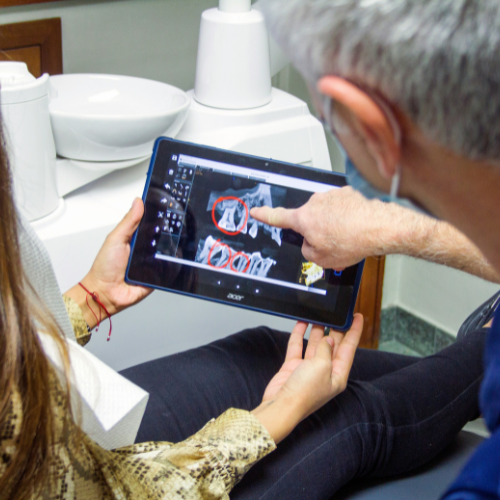
Root Canal vs Tooth Extraction
Not sure whether you need a root canal or extraction? Learn the differences, benefits, and how dentists determine the right treatment.
Read More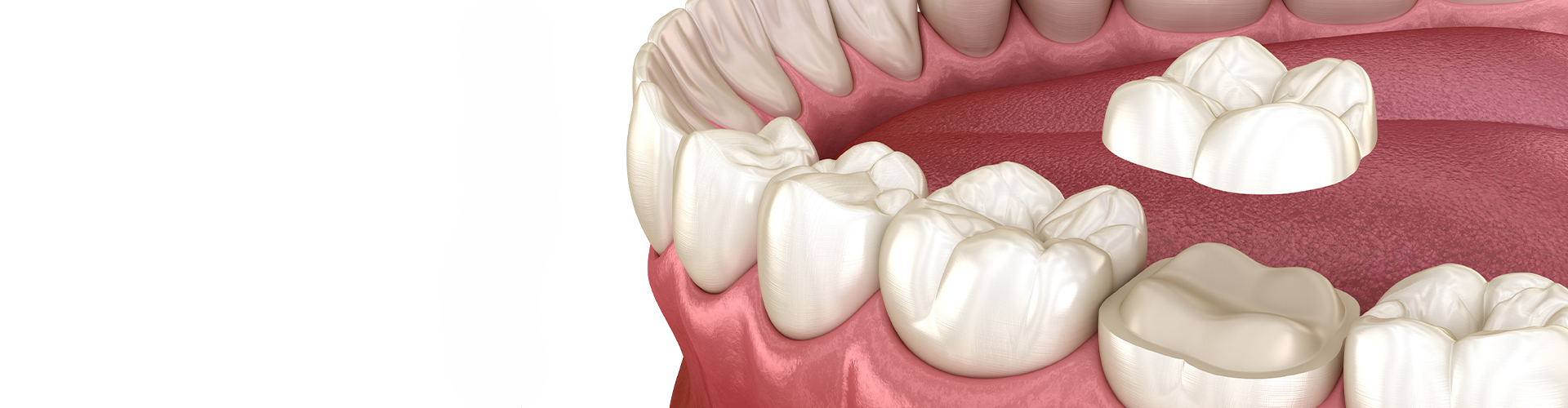
It starts with a tiny crack, a lingering ache, or maybe just your dentist saying, “We can’t do a simple filling this time.” Suddenly, you’re staring down the possibility of something bigger, an inlay, an onlay, or a crown.
If that sounds familiar, you’re not alone. Many patients are caught off guard when a tooth needs more than just a quick fix. And with all the treatment names being tossed around, it can be hard to know what your tooth really needs.
At Cypress Family Dental, we believe in helping you make decisions with clarity. So let’s break down the options: what they are, when they’re used, and why a crown might just be the most practical and lasting solution for your smile.
At first glance, they can sound like dental jargon. But each of these options serves a specific purpose depending on how much of your tooth is damaged.
Inlays: An inlay fits inside the tooth, almost like a puzzle piece. It’s typically used when the damage is too extensive for a regular filling but the surrounding cusps of your tooth are still healthy. Think of it as a custom filling made from a stronger material, usually porcelain or composite resin, that offers a snug, lasting fit.
Onlays: Onlays are like inlays, but they go a step further. They extend to cover one or more cusps of the tooth. If your tooth has more structural damage but doesn’t need a full crown, an onlay might be used. Sometimes called “partial crowns,” they provide a nice middle ground between preserving tooth structure and offering protection.
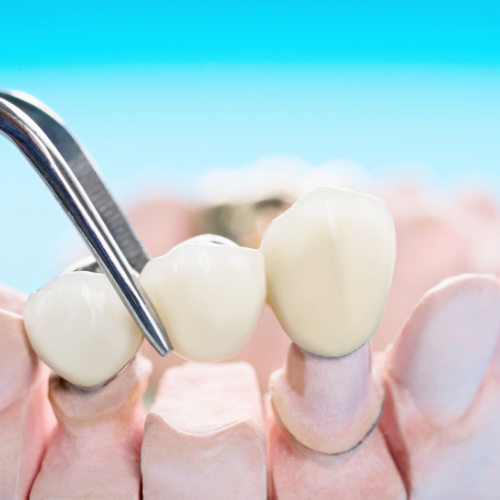
Crowns: Crowns are the heavy lifters. If your tooth is significantly damaged, weakened by decay, or cracked, a crown will likely be the best option. It covers the entire tooth above the gumline, restoring its shape, strength, and appearance. Crowns can be made from several materials, but porcelain and ceramic are popular choices for blending in naturally with the rest of your smile.
In short:
Now that we’ve cleared that up, let’s talk about when one option outshines the others.
Crowns are often the go-to option when your tooth has moved past the point of patching up.
If your tooth:
…a crown is usually the best call.
Crowns aren’t just about covering things up. They protect what’s left of your natural tooth, allow you to chew normally, and prevent further damage. A cracked or fragile tooth left untreated can break completely, possibly beyond repair. A crown acts like a helmet, taking the pressure off the weak parts of your tooth and giving it the support it needs.
Another advantage of crowns is longevity. While inlays and onlays are strong, full crowns typically last longer and offer more durability, especially for teeth in the back of your mouth that do most of the chewing.
Even if you’ve heard of inlays and onlays, they aren’t always offered in general dental practices. Many clinics, including ours, focus on crowns because they’re effective, reliable, and more widely used for the kind of damage we commonly see.
It might seem logical that less coverage means a lower price. And sometimes, that’s true, but not always.
Inlays and onlays are custom-made in a lab, just like crowns. That means the cost of materials, the precision involved, and the fabrication process are very similar. The final cost often depends on:
Because of that, inlays and onlays can sometimes cost just as much, or more, than a crown, especially if they require more detail or specific shaping.
Now, if you’re weighing options purely based on cost, a traditional filling is the cheapest. But once you’re past that stage, crowns often offer the best value in the long run. They last longer, cover more, and help you avoid future dental emergencies that might result in even costlier treatments like extractions or implants.
At Cypress Family Dental, we also walk you through payment options and check your insurance benefits. Our goal is never to upsell, it’s to protect your tooth in a way that works for your budget and lifestyle.
That answer always comes down to the health of your tooth, not just the treatment menu. While inlays and onlays are great options in theory, many teeth in real life don’t fall neatly into those middle categories. Most of the time, when a filling won’t cut it, a crown is the most practical solution.
Here’s how we approach it at Cypress Family Dental:
We don’t just fix teeth, we help you protect your health, time, and wallet down the road.
If you’re dealing with a cracked filling, an aching molar, or a dentist telling you your tooth needs more support, don’t panic. You don’t have to figure it out alone.
Our team at Cypress Family Dental is here to evaluate your tooth, explain your options clearly, and help you make a choice that fits your needs. Most importantly, we’re here to help you save your tooth before the damage goes any deeper.
Whether you end up needing a crown or just want a second opinion, we’re happy to help.
Schedule an appointment today and let’s get your smile back to full strength.
Fresh news from the dental world


Mon - Fri 8AM - 5PM
Sat & Sun Closed
Check out what our patients are saying in Cypress...
..png)

“The Doctors Are Just Stellar”
The sweetest people work here, I'm convinced! The ladies at the front desk always go out of their way to be kind and helpful, the hygienists listen to your concerns and will address them to their best ability, and the doctors are just stellar. I drive over 40 min from where I live to go here because it's rare to find a dental office this fantastic.

“They Are So Efficient”
This is the best dentist I have been to and I have been to several. The team is professional and welcoming. They are never over-booked and I have never waited more than 5 minutes in the lobby. They are so efficient, no matter what I go in for, I am out in 45 minutes or less. I highly recommend Cypress Family Dental.

“A Very Pleasant Experience”
My visit to the Cypress Family Dental office today was a very pleasant experience. The front desk staff greeted me upon entering the office and efficiently confirmed my scheduled appointment. I'm seen within a short time by professional, knowledgeable and comfortable staff. They're open to various types of insurance and are flexible on terms. Overall, I would definitely recommend Cypress Family Dental.

“They Truly Care”
The dentist and his staff are wonderful people! In the past, I have had horrible experiences at other dentist offices and then I found this place and I don't think I would ever go anywhere else again. I live about 45 min away from their office but the drive is well worth it. They truly care about their patients. I would recommend this office to anyone.
..png)
“They're All Top Notch”
I'm so happy to have found this awesome dentist with an awesome staff. I am completely confident in the doctor's skill level, and completely comfortable relying on him to work on me without allowing me to experience unnecessary pain. In addition to having a good relationship with the dentist, being able to relate with the office staff is equally important to me. From the hygienist to the dental assistants to the front desk, they're all top notch.

“The Staff Did A Great Job”
Came to Cypress Family Dental a year ago for my sleep apnea device. No more snoring! The staff did a great job fitting me for this oral appliance. Better yet, they were there to support me when I needed some adjustments later on. The front office staff couldn't have been more accommodating to schedule me in. Easy to recommend.
“The Doctors Are Just Stellar”
The sweetest people work here, I'm convinced! The ladies at the front desk always go out of their way to be kind and helpful, the hygienists listen to your concerns and will address them to their best ability, and the doctors are just stellar. I drive over 40 min from where I live to go here because it's rare to find a dental office this fantastic.
“They Are So Efficient”
This is the best dentist I have been to and I have been to several. The team is professional and welcoming. They are never over-booked and I have never waited more than 5 minutes in the lobby. They are so efficient, no matter what I go in for, I am out in 45 minutes or less. I highly recommend Cypress Family Dental.
Check out our accreditations, sources, and relationships in the wide world of dentistry...


Check us out and follow our Cypress dental practice on social media...


