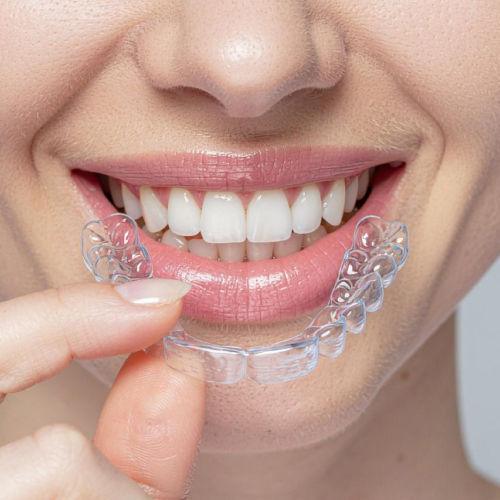
Why Your Invisalign Trays Aren't Fitting—And What to Do About It
Invisalign tray not fitting right in Cypress? Learn why gaps happen, what tracking means, and when refinements are needed. Call Cypress Family Dental.
Read More
Written by Dr. Tokin Kim, DDS | USC Graduate
Medically Reviewed by Dr. Bo Ram Um, DDS
If you're considering veneers in Cypress, you've probably asked this question at least once. And honestly, it's a smart one. Veneers are a long-term investment, and you deserve a straight answer before committing.
Here's the short version: veneers can stain, but it's more nuanced than that. The material matters, the cement matters, and so does how you care for them afterward. I've had patients in Cypress — and throughout North Orange County — come in convinced their veneers had "gone yellow," only to find out the issue wasn't staining at all.
So let's break this down properly. I'll cover whether veneers stain, how porcelain compares to composite, and why some veneers look darker even when staining isn't the actual culprit.
Short answer? Yes — but not the way natural teeth do.
Porcelain veneers are fired at high temperatures and glazed, which creates a glass-like surface that resists pigment absorption far better than natural enamel. But "stain-resistant" isn't the same as "stain-proof." And that distinction matters a lot over a decade or two, as Cleveland Clinic notes in their overview of dental veneers.
The area I see staining most often is at the margins — the thin seam where the veneer meets the natural tooth. Over time, especially after three to four years, that junction can pick up color from coffee, tea, red wine, and similar foods. The resin cement used to bond the veneer can also discolor, which shows through at the edges.
I had a patient last month who came in frustrated because her veneers looked "stained" along the gumline. She'd been meticulous about brushing. But the margin staining had nothing to do with hygiene — it was the natural aging of the cement underneath, something no toothbrush can fix.
Look, the survival data on veneers is genuinely impressive. Studies show about 91% of porcelain veneers placed in specialist settings survive past 20 years. But that doesn't mean they stay perfectly white the entire time.
What accelerates staining? Dark beverages, tobacco, poor oral hygiene, and — this one surprises people — abrasive whitening toothpastes that scratch the veneer surface and make it more porous over time.
And here's something I tell every veneer patient: the veneer itself may stay relatively clean, but the natural tooth structure around it won't. Contrast between the two can make the veneer look stained when it actually isn't.
Bottom line? Veneers resist staining better than your natural teeth, but they're not immune — especially at the margins after a few years.
Yes. Significantly less. This isn't really a close comparison.
Porcelain is a dense ceramic material with a glazed surface that repels pigment at a molecular level. Composite resin, on the other hand, is a polymer matrix — more porous by nature, and more susceptible to absorbing color from food and drinks over time.
Studies back this up consistently. Composite veneers show higher color change and increased surface roughness after exposure to staining agents compared to porcelain. The bond strength difference is also notable: porcelain bonds to enamel at roughly 63 MPa versus about 31 MPa for composite. Stronger bond, less microleakage, less margin staining.
Honestly, I lean toward porcelain for most patients who want long-term results. Composite has its place — it's more conservative, easier to repair, and costs less upfront. And I get it, budget is real. But if stain resistance is your priority, porcelain wins every time.
Actually, scratch that — it depends on the patient. For younger patients or those who want to avoid enamel removal, composite veneers can absolutely be the right call, even knowing they'll need more maintenance and possible replacement sooner.
Here's the thing about composite longevity: roughly 80% of composite veneers last beyond five years, but the staining issue typically becomes visible before that. Porcelain veneers, by contrast, can last 10 to 20 years with proper care, and 89.3% of E-max porcelain veneers showed no significant staining or failure after five years.
So what's the takeaway for patients in La Palma or Cypress weighing their options? If you drink coffee daily and want minimal upkeep, porcelain is the more forgiving choice long-term.
This one surprises almost every patient I bring it up with. Your veneer can look darker — sometimes noticeably — without a single stain touching it.
Why? A few reasons, and they're all worth understanding before you commit to a shade.
First: veneer thickness. Porcelain veneers typically range from 0.3 to 1.0 mm thick. Thinner veneers are more translucent, which means the color of the underlying tooth shows through more. If your natural tooth is dark — from old trauma, tetracycline staining, or a root canal — that darkness can bleed through a thin veneer and shift its apparent color. Research shows that each 0.2 mm increase in veneer thickness reduces perceived lightness by roughly one shade unit.
Second: resin cement. The cement used to bond your veneer has a color too, and it ages. Over time, resin cements can yellow or darken, especially under thinner veneers where the effect is more visible.
Third: ceramic processing. The firing and glazing process can introduce subtle intrinsic color shifts in the ceramic itself — often darker — that only become apparent after bonding.
I'm not 100% sure why, but my theory is that patients and even some dentists underestimate how much the tooth substrate influences the final result. We spend a lot of time selecting the veneer shade but sometimes less time managing the underlying tooth color before bonding.
Are you seeing a pattern here? The final color of a veneer isn't just about the porcelain — it's a combination of the ceramic shade, veneer thickness, cement color, and what's underneath.
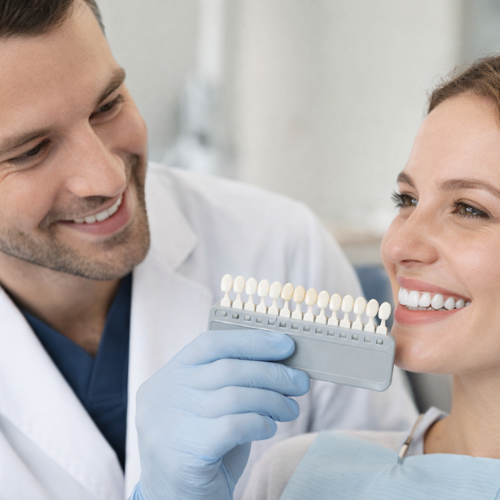
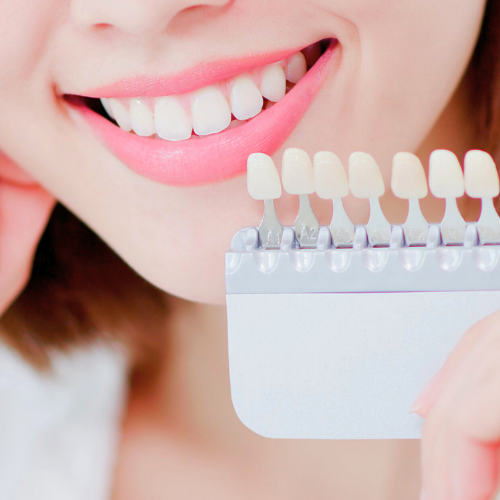
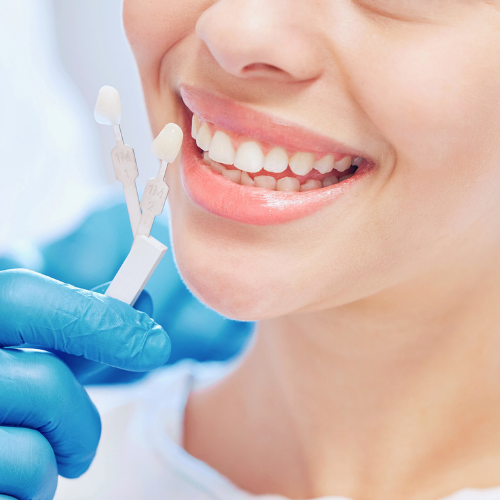
This is why shade matching and treatment planning matter so much. At our practice, we factor in all of these variables before fabrication. A veneer that looks perfect on a model can look different once it's bonded over a dark substrate, which, fair enough, catches a lot of patients off guard.
If you're in Cypress or the surrounding North Orange County area and thinking about veneers, let's talk through what's actually right for your smile — not just the ideal scenario, but your specific teeth, your habits, your goals.
At Cypress Family Dental, we take the time to walk through material options, shade selection, and long-term maintenance so you know exactly what to expect. No surprises down the road.
Call us or request an appointment online to get started. We'd love to help you make a confident, informed decision about your smile.
This content is for informational purposes only and does not replace professional medical advice, diagnosis, or treatment. Always consult with a qualified healthcare provider.
Fresh news from the dental world



Mon - Fri 8AM - 5PM
Sat & Sun Closed
Check out what our patients are saying in Cypress...
..png)

“The Doctors Are Just Stellar”
The sweetest people work here, I'm convinced! The ladies at the front desk always go out of their way to be kind and helpful, the hygienists listen to your concerns and will address them to their best ability, and the doctors are just stellar. I drive over 40 min from where I live to go here because it's rare to find a dental office this fantastic.

“They Are So Efficient”
This is the best dentist I have been to and I have been to several. The team is professional and welcoming. They are never over-booked and I have never waited more than 5 minutes in the lobby. They are so efficient, no matter what I go in for, I am out in 45 minutes or less. I highly recommend Cypress Family Dental.

“A Very Pleasant Experience”
My visit to the Cypress Family Dental office today was a very pleasant experience. The front desk staff greeted me upon entering the office and efficiently confirmed my scheduled appointment. I'm seen within a short time by professional, knowledgeable and comfortable staff. They're open to various types of insurance and are flexible on terms. Overall, I would definitely recommend Cypress Family Dental.

“The Staff Did A Great Job”
Came to Cypress Family Dental a year ago for my sleep apnea device. No more snoring! The staff did a great job fitting me for this oral appliance. Better yet, they were there to support me when I needed some adjustments later on. The front office staff couldn't have been more accommodating to schedule me in. Easy to recommend.

“They Truly Care”
The dentist and his staff are wonderful people! In the past, I have had horrible experiences at other dentist offices and then I found this place and I don't think I would ever go anywhere else again. I live about 45 min away from their office but the drive is well worth it. They truly care about their patients. I would recommend this office to anyone.
..png)
“They're All Top Notch”
I'm so happy to have found this awesome dentist with an awesome staff. I am completely confident in the doctor's skill level, and completely comfortable relying on him to work on me without allowing me to experience unnecessary pain. In addition to having a good relationship with the dentist, being able to relate with the office staff is equally important to me. From the hygienist to the dental assistants to the front desk, they're all top notch.
“The Doctors Are Just Stellar”
The sweetest people work here, I'm convinced! The ladies at the front desk always go out of their way to be kind and helpful, the hygienists listen to your concerns and will address them to their best ability, and the doctors are just stellar. I drive over 40 min from where I live to go here because it's rare to find a dental office this fantastic.
“They Are So Efficient”
This is the best dentist I have been to and I have been to several. The team is professional and welcoming. They are never over-booked and I have never waited more than 5 minutes in the lobby. They are so efficient, no matter what I go in for, I am out in 45 minutes or less. I highly recommend Cypress Family Dental.
Check out our accreditations, sources, and relationships in the wide world of dentistry...


Check us out and follow our Cypress dental practice on social media...


