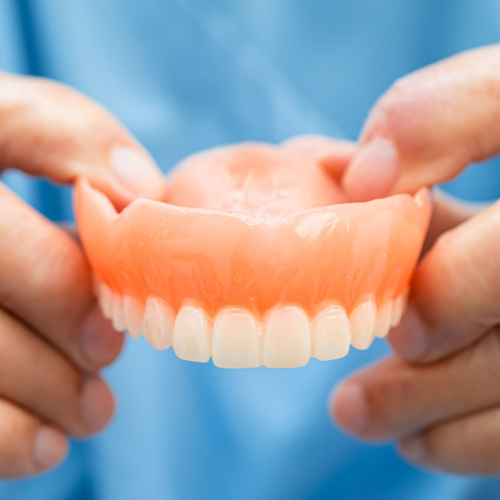
How Much Does It Cost to Replace All Your Teeth With Dentures?
Wondering about the cost to replace all your teeth with dentures? Learn about traditional & snap-on denture prices. Read our guide & schedule a visit today!
Read More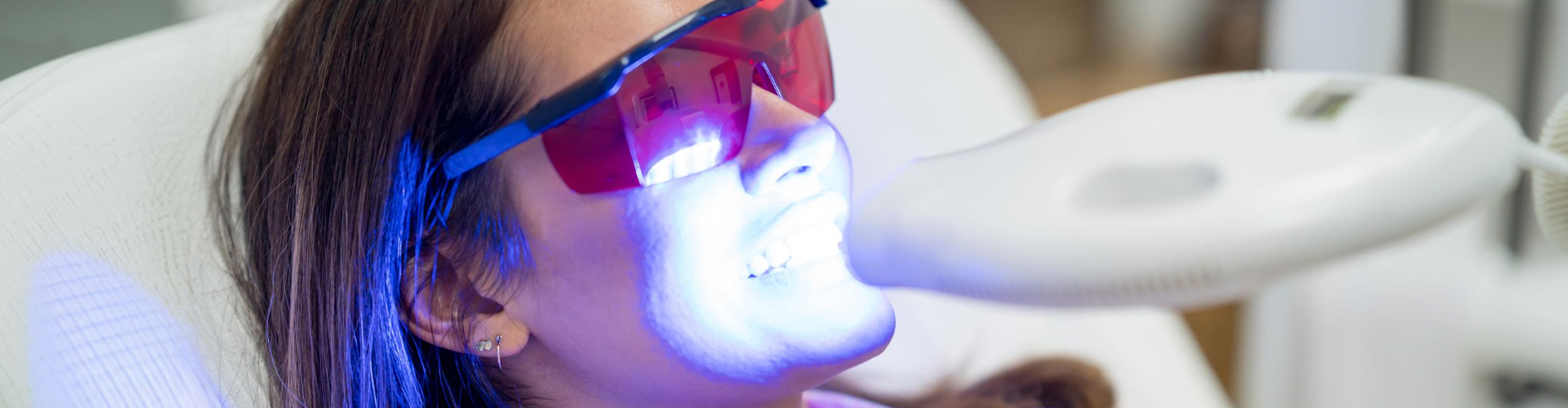
Whitening before veneers or bonding can improve your final result, but the timing matters more than most patients realize. Residual oxygen from whitening gels temporarily compromises how well bonding materials stick to your enamel. Rushing the process risks restorations that look mismatched or fail prematurely.
This is the part most dental websites skip entirely — and it's the part that causes the most frustration after treatment. For Cypress-area patients, understanding the hydration cycle of enamel is essential.
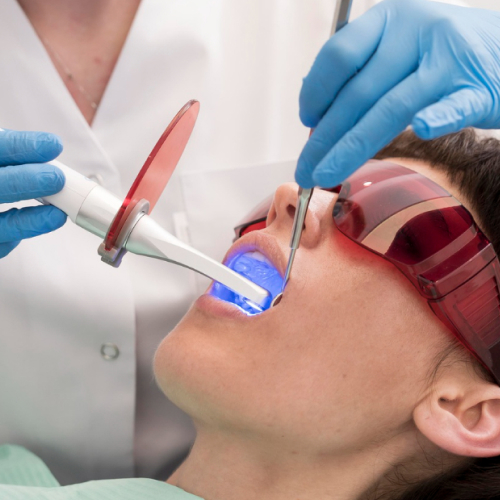
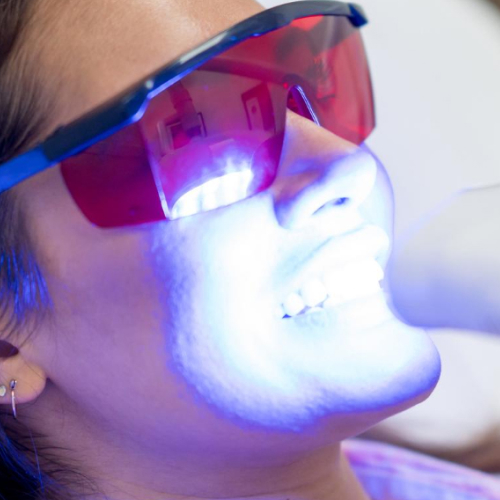
Professional whitening, especially in-office systems using high-intensity light, temporarily dehydrates your enamel. Dehydrated teeth look dramatically whiter than they actually are in their normal, hydrated state. If your dentist takes a shade impression or matches your veneer color the same day whitening is finished, that shade is essentially fictional. Once your teeth rehydrate over the following 48–72 hours, the color shifts noticeably back toward yellow.
The result? Veneers or bonding that look unnaturally bright or opaque compared to your surrounding teeth — the very complaint patients make when they say their restorations look "fake."
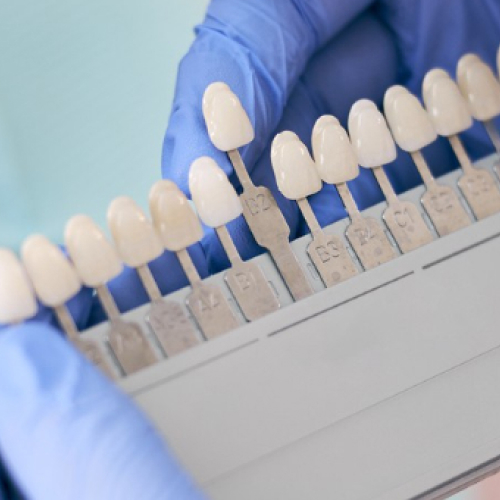
The fix is simple but requires patience. Request a shade verification appointment at least 10 days after whitening is complete. According to WebMD, keeping whitening gel on longer to compensate actually dehydrates teeth further, compounding this problem. Waiting allows your teeth to fully rehydrate and reach their true post-whitening color before any shade matching happens. A pro teeth whitening treatment performed under professional supervision ensures the process is timed and monitored correctly from the start.
This single step prevents one of the most common complaints in cosmetic dentistry.
Most articles tell you to wait 7–14 days after whitening before bonding. Few explain why — and that missing explanation is exactly why some patients push back on the timeline.
Here's the technical reality: whitening gels release hydrogen peroxide, which penetrates enamel tubules and produces oxygen free radicals. Those radicals are what break apart stain molecules and lighten your teeth. The problem is that residual oxygen doesn't disappear when the whitening session ends. It stays trapped inside the enamel structure for days afterward.
When bonding resin is applied to oxygen-saturated enamel, that residual oxygen directly interferes with polymerization — the chemical hardening process that makes the resin cure and grip the tooth. The resin can't form proper bonds with the enamel surface. Research published in PMC confirms that bleaching treatments cause measurable reductions in bracket and composite bond strength, with the weakest adhesion occurring immediately after whitening.
This isn't a conservative suggestion. Bonding too soon means a significantly higher risk of restoration failure — the composite lifting, the veneer debonding, or the bracket falling off. Harvard Health notes that the ADA recommends consulting your dentist before any bleaching, precisely because these downstream effects matter.
Practically speaking, most dentists recommend waiting a minimum of one to three weeks after in-office whitening before placing cavity fillings or composite bonding, or preparing teeth for veneers. At-home whitening with lower peroxide concentrations (3–16%) dissipates more gradually, which can extend the recommended wait time.
The question looks the same on the surface, but the answer branches depending on which restoration you're getting.
Before veneers: Whitening first is strongly recommended. Porcelain veneers are color-stable — they won't change shade after placement. That means the shade you choose before your veneers are fabricated is permanent. If your natural teeth are still yellow when you select the veneer shade, you're locking in a color you may want to change later. Whitening first lets you choose a brighter baseline shade that the veneers can match. The ADA's guidance on whitening reinforces that bleaching agents only work on natural tooth enamel, not on existing restorations — so whitening after veneer placement won't change the veneer color at all.
One important caveat: bleaching does not work on porcelain crowns, composite bonding, or existing veneers. If you have older restorations on adjacent teeth, your dentist needs to factor that into the shade planning conversation.
Before bonding: The logic is similar but the stakes are slightly higher. Composite resin used in bonding is color-matched to your teeth at the time of placement. If your teeth are still stained when the bonding is done, the composite will be matched to that yellower shade. Whiten afterward, and your natural teeth brighten while the bonding stays the same color — creating a visible mismatch. Whitening first, waiting the appropriate time, then placing the bonding gives you a consistent result. Healthline's overview of teeth whitening confirms that peroxide-based products only affect natural tooth structure, not restorative materials.
Whitening before veneers or bonding isn't a one-time event — it's the start of an ongoing commitment. Here's why: your veneers and bonding are permanently color-stable, but your natural teeth will continue to accumulate stains from coffee, tea, wine, and aging. Six to twelve months after placement, the surrounding teeth can drift noticeably yellower while the restorations hold their original shade, creating a mismatch that grows over time.
A practical maintenance schedule for most patients looks like this:
The goal is keeping your natural teeth at the same brightness level as your restorations, not chasing a brighter shade that the restorations can never match. Your dentist can prescribe the appropriate concentration based on your specific restorations and sensitivity levels.
Sequencing whitening, veneers, and bonding correctly makes the difference between a result that lasts and one that needs early correction. At Cypress Family Dental, we help patients in Cypress and throughout North Orange County build a treatment timeline that accounts for chemistry, shade stability, and long-term maintenance — before any irreversible work begins. Whether you're also exploring aesthetic dentistry options to complete your smile, or simply want to understand the right sequence for your specific case, contact us to schedule a cosmetic consultation.
This article is for informational purposes only and does not constitute professional dental advice. Please consult a licensed dentist for guidance specific to your oral health needs.
Fresh news from the dental world


Mon - Fri 8AM - 5PM
Sat & Sun Closed
Check out what our patients are saying in Cypress...
..png)

“The Doctors Are Just Stellar”
The sweetest people work here, I'm convinced! The ladies at the front desk always go out of their way to be kind and helpful, the hygienists listen to your concerns and will address them to their best ability, and the doctors are just stellar. I drive over 40 min from where I live to go here because it's rare to find a dental office this fantastic.

“They Are So Efficient”
This is the best dentist I have been to and I have been to several. The team is professional and welcoming. They are never over-booked and I have never waited more than 5 minutes in the lobby. They are so efficient, no matter what I go in for, I am out in 45 minutes or less. I highly recommend Cypress Family Dental.

“They Truly Care”
The dentist and his staff are wonderful people! In the past, I have had horrible experiences at other dentist offices and then I found this place and I don't think I would ever go anywhere else again. I live about 45 min away from their office but the drive is well worth it. They truly care about their patients. I would recommend this office to anyone.

“The Staff Did A Great Job”
Came to Cypress Family Dental a year ago for my sleep apnea device. No more snoring! The staff did a great job fitting me for this oral appliance. Better yet, they were there to support me when I needed some adjustments later on. The front office staff couldn't have been more accommodating to schedule me in. Easy to recommend.

“A Very Pleasant Experience”
My visit to the Cypress Family Dental office today was a very pleasant experience. The front desk staff greeted me upon entering the office and efficiently confirmed my scheduled appointment. I'm seen within a short time by professional, knowledgeable and comfortable staff. They're open to various types of insurance and are flexible on terms. Overall, I would definitely recommend Cypress Family Dental.
..png)
“They're All Top Notch”
I'm so happy to have found this awesome dentist with an awesome staff. I am completely confident in the doctor's skill level, and completely comfortable relying on him to work on me without allowing me to experience unnecessary pain. In addition to having a good relationship with the dentist, being able to relate with the office staff is equally important to me. From the hygienist to the dental assistants to the front desk, they're all top notch.
“The Doctors Are Just Stellar”
The sweetest people work here, I'm convinced! The ladies at the front desk always go out of their way to be kind and helpful, the hygienists listen to your concerns and will address them to their best ability, and the doctors are just stellar. I drive over 40 min from where I live to go here because it's rare to find a dental office this fantastic.
“They Are So Efficient”
This is the best dentist I have been to and I have been to several. The team is professional and welcoming. They are never over-booked and I have never waited more than 5 minutes in the lobby. They are so efficient, no matter what I go in for, I am out in 45 minutes or less. I highly recommend Cypress Family Dental.
Check out our accreditations, sources, and relationships in the wide world of dentistry...


Check us out and follow our Cypress dental practice on social media...


