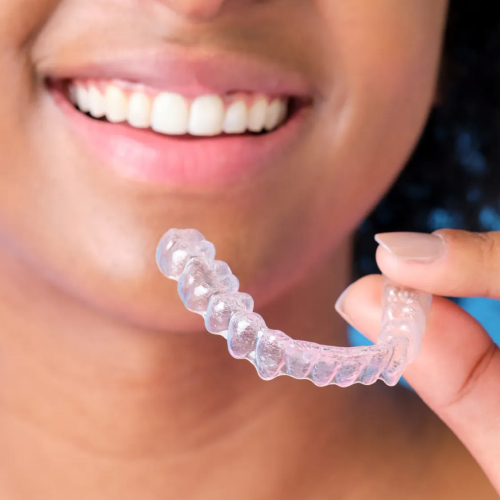
Does Invisalign Stain? What Cypress Patients Need to Know About Keeping Trays Clear
Wondering if Invisalign stains? Learn how to keep aligners clear, clean trays properly, and care for your smile. Contact Cypress Family Dental today!
Read More
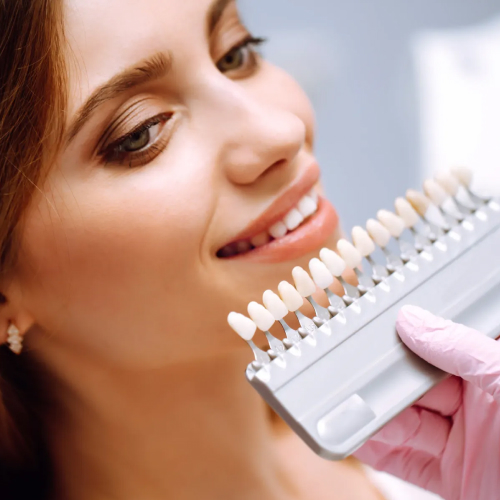
Teeth whitening, porcelain veneers, and composite bonding each solve different problems — and choosing the wrong one first can force you to redo expensive work. Understanding the clinical order of operations, and the lifetime commitment each option demands, is the key to making a smart decision. If you're exploring your options, aesthetic dentistry services can help you find the right path forward.
For Cypress-area patients, most don't realize that whitening gels work exclusively on natural tooth enamel. Hydrogen peroxide and carbamide peroxide oxidize colored compounds inside your enamel — they cannot alter the shade of porcelain or composite resin. At all.
This creates a critical sequencing problem. If you get composite bonding or veneers placed first, then decide to whiten your natural teeth six months later, your natural enamel brightens while the restorations stay exactly the original shade. The mismatch is visible and permanent. The only fix is replacing restorations that were otherwise functioning perfectly — purely to match your new tooth color.
The correct clinical protocol is straightforward: whiten first, restore second. According to WebMD, bleaching will not whiten porcelain crowns or tooth-colored composite bonding — a fact that's easy to overlook when planning cosmetic treatment.
There's also a second timing rule that matters just as much. After whitening, residual oxygen molecules remain in the enamel and actively inhibit the bonding agents used to place veneers or composite. Placing restorations too soon results in weaker adhesion. Most clinicians recommend waiting at least 14 days after pro teeth whitening before proceeding with any bonded restorations, giving the enamel time to stabilize. PMC's article confirms that post-bleaching changes to enamel surface chemistry are a well-documented clinical concern.
Skipping this waiting period isn't just a minor inconvenience — research published in PMC confirms that bond strength to bleached enamel is significantly reduced immediately after whitening, and that a waiting period is essential for optimal adhesion.
Porcelain veneers deliver stunning, long-lasting results — but they come with a biological and financial commitment that most comparison guides understate.
Placing traditional veneers requires removing roughly 0.5mm of healthy enamel from the front of each tooth. That removal is permanent and irreversible. A Healthline overview of dental veneers notes that this enamel reduction — sometimes extending past the enamel layer entirely — can be painful and requires local anesthetic.
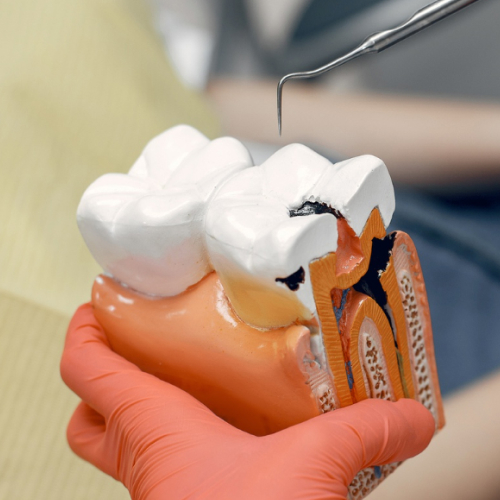
Here's what that means over a lifetime. Veneers typically last 10 to 15 years. A patient who gets veneers at 25 will likely need 3 to 4 replacement cycles before age 65. Each replacement requires additional tooth preparation on enamel that becomes progressively thinner. Over decades, this increases the risk of pulp exposure, chronic sensitivity, and in some cases, the eventual need for endodontic root canal treatment on teeth that started out completely healthy.
Contrast that with professional whitening. Zero enamel is removed. The procedure is fully reversible. Periodic touch-ups maintain the result without any structural consequence to the tooth.
This doesn't mean veneers are the wrong choice — for severely discolored, chipped, or misshapen teeth, they may be the most appropriate solution. The American Dental Association's MouthHealthy resource emphasizes that veneers placed by licensed dentists over healthy teeth, with proper preparation, have excellent long-term outcomes. The point is that a 25-year-old choosing veneers primarily for color should fully understand the enamel tax they're agreeing to pay — repeatedly — for the rest of their life. An article by PMC further underscores how preparation design directly affects the long-term survival of veneer restorations.
Composite bonding is popular because it's fast, minimally invasive, and can mask stains in a single visit. For small chips, minor gaps, or slightly discolored teeth, it's an excellent option. But there's a risk that rarely gets explained upfront: marginal staining.
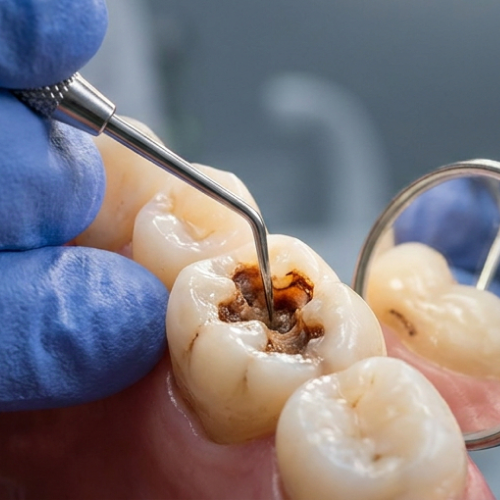
The interface where composite resin meets natural tooth enamel is porous and susceptible to micro-leakage. Over time, daily coffee, tea, or red wine consumption drives pigment molecules into this margin, forming dark brown lines at the edges of the bonding. Unlike surface stains on natural enamel — which respond well to whitening — these marginal stains cannot be bleached away. They require physical resurfacing or replacement of the bonding itself. In some cases, decay at these margins may also lead to the need for cavity fillings to address damage before any cosmetic work can be redone.
Healthline's composite veneer guide notes that composite resin is more prone to staining and chipping than porcelain, and that patients who consume staining foods and beverages regularly should factor this into their decision. WebMD's cosmetic dentistry overview similarly highlights that bonding material can stain and may need to be touched up or replaced more frequently than other restorative options.
Ready to find out which smile upgrade is right for you? Schedule a cleaning and exam at Cypress Family Dental to discuss your options with our team.
This article is intended for general informational purposes only and does not constitute dental or medical advice. Always consult a licensed dental professional regarding your specific oral health needs and treatment options.
Fresh news from the dental world


Mon - Fri 8AM - 5PM
Sat & Sun Closed
Check out what our patients are saying in Cypress...
..png)

“The Doctors Are Just Stellar”
The sweetest people work here, I'm convinced! The ladies at the front desk always go out of their way to be kind and helpful, the hygienists listen to your concerns and will address them to their best ability, and the doctors are just stellar. I drive over 40 min from where I live to go here because it's rare to find a dental office this fantastic.

“They Are So Efficient”
This is the best dentist I have been to and I have been to several. The team is professional and welcoming. They are never over-booked and I have never waited more than 5 minutes in the lobby. They are so efficient, no matter what I go in for, I am out in 45 minutes or less. I highly recommend Cypress Family Dental.

“A Very Pleasant Experience”
My visit to the Cypress Family Dental office today was a very pleasant experience. The front desk staff greeted me upon entering the office and efficiently confirmed my scheduled appointment. I'm seen within a short time by professional, knowledgeable and comfortable staff. They're open to various types of insurance and are flexible on terms. Overall, I would definitely recommend Cypress Family Dental.

“They Truly Care”
The dentist and his staff are wonderful people! In the past, I have had horrible experiences at other dentist offices and then I found this place and I don't think I would ever go anywhere else again. I live about 45 min away from their office but the drive is well worth it. They truly care about their patients. I would recommend this office to anyone.

“The Staff Did A Great Job”
Came to Cypress Family Dental a year ago for my sleep apnea device. No more snoring! The staff did a great job fitting me for this oral appliance. Better yet, they were there to support me when I needed some adjustments later on. The front office staff couldn't have been more accommodating to schedule me in. Easy to recommend.
..png)
“They're All Top Notch”
I'm so happy to have found this awesome dentist with an awesome staff. I am completely confident in the doctor's skill level, and completely comfortable relying on him to work on me without allowing me to experience unnecessary pain. In addition to having a good relationship with the dentist, being able to relate with the office staff is equally important to me. From the hygienist to the dental assistants to the front desk, they're all top notch.
“The Doctors Are Just Stellar”
The sweetest people work here, I'm convinced! The ladies at the front desk always go out of their way to be kind and helpful, the hygienists listen to your concerns and will address them to their best ability, and the doctors are just stellar. I drive over 40 min from where I live to go here because it's rare to find a dental office this fantastic.
“They Are So Efficient”
This is the best dentist I have been to and I have been to several. The team is professional and welcoming. They are never over-booked and I have never waited more than 5 minutes in the lobby. They are so efficient, no matter what I go in for, I am out in 45 minutes or less. I highly recommend Cypress Family Dental.
Check out our accreditations, sources, and relationships in the wide world of dentistry...


Check us out and follow our Cypress dental practice on social media...


